
The Dilemma of the "Joint Ticket": Weighing Ethical Legitimacy and Constitutional Resilience
-
News
-
1 minute ago
This article was translated by AI. Read the original article on Kompas.com. See Original
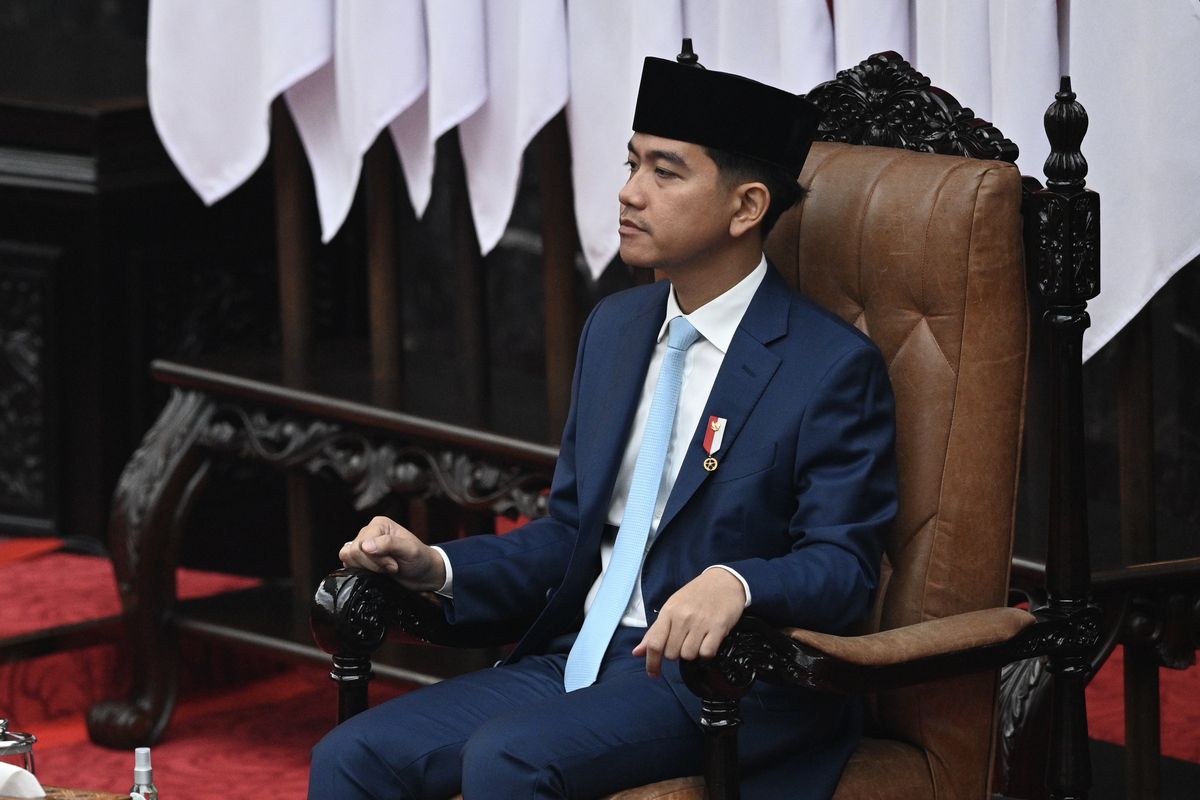
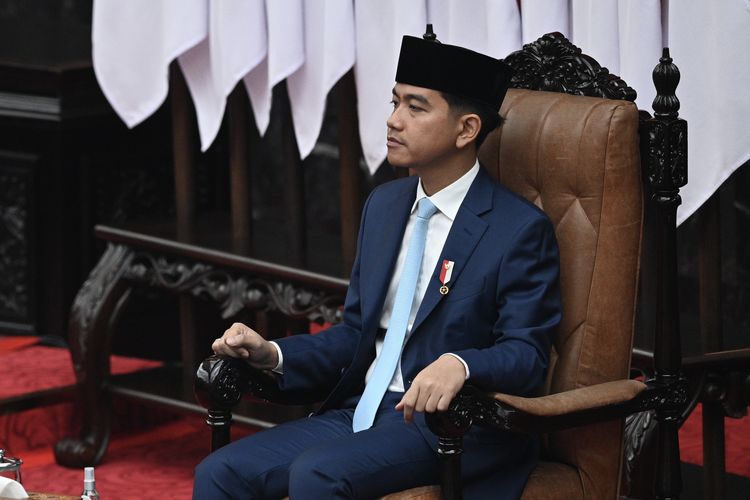
GIBRAN Rakabuming Raka is wise. He asserts that power has its limits, while preserving dignity can transcend a term in office.
A leader should understand that they are tested not by their courage to hold onto power, but by their ability to let go of their position to uphold dignity and the interests of the nation.
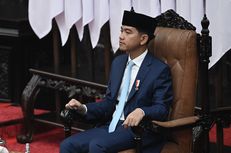
This is how I interpret the news of Vice President Gibran Rakabuming Raka’s resignation on Wednesday (11/11/2026).
This news presents an important moment in Indonesia's governance.
After expressing his intention to resign to President Prabowo Subianto the day before, Gibran reportedly submitted his resignation letter at Halim Perdanakusuma Air Force Base.
This development unfolded as 120 members of the House of Representatives from eight factions proposed a statement of opinion regarding the legitimacy of Gibran’s educational documents.
This proposal opened the door for a potential dismissal through constitutional mechanisms.
If his resignation is completed following constitutional procedures, Gibran has chosen a path different from facing impeachment.
The question is no longer merely why Gibran resigned, but whether this resignation can serve as a moment to restore personal honor, uphold the dignity of the presidency, and redirect the nation’s energy back to the people's interests.
Max Weber, in Economy and Society, explains that power needs legitimacy to gain public acceptance.
David Beetham, in The Legitimation of Power (1991), emphasizes that legitimacy is not solely based on legality but also on normative justification and public approval.
This means that the legality of power and moral legitimacy do not always align.
In Gibran's case, the electoral mandate from the 2024 elections does not automatically dissolve due to the controversy surrounding his educational documents.
However, judicial decisions regarding the administrative documents used for his candidacy raise legal issues that need to be resolved transparently.
As this issue evolves into a debate about the constitutional qualifications for the position, questions arise concerning the sustainability of public legitimacy.
A leader may have a legal right to remain but must still consider the moral and political consequences of continuing in power.
Here, the resignation acquires a broader significance.
It can represent a choice to separate personal interests from national interests, without being interpreted as an admission of fault.
Power that is maintained while ignoring trust issues risks experiencing legitimacy erosion.
Conversely, the willingness to limit power can pave the way for rebuilding public trust.
Gibran's power has never been free from controversy. The public still remembers that his candidacy became possible after a Constitutional Court decision that altered the age requirements for presidential and vice-presidential candidates.
That ruling, regardless of its legal arguments, has been perceived by many as a door intentionally opened for one individual.
From that moment on, every step Gibran took was shadowed by the question: does he occupy that position because he meets the requirements, or because the requirements were adjusted?
This controversy then extended to his educational documents. From diploma equivalency to the validity of candidacy requirements, as one issue was unresolved, another arose.
As a result, the debate shifted from mere administrative matters to discussions about legitimacy.
When legitimacy is continually questioned, the vice presidency, which should be a platform to serve the people, instead becomes a source of endless turmoil.
Thus, Gibran's resignation cannot merely be viewed as the end of a term.
It is a decision to leave a position that has been mired in controversy from the start.
If he had stayed, the polemics would have inescapably followed him wherever he went.
By stepping down, he severs that chain. He no longer needs to defend a power that is perpetually questioned, and the state no longer needs to expend energy addressing the same recurring issue.
In Jurgen Habermas's thinking, democratic legitimacy relates to the willingness of power to be accountable through a rational public process.
Meanwhile, Weber's ethics of responsibility remind us that political actions must consider their consequences, not simply adhere to personal convictions.
From a constitutional ethics perspective, resignation can hold moral significance when undertaken consciously to avoid greater harm to the life of the nation.
The momentum of National Heroes Day, recently observed on November 10, offers interesting reflection.
The heroes sacrificed personal interests for the independence of the nation.
In modern democracy, that spirit of sacrifice can be interpreted as the willingness to place the people's interests above the continuation of power.
However, moral heroism does not merely arise from the act of resigning.
It is also determined by the sincerity of the reasons, respect for the law, and the willingness to be accountable for decisions.
Resigning with the spirit of moral heroism of the constitution is not just about relinquishing an embattled power. It's about saving dignity and the interests of the people.
Because power entangled in controversy deepens pressing issues: poverty, inequality, job creation, education, and legal justice.
The nation’s energy should not remain held hostage by controversies surrounding a single official, while the interests of the people await resolution.
Gibran's resignation opens the opportunity for all state institutions to demonstrate constitutional maturity.
The President must ensure governmental continuity, the House of Representatives must exercise oversight responsibly, and the People's Consultative Assembly must guarantee the orderly conduct of constitutional processes.
From a moral standpoint, history judges not just how one gains power, but also how he leaves it.
Leaving a position does not necessarily mean losing honor.
Conversely, retaining power does not automatically preserve dignity.
When Gibran’s resignation is concluded in an orderly, transparent, and responsible manner, this event can serve as a lesson that the constitution not only regulates how power is acquired but also how it can be ended with dignity.
For power has a time limit. The dignity of a statesman is tested far beyond their term in office.
Thus, Gibran's choice to resign can be seen as an opportunity to showcase constitutional moral responsibility, as long as it is followed by an open legal resolution and does not turn resignation into a means of evading accountability.
Political history shows that leaving one’s position does not always equate to defeat.
Setya Novanto resigned as Speaker of the House on December 16, 2015, when the Honorary Board was processing the ethical case known as the 'Papa Minta Saham' (Papa Wants Shares).
This decision was made before the ethical process yielded a final ruling.
Novanto’s resignation did not erase ethical or legal responsibilities.
However, this incident illustrates how officials can choose to leave their positions when institutional pressures become greater.
President Suharto also resigned on May 21, 1998, after facing a multidimensional crisis and demands for reform.
The context is undoubtedly different, but it teaches that the sustainability of power cannot be separated from political support and public acceptance.
In the UK, Boris Johnson announced his resignation as leader of the Conservative Party in July 2022 after losing support within his government.
Each of these events has different backgrounds and legal consequences. Therefore, it is not appropriate to directly compare them with Gibran.
However, one important lesson remains: public office is not a personal possession.
The ability to determine when to leave power is part of the responsibility of statesmanship.