
Firli Bahuri Case Reopened, Police Visit Him Due to Two Failed Questionings
-
News
-
8 minutes ago
This article was translated by AI. Read the original article on Kompas.com. See Original
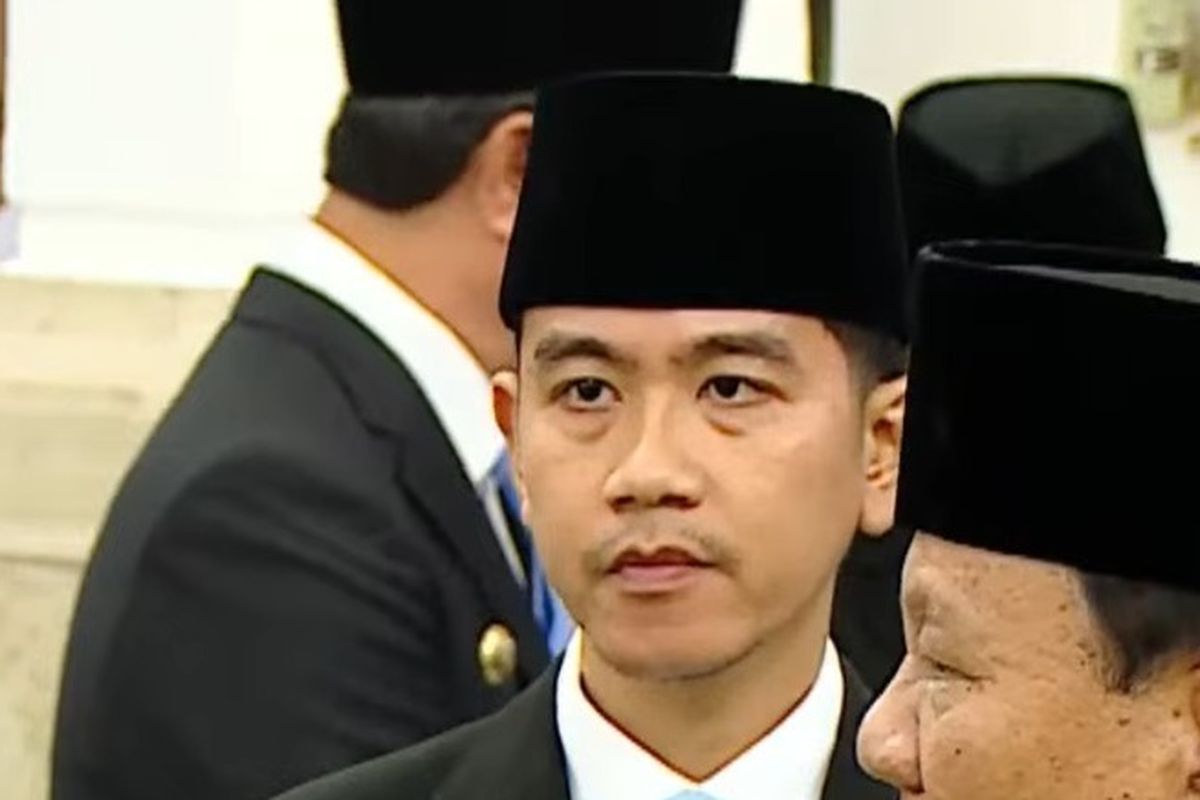
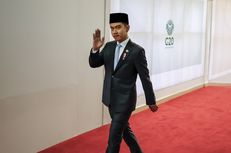
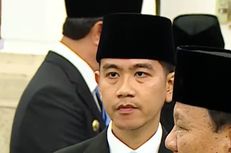
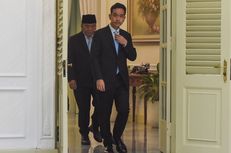
JAKARTA, KOMPAS.com - The controversy surrounding the educational credentials of Vice President Gibran Rakabuming Raka shows no signs of resolution.
Amid a ruling by the Supreme Court (MA) that annulled the equivalency certificate for his diploma, Gibran is prepared to take legal action to validate his educational documents.
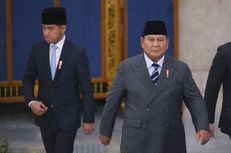
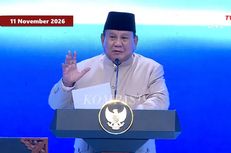
Gibran indicated that he received advice from President Prabowo Subianto to continue the fight through the State Administrative Court (PTUN), presenting all educational documents from elementary school to university.
He also mentioned that Prabowo suggested he coordinate with the Ministry of Education and Culture (Kemendikdasmen) to file for a judicial review (PK) with the Supreme Court.
However, this move faces fundamental issues, mainly the finality of the court's decision.
Several legal experts believe Gibran's options to alter the situation through legal avenues are increasingly limited.
In fact, his effort to maintain his vice presidential position now intersects with political and constitutional consequences.
The Coordinating Minister for Law, Human Rights, Immigration, and Prisons, Yusril Ihza Mahendra, stated that Gibran has no other legal recourse to confirm the validity of his high school equivalency certificate following the court's decision.
According to Yusril, the Constitutional Court's ruling is final and binding.
Moreover, the Supreme Court's decision has also become final due to the absence of parties seeking a judicial review.
"This matter cannot be pursued further because the Constitutional Court's ruling is final and binding; there are no legal avenues left. The Supreme Court's ruling is also final since no one can file for a judicial review on that decision," Yusril said at the Presidential Palace in Jakarta on Tuesday (10/11/2026).
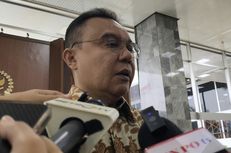
A similar view was expressed by Sarifuddin Sudding, a member of Commission III of the House of Representatives from the National Mandate Party (PAN).
He believes that the Supreme Court's cassation ruling No. 742 K/TUN/2026 is the highest decision in this case and has become final and binding.
"This has gone through a final decision from the Supreme Court. I think it’s the highest institutional decision, and it is indeed conclusive," Sudding told Kompas.com.
Sudding also argued that Gibran should not wait for another legal process to decide on his diploma controversy.
He remarked that the matter has already gone through a lengthy process.
Constitutional law expert from Gadjah Mada University (UGM) Herlambang Wiratraman explained that the rulings from both the Constitutional Court and the Supreme Court limit the legal avenues available to Gibran.
He stated that seeking a judicial review of the Supreme Court's ruling is not a mechanism that can be initiated casually.
Strict requirements must be met, including legal grounds that can justify the request for a judicial review.
"Judicial reviews also have strict requirements. Gibran cannot just declare he will go to the Ministry of Education to seek a judicial review," Herlambang stated when contacted by Kompas.com on Wednesday (11/11/2026).
According to Herlambang, another issue is the timing for presenting evidence.
The educational documents that Gibran claims he will present should have been submitted during the court proceedings.
He believes it is inappropriate for evidence that should have been presented initially to instead be sought after the case has progressed through various judicial levels up to the Supreme Court.
"Thus, it cannot be invented by the Ministry of Education, and certainly, Gibran should have provided evidence from the beginning, not just during the processes that have already taken place from the bottom to the Supreme Court," he elaborated.
Another issue that requires attention is Gibran's plan to pursue the PTUN route again.
This move is viewed as not necessarily restoring the status of the annulled equivalency certificate as decided by the Supreme Court.
Constitutional law expert Margarito Kamis argued that Gibran's attempt to revalidate his educational documents through the PTUN is misguided if his goal is to amend the legal implications of the Supreme Court's ruling.
He contended that even if Gibran possesses valid and complete educational documents, their existence does not automatically negate the effects of the Supreme Court’s ruling No. 742 K/TUN/2026.
"Even if he has valid documents, it does not change the Supreme Court's decision that has already been issued," Margarito stated during a Newsroom Talk event on Kompas.com on Tuesday (10/11/2026).
He explained that, under administrative law, a state administrative decision can be annulled if there was a material error at the time the decision was made.
Thus, issues already decided by the Supreme Court cannot simply be reinstated through filing a new lawsuit accompanied by additional documents.
"Why is that? In administrative law, a state administrative decision can be annulled due to a material error when that decision was made," he noted.
Meanwhile, Herlambang also raised questions regarding the object of the lawsuit Gibran intends to file again.
If the lawsuit still pertains to the equivalency certificate, its substance could risk duplicating the case already ruled on by the Supreme Court.
"If it’s still related to the certificate, then it certainly repeats what has already been decided by the Supreme Court, or the object itself may no longer exist," asserted Herlambang.
Herlambang opined that Gibran faces two choices if he finds no way to resolve this issue through legal means: to resign or to confront impeachment proceedings.
In his view, resignation is an option that can be pursued through constitutional mechanisms as regulated in Article 8, Paragraph (2) of the 1945 Constitution.
"I believe resigning is far better so that the constitutional energies are not drained over the issue of a vice president who failed to validate his diploma," said Herlambang.
He reiterated that Gibran's resignation could spare the country from an impeachment process that may drain political and constitutional energy.
"It’s better for Gibran to resign than go through an impeachment that will exhaust political and constitutional energies, especially as Indonesia is facing many other fundamental issues," he noted.
If Gibran chooses not to resign, impeachment procedures must follow the constitutionally mandated processes.
Herlambang explained that this process begins in the House of Representatives, followed by testing by the Constitutional Court, with the final decision resting with the People's Consultative Assembly (MPR).
Meanwhile, if there is a vacancy in the vice presidency due to resignation, Article 8, Paragraph (2) of the 1945 Constitution states that the president must propose two vice presidential candidates to the MPR.
Both candidates should come from party or coalition party groups that nominated the elected presidential and vice presidential pair in the previous election.
Furthermore, the MPR must hold a plenary session no later than 60 days after the vacancy occurs to select one of the two candidates proposed by the president.
Apart from whether Gibran will resign or face impeachment, Herlambang emphasized that the issue of the validity of educational documents and the vice presidential nomination process should not conclude with Gibran's position.
According to him, the House of Representatives needs to follow up on findings from the rulings of the Constitutional Court and the Supreme Court, particularly regarding the parties involved in the process that allowed Gibran to be a vice presidential candidate.
He believes there may be criminal elements if individuals are found complicit in actions related to electoral offenses.
"Even if Gibran resigns, the DPR is expected not to remain silent about the findings in the rulings of the MK and MA, particularly about the involvement of those who facilitated Gibran’s candidacy, as this could very well constitute criminal acts associated with electoral wrongdoing," Herlambang warned.
For this reason, he urged the DPR to persist in questioning the electoral process, including the performance of the Election Commission (KPU).
The law enforcement institutions are also urged to take action if criminal elements are discovered.
"This means the DPR must continue to question and law enforcement agencies must act if any elements of criminality are found," he stated.
Herlambang underscored that Gibran’s resignation should not serve as a reason to halt investigations into alleged issues within the nomination process and electoral conduct.