

President Prabowo Reports Rp 480 Trillion Leak in State Budget
-
News
-
24 minutes ago
This article was translated by AI. Read the original article on Kompas.com. See Original
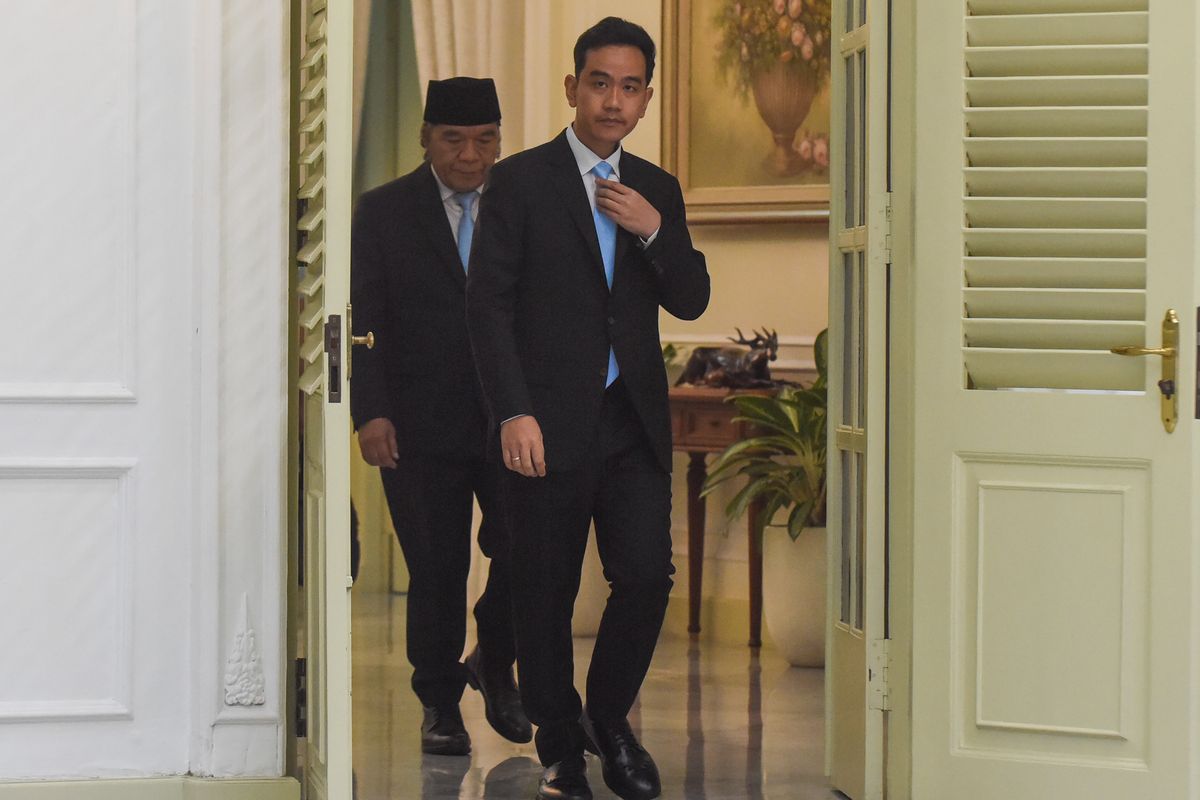
RESIGNATION of the Vice President should not be understood as an automatic solution to end all constitutional issues. Such a resignation does not absolve them of their constitutional responsibilities.
It is essential to distinguish between leaving the position and accounting for the use of that position.
Gibran Rakabuming Raka might resign administratively. However, the constitutional questions regarding their behavior, actions, and responsibilities while in office as Vice President do not simply vanish with their resignation.
The context of Gibran's potential resignation cannot be detached from the diploma case, which has been ruled on by two judicial bodies, the Constitutional Court and the Supreme Court.
Proceedings in the Constitutional Court and the Supreme Court represent judicial accountability, while resigning from the vice presidency involves constitutional accountability.
Of course, the distinction between judicial accountability and constitutional accountability is crucial. Each has its own subject matter, scope, and consequences.
The court examines issues based on the law and its judicial authority. In contrast, constitutional accountability pertains to the adherence of public office holders to the constitution, the oath of office, the ethics of public power, and their responsibility in executing state mandates.
Supreme Court decisions, if related to the context of a resignation, must be viewed within the confines of its authority. Supreme Court rulings do not equate to impeachment decisions.
The Supreme Court is not the body responsible for delivering constitutional judgments on the Parliament's opinion regarding the removal of a President or Vice President, as per the mechanism outlined in Article 7B of the 1945 Constitution. That function resides with the Constitutional Court.
Therefore, it is inaccurate to consider an ordinary court ruling as having resolved all constitutional issues surrounding a Vice President's resignation.
The issue of a Vice President's resignation is not solely whether an individual is guilty or not according to a court ruling. The matter is much broader than that.
It requires evidence as to whether there are actions or circumstances that impact the constitutional legitimacy of the position previously held.
Has the oath of office been fulfilled? Have the constitutional requirements been met? Are there actions that need to be explained to the legislature and the public?
Questions like these cannot be answered through judicial rulings; rather, they necessitate constitutional decisions, and the forum should not be judicial but a political-constitutional forum.
Thus, if the Vice President opts to resign amidst issues that carry constitutional dimensions, there needs to be a transparent state accountability forum.