
Witness Denies Money Transfer from Don Ritto Law Office to Febrie Adriansyah
-
News
-
10 minutes ago
This article was translated by AI. Read the original article on Kompas.com. See Original
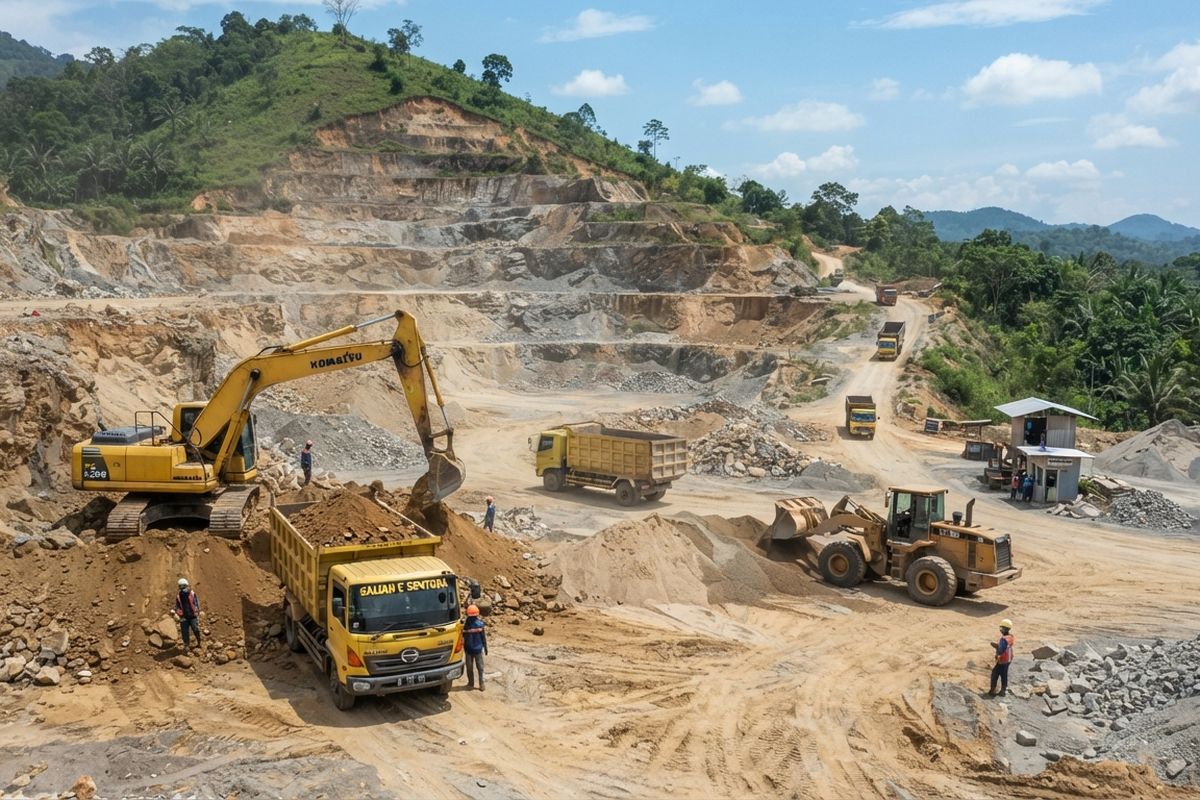
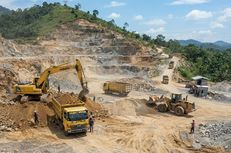
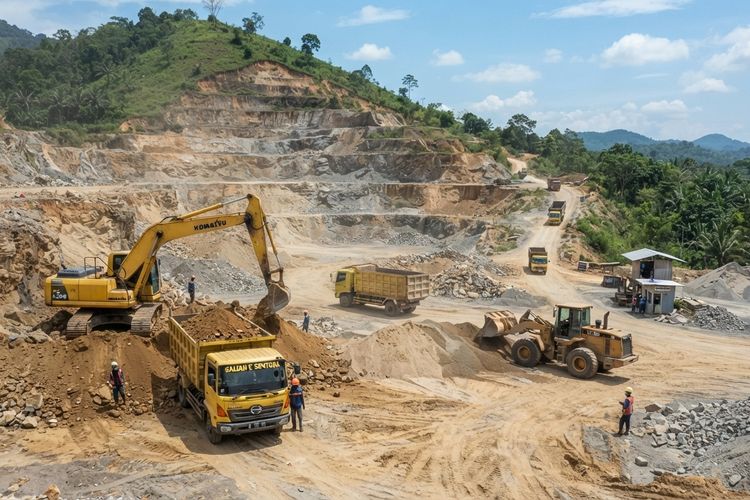
JAKARTA, KOMPAS.com - The management of natural resources in the regions is once again catching the government's attention. This time, the authority for permits related to mineral extraction (galian C), specifically sand and gravel (sirtu), which has been at the provincial level, is likely to be returned to the regency/city governments.
This plan is being prepared by the Minister of Energy and Mineral Resources (ESDM) Bahlil Lahadalia to expedite the handling of significant flood and landslide impacts that struck several areas in Sumatra in November 2025.
Sand and gravel material accumulating in rivers will be utilized to support normalization efforts while also opening opportunities for cooperation with third parties.
However, this discourse is not merely about hastening disaster response.
The transfer of authority also reignites debates regarding the effectiveness of decentralization, the capacity of local governments to manage natural resources, and the potential for increasing locally generated revenue (PAD).
The return of authority to the regency/city governments does not automatically resolve issues.
Challenges such as limited human resources, differing fiscal capacities, and the risk of permit misuse must be taken into consideration.
So, will returning the authority for galian C permits to regency/city governments serve as a solution for expediting services and enhancing PAD, or will it instead create new problems in the oversight of local mining?
Professor Djohermansyah Djohan from the Institute of Home Affairs (IPDN) argues that, from a decentralization perspective, the authority for managing galian C is indeed more appropriately placed at the regency/city level.
Djohermansyah notes that the division of governance responsibilities among central, provincial, and regency/city governments should consider the complexity and capacity of each level of government.
High-tech issues requiring specialized human resources and significant financing can be managed by the central government.
In contrast, matters with moderate complexity can fall under provincial authority.
Meanwhile, relatively simple matters that directly impact daily community needs should be handled by regency/city governments.
"If we are just talking about galian C, which relates to sirtu, sand, and gravel, that's a relatively light issue in mining. So why should that be managed by the central or provincial government?" Djohermansyah said during a call with KOMPAS.com on Tuesday (10/11/2026).
He argues that managing sand and gravel does not necessitate the technology and expertise required for oil and natural gas management.
Therefore, regency/city governments are believed to have the capacity to handle permits, manage the utilization of materials, and collaborate with third parties.
Beyond the complexity of issues, Djohermansyah explains that returning this authority aligns with the principle of externality in governance.
This principle refers to the government entities or regions most affected by a certain issue.
In the context of galian C, the regency/city communities are the parties most directly impacted by the extraction of sand and gravel, including river sedimentation that can trigger environmental problems or disasters.
"So, externality refers to who is most directly affected by the issue. If sand and gravel are involved, for example, in Aceh, rivers are getting blocked by sand and gravel. Those are the people directly affected, the communities in the regency," he stated.
Djohermansyah believes the proximity of regency/city governments to mining locations or rivers also allows for more direct supervision.
Conversely, provincial governments oversee a broader region, making it more challenging to monitor material extraction activities in every area.
He even suggests that this return of authority should not just be for regency/city governments affected by disasters in Sumatra.
According to him, disaster moments should be viewed as opportunities to evaluate the division of authority more comprehensively.
"Therefore, my advice is to take advantage of this momentum and return the management of government affairs in galian C or sirtu to regency/city governments," Djohermansyah said.
Djohermansyah also reminds us that the authority for managing galian C at the regency/city level is not new in Indonesia's governance history.
He explains that the management of sand and gravel used to fall under the jurisdiction of local governments, even from the colonial period through to the New Order era.
However, this division should change after the government restructured mining issues through the Law on Minerals and Coal (Minerba).
The authority for managing mining, previously scattered among regions, was then centralized to the central government.
Subsequently, some permit authority was delegated back to provincial governments.
Djohermansyah believes this change has led to challenges in overseeing and addressing mining activities that are located across various regency/city areas.
In his view, both provincial and central governments do not always have teams that are close enough to the site to conduct direct supervision.
"The provincial government is far away, but the regency government is nearby, with the river right there, allowing for direct control and visibility," he said.
He also highlighted bureaucratic concerns.
According to him, managing galian C at the central or provincial level requires bureaucratic support that must reach out to the regency/city areas.
Meanwhile, regency/city governments are considered better positioned to provide guidance and oversight through existing regional offices.
"Regency/city governments already have mining departments. At the regency level, they can have their own apparatus, making it more streamlined. The equipment, development, and supervision do not require overly sophisticated technology," he said.
Thus, he considers the return of galian C authority to regency/city governments is not just a response to disasters but also an essential part of evaluating decentralization in governance.
From a benefits perspective, Executive Director of the Regional Autonomy Implementation Monitoring Committee (KPPOD), Herman Nurcahyadi Suparman, or Armand, sees at least three advantages if the authority for galian C permits is returned to the regency/city level.
First, it allows for faster service and recovery after disasters.
The proximity of regency/city governments to disaster locations, river conditions, and community needs facilitates a quicker decision-making process.
In the context of river normalization, local governments can more easily coordinate the utilization of sediment materials, including sand and gravel that have accumulated.
Thus, bureaucratic chains that previously had to go through provincial governments can be shortened.
Second, it strengthens the fiscal capacity of the region. Regency/city governments can utilize the potential of sand and gravel through cooperation with third parties to generate additional regional revenues.
This aligns with the remarks from Minister of Home Affairs Tito Karnavian, who stated that materials from river normalization can be used for development, while some proceeds from cooperation can contribute to PAD.
Third, it enhances the accountability of local governments.
According to Armand, regency/city governments are closer to the communities, allowing for the utilization of river materials to better meet developmental needs and local conditions.
"Because regency/city governments are closer to disaster areas, river conditions, for instance, and also community needs," Armand said when contacted by Kompas.com on Wednesday (11/11/2026).
However, Armand warns that these benefits will only be realized if local governments maintain good governance and can account for every material utilization process.
Behind the opportunities for increasing PAD, returning the authority for galian C permits also poses significant risks.
Armand identifies the main issue to anticipate as the capacity for guidance and supervision within regency/city governments.
This is because the capacity of each area varies.
Some regions have adequate human resources and fiscal capacity, while others still struggle to manage mining affairs.
One risk to be vigilant about is the emergence of rent-seeking practices between local governments and third parties given the opportunity to manage sand and gravel materials.
"We must not let that lead to rents between local governments and, for instance, third parties," Armand remarked.
He emphasizes that sediment utilization partnerships must be conducted transparently and accountably.
Local governments also need to ensure that river material utilization is not solely pursued for revenue but remains focused on the primary goals of normalization and environmental sustainability.
Armand adds that the potential for increasing PAD from galian C management cannot be generalized across all regencies/cities.
The level of revenue will greatly depend on the natural resource potential of each region and the quality of its mining governance.
Consequently, he advocates for utilizing digital platforms to enhance transparency and community oversight.
"We hope, for example, to use digital platforms so that community oversight can be visible, including the community being able to see how much revenue potential exists from related sectors, including galian C," he stated.
With a transparent system, communities are expected to be informed of the potential for regional revenue while also monitoring how sand and gravel materials are managed.
Another issue of concern for KPPOD is the disparity in capacity among regions.
Armand revealed that based on data from the Ministry of Home Affairs cited by KPPOD, around 90 percent of regions, particularly regencies/cities, still have low fiscal capacity.
This condition affects local governments' abilities to provide civil servant personnel (ASN) with the competence to manage and oversee mining activities.
In his view, returning authority without strengthening regional capacity may create new problems.
Because the authority for permits not only pertains to issuing licenses but also encompasses guidance, supervision, and control of mining activities.
"This presents a challenge for regency/city governments. It must also be supported by monitoring capabilities from local apparatus," Armand emphasized.
Thus, the government needs to prepare adequate mechanisms for guidance and supervision before broadly transferring this authority.
Strengthening apparatus capacity, ensuring permit transparency, and monitoring cooperation with third parties are some aspects that need attention.