
Microsoft Indonesia Supports Copyright Law to Promote Innovation in the Creative Industry Sector
-
News
-
19 minutes ago
This article was translated by AI. Read the original article on Kompas.com. See Original
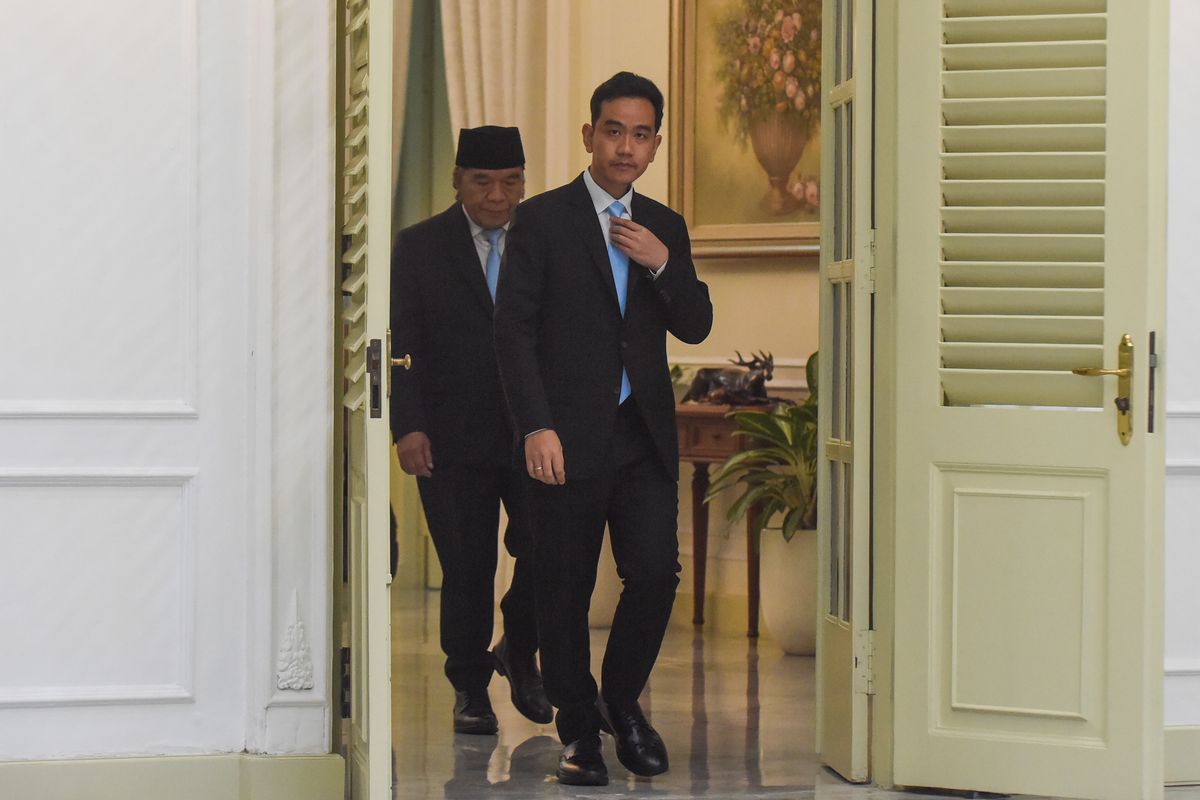
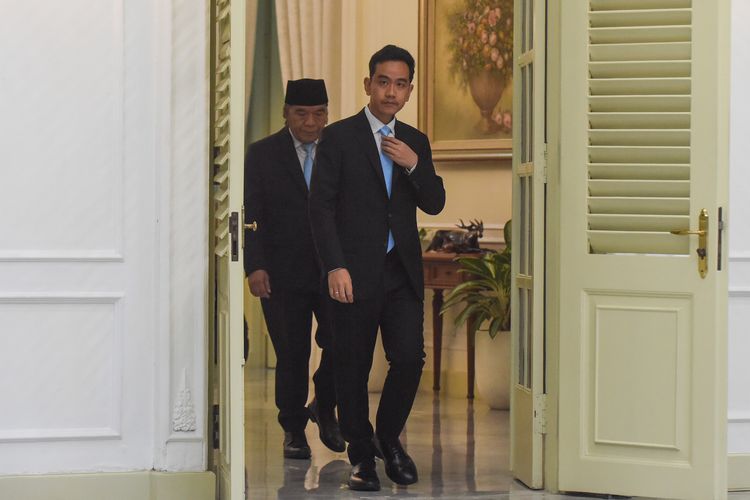
DISCOURSE on the resignation of Vice President Gibran Rakabuming Raka amidst the controversy surrounding educational requirements and judicial decisions is not merely an issue pertaining to the political future of a vice president.
This presents a serious test for the ethics of power, constitutional responsibility, and the maturity of Indonesia's democracy.
If the intention to resign is genuinely realized, I see it potentially bringing about several positive impacts on our state governance. Indeed, its benefits could extend to the regions.
The fundamental issue at stake is not just who holds the position, but how an official can be held accountable for their eligibility under the law, the constitution, and the people.
In democracy, the courage to retain a position is certainly necessary. However, the courage to relinquish a position when serious questions about legitimacy and eligibility arise is far more crucial. Positions should not be maintained at the cost of the honor of state institutions.
In a democracy, public office is not a personal right to be retained by any means necessary.
Office is a mandate acquired through constitutional mechanisms and must be administered according to legal requirements.
Therefore, when serious issues regarding the fulfillment of qualifications to hold an office arise, an official should have the courage to evaluate themselves.
Power should not be used as a shield to evade accountability.
This is where resignation can become an honorable option. There is no need to wait for political pressure to escalate, prolonged institutional conflict, or impeachment processes that could drain national energies.
An official willing to step down when facing fundamental issues regarding their eligibility for office demonstrates a chivalrous attitude. They prioritize institutional and national interests over their personal power.
For Gibran, if the resignation is executed consciously and responsibly, that step can preserve his honor and help quell the national controversy.
Resigning does not mean ending a political journey. The door to return to the political sphere remains open as long as the individual meets all applicable requirements.
It should be emphasized that resignation is not an automatic admission of legal violations.
Whether or not violations have occurred must still be resolved through established legal mechanisms.
However, ethically, the willingness to relinquish office in the face of serious issues represents a form of responsibility for a public official.
There is one impact that I find particularly significant—regarding regional governance.
Indonesia has 546 autonomous regions consisting of provinces, regencies, and cities. Among them, there are regional heads and deputy heads who receive mandates through elections to govern and serve the public.
What happens if, after their appointment, serious issues are later discovered regarding the qualifications of a regional head or deputy head?
For example, concerning diplomas, age limits, citizenship status, or the use of invalid documents as eligibility requirements.
Should these officials be forced to maintain their positions until a political struggle occurs in the regional parliament or through a long removal process?
In my view, it shouldn't be this way.
If Gibran truly opts to resign as a form of ethical accountability regarding his eligibility for office, that action could establish a moral and political precedent for officials in the regions.
The message is clear: when fundamental issues regarding position qualifications arise, an official must be courageous enough to take responsibility rather than hide behind power.
Indeed, legally, a vice president's resignation does not automatically create a binding legal precedent for regional heads.
Law No. 23 of 2014 on Regional Government has established the mechanisms for the dismissal of regional heads and deputy heads, particularly in cases where it is proven they have used false documentation or statements as eligibility requirements.
Nevertheless, the moral and political precedent remains significant. Regional heads and deputy heads must adhere to the same integrity standards as national officials.
We must not allow central officials to be held accountable while regional officials feel they can hide behind their positions and political power.
We need a governance tradition that upholds personal responsibility. Office should not be a refuge from legal issues but a trust that requires accountability.
Thus, voluntary resignation can be a more dignified resolution as long as it is done legally and not intended to evade accountability for past wrongs.
Another impact is the opportunity to end national political turmoil.
The controversy surrounding Gibran has consumed public attention and national political energy. If this issue continues to linger, the government risks losing focus on its development agenda.
After all, the people need a functioning government, not political elites endlessly entrapped in conflicts over the legitimacy of positions.
In such a situation, voluntary resignation could serve as a simpler and more dignified exit than maintaining an ongoing political conflict.
We can learn from President Soeharto's resignation on May 21, 1998. As political pressures and legitimacy crises intensified, Soeharto ultimately declared his resignation. This event became a pivotal moment in Indonesia's reform journey.
Of course, constitutionally, the resignation of the president and vice president follows different mechanisms.
However, there are relevant political lessons: when the sustainability of a position heightens a trust crisis, the courage to release that position may help preserve greater interests.
From a constitutional perspective, a vice president's resignation would not create a vacancy in the succession mechanism.
Article 8 paragraph (2) of the 1945 Constitution clearly states that if there is a vacancy in the vice presidency, the MPR must hold a session to choose a vice president from two candidates proposed by the president within 60 days.
This means the constitution has provided a path forward. The president proposes two names while the MPR selects one of them. Thus, filling the position does not rely on unilateral appointments by the president.
It should also be distinguished that voluntary resignation is not impeachment. Resignation is an official's decision to relinquish their position, while impeachment is a removal process governed by constitutional mechanisms involving the DPR, the Constitutional Court, and the MPR.
This moment can also open up opportunities for a vice president with competence, integrity, leadership capacity, and the ability to collaborate with the president in a presidential system of governance.
Successions should not merely become an arena for compromise and power-sharing among political factions. National interests must be placed above coalition interests and political dynasties.
Gibran's issue indeed provides important lessons about the quality of democracy and our national leadership recruitment system.
So far, the process of nominating public officials has often emphasized the strength of political support, popularity, and networks of power.
Meanwhile, the verification of administrative and substantive requirements should have been the first hurdle that is non-negotiable.
We must not allow the nation to only start questioning the eligibility of an official after they have been appointed and executed power.
Fundamental issues such as diplomas, age, citizenship, and other requirements must be strictly checked from the beginning.
Therefore, the KPU, Bawaslu, political parties, and all related institutions must strengthen the candidate verification process. Do not allow administrative gaps or supervisory weaknesses to become sources of constitutional issues later on.
Democracy must not only bring leaders to power through votes. It must also ensure that those elected genuinely meet the qualifications to lead.
Electoral victory should not serve as justification for ignoring legal requirements.
Ultimately, I believe that resigning is not a defeat if done to uphold the honor of the position and the interests of the nation.
Conversely, maintaining a position while disregarding fundamental issues of eligibility risks undermining public trust in state institutions.
We need to build a new political tradition: public officials must not only be brave enough to seize power, but they must also be brave enough to relinquish it when serious questions arise regarding their legitimacy and eligibility.
Let not the position be more important than honor, power more valuable than responsibility, and personal interests prioritized over national interests.
For in a democracy, the honor of a leader is measured not by how long they can cling to power, but by how courageously they can account for their mandate, including the bravery to resign when their position becomes a source of problems for the nation and state.