
Yusril on Gibran's Effort to Validate Diploma in PTUN: It's Pointless, MA Decision is Final
-
News
-
Just now
This article was translated by AI. Read the original article on Kompas.com. See Original
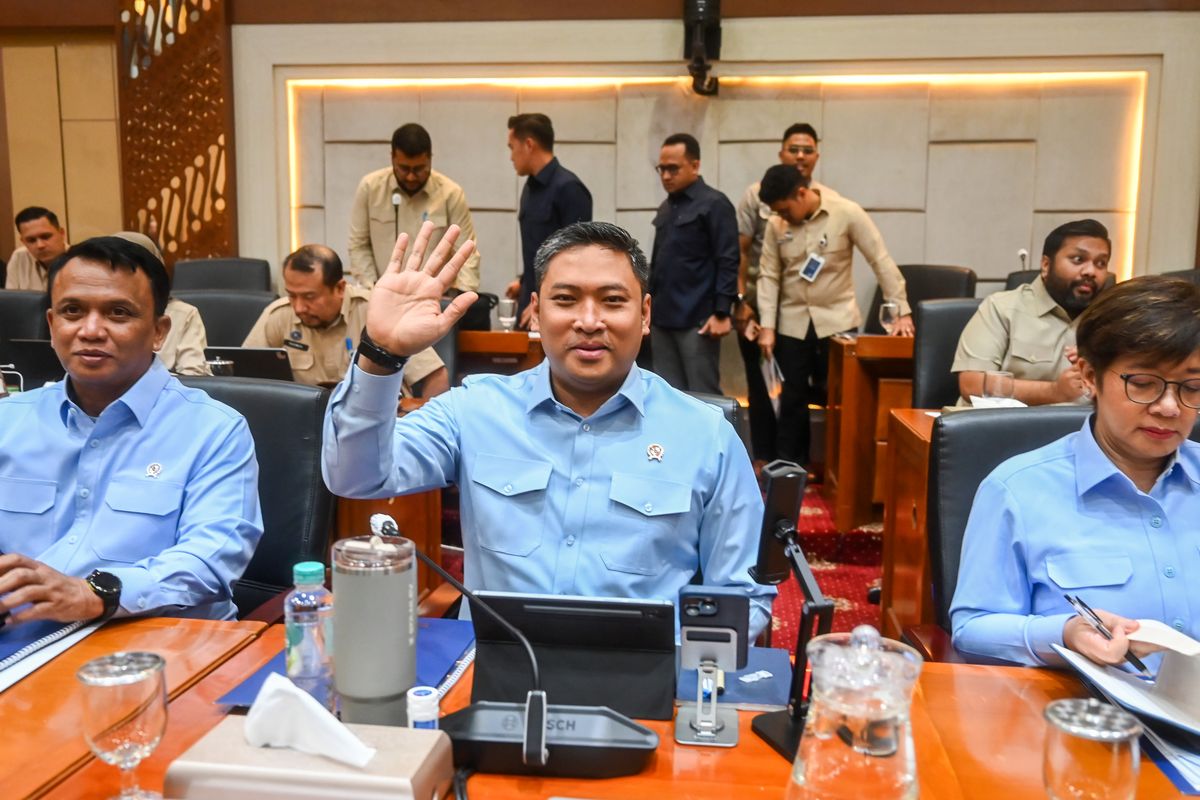
THE SIZE of the budget for the Free Nutritious Meal (MBG) program certainly demands more than just the central government's capability to expand the reach of beneficiaries.
This national strategic program also requires governance that can ensure target accuracy, service quality, sustainable funding, and involvement from local governments. This raises questions about the urgency of our fiscal incentives.
In 2027, the National Nutrition Agency (BGN) allocated approximately IDR 232.5 trillion for the MBG program, targeting 72.46 million beneficiaries.
The total budget ceiling for the BGN reached IDR 240.2 trillion, after being adjusted from the initial indicative ceiling of IDR 270.2 trillion.
This large allocation demonstrates that MBG is no longer just a program to meet nutritional needs, but rather one of the government’s largest fiscal and social interventions. (BGN Public Relations, 2026)
Meanwhile, throughout 2026, the realization of the MBG budget has reached IDR 139.77 trillion as of September 16, or about 63.89 percent of the ceiling of IDR 218.77 trillion.
In terms of coverage, the number of beneficiaries as of August 31, 2026, reached 56.99 million people or approximately 76.45 percent of the target of 74.50 million people.
This figure indicates progress in budget absorption and expansion of reach.
However, the success of the program should not be solely measured by the amount of budget spent or the number of beneficiaries reached. (BGN Public Relations, 2026)
Moreover, considering recent developments, the National Nutrition Agency (BGN) launched the MBG 2.0 transformation on October 29, 2026, under the leadership of BGN Head, Sudaryono.
This transformation marks a new chapter in the implementation of the MBG program through several fundamental improvements, particularly in three main priorities: combating corruption, strengthening governance and oversight, and enhancing transparency and collaboration.
We also need to pay attention to the discourse surrounding a fiscal incentive of IDR 1 trillion to outstanding local governments through the Ministry of Home Affairs.
However, it should be clarified from the start that this figure is not a budget specifically allocated for the Free Nutritious Meal (MBG) Program, nor is it a reward for the regions deemed most successful in implementing MBG.
The Head of the National Nutrition Agency (BGN), Sudaryono, confirmed that the IDR 1 trillion is the total ceiling for fiscal incentives provided by the Ministry of Home Affairs based on various indicators of regional development performance.
The MBG will only become one additional parameter in that assessment starting next year.
To date, assessments of regional performance relate to the ability to control inflation, reduce poverty, and lower unemployment rates.
Thus, integrating MBG into the assessment criteria is essentially not about forming a new exclusive incentive scheme for one program, but rather expanding the evaluation dimensions of regional government performance.
The core issue is no longer whether or not MBG is an indicator, but how that indicator is developed, measured, verified, and proportionately positioned within the overall assessment framework of regional performance.
Once again, the issue of institutional arrangement remains unresolved. Presidential Regulation No. 115 of 2025 on the Governance of the Free Nutritious Meal Program has actually provided quite clear legal grounding regarding the role of local governments.