

BNPB: 5,940 Families Affected by Flooding in Bandung City
-
News
-
2 minutes ago
This article was translated by AI. Read the original article on Kompas.com. See Original
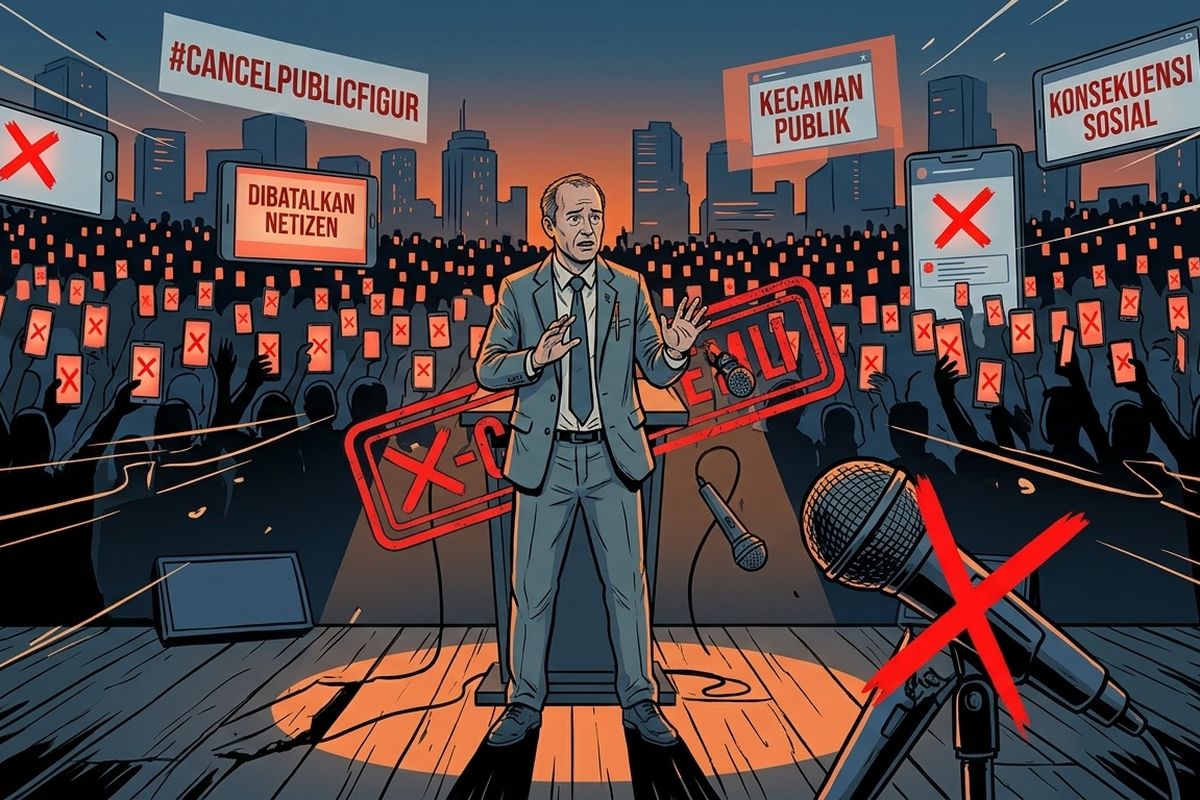
JAKARTA, KOMPAS.com - The phenomenon of cancel culture is increasingly prevalent on social media as public figures are seen exhibiting attitudes or behaviors that clash with societal concerns.
The public responds to these differing perceptions by withdrawing support and demanding the cancellation of the individual's involvement in an event.
This phenomenon was notably experienced by celebrity and Special Presidential Envoy for Youth Development and Arts, Raffi Ahmad.
His presence at the Youth Pledge Declaration event with the Metro Jaya Police at Bundaran HI, Central Jakarta, on Thursday (29/10/2026) drew scrutiny after allegations surfaced suggesting that the attendees were not students as introduced.
The wave of criticism continued with the cancellation of Raffi's invitation to the GSI Youth Fest scheduled for November 8, 2026, at Manahan Stadium, Solo. More recently, cancel culture has expanded to threats of a boycott against RANS Carnival at Maguwoharjo Stadium, Sleman, Yogyakarta.
Why is cancel culture increasingly emerging as a form of public expression?
Sociologist from Gadjah Mada University (UGM), Abe Widyanta, believes that cancel culture targeting public figures is a manifestation of societal structural anger.
Cyberspace has become a battleground when formal democratic channels, such as parliaments, state institutions, and the judiciary, are clogged or co-opted by oligarchies and alliances of power and business. Consequently, society loses space to articulate politically.
"It is not surprising that cyberspace ultimately becomes a battleground for social classes in society," Abe told Kompas.com on Thursday (5/11/2026).
Abe views public figures like Raffi Ahmad as often being seen as representatives of a privileged class or capital agents perpetuating the status quo.
Similarly, Maudy Ayunda faced public criticism regarding the mindfulness she shared in a video post while avoiding negative news surrounding Indonesia.
"The public is not just angry at the individual; they're angry at the power structure and the accumulation of capital that facilitates them (the elites and corporations)," Abe stated.
Abe noted that, sociologically, such boycott actions are a form of bottom-up social control.
In the era of cyberspace, cancel culture democratizes that social control.
"This type of bottom-up social control has a significant impact on capitalist elites. The reputation, sponsorship, and market value of such celebrities are at risk," Abe elaborated.