Prabowo's Praise for the New Police Chief...
-
News
-
Just now
This article was translated by AI. Read the original article on Kompas.com. See Original
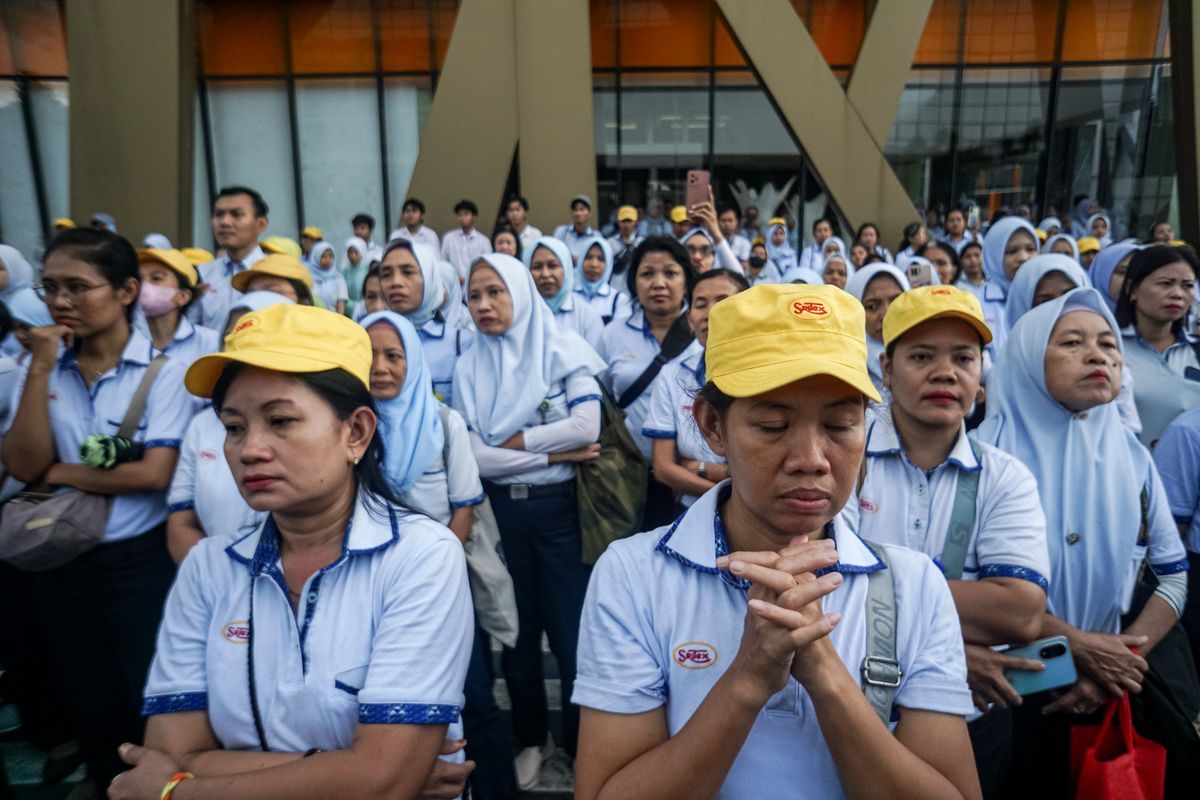
JAKARTA, KOMPAS.com - Law Number 27 of 2026 concerning Employment Protection officially mandates that companies, the government, and labor unions must work to prevent layoffs.
"Employers, workers/laborers, labor unions, the central government, and local governments, by all means, must prevent the occurrence of layoffs," states Article 228, paragraph (1) of the Employment Protection Law, which was sourced from the Legal Documentation and Information Network (JDIH) of the Ministry of State Secretariat on Friday (6/11/2026).
Furthermore, Article 228, paragraph (2) of the Employment Protection Law outlines ten steps to prevent layoffs, including:
If layoffs are unavoidable, the termination of employment must occur through bipartite negotiations aimed at reaching a consensus between the employer and the labor unions or workers.
"If bipartite negotiations as intended in paragraph (3) do not reach an agreement, then the employer and workers/laborers or labor unions settle disputes over layoffs through industrial relations dispute resolution procedures in accordance with legal regulations," states Article 228, paragraph (5) of the Employment Protection Law.
"Termination of employment without an agreement or a decision from the industrial relations dispute resolution body that has permanent legal force shall be deemed null and void, and the employer is obliged to re-employ the affected worker/laborer," states Article 228, paragraph (7) of the Employment Protection Law.
Additionally, the Employment Protection Law regulates severance pay for workers who experience layoffs.
"In the event of a layoff, the employer is obliged to pay severance pay and/or long service award and compensation for rights that should have been received based on the multiplication factors according to the reasons for the layoff," states Article 232, paragraph 1 of the Employment Protection Law.
Severance payment is based on the length of service of the worker before the layoff, as stipulated in Article 232, paragraph (2) of the Employment Protection Law.
"Severance pay as intended in paragraph (1) shall be given with at least the following provisions: