

In One Year, Police Reveal 56,203 Drug Cases and Seize 601.74 Tons of Evidence
-
News
-
1 minute ago
This article was translated by AI. Read the original article on Kompas.com. See Original
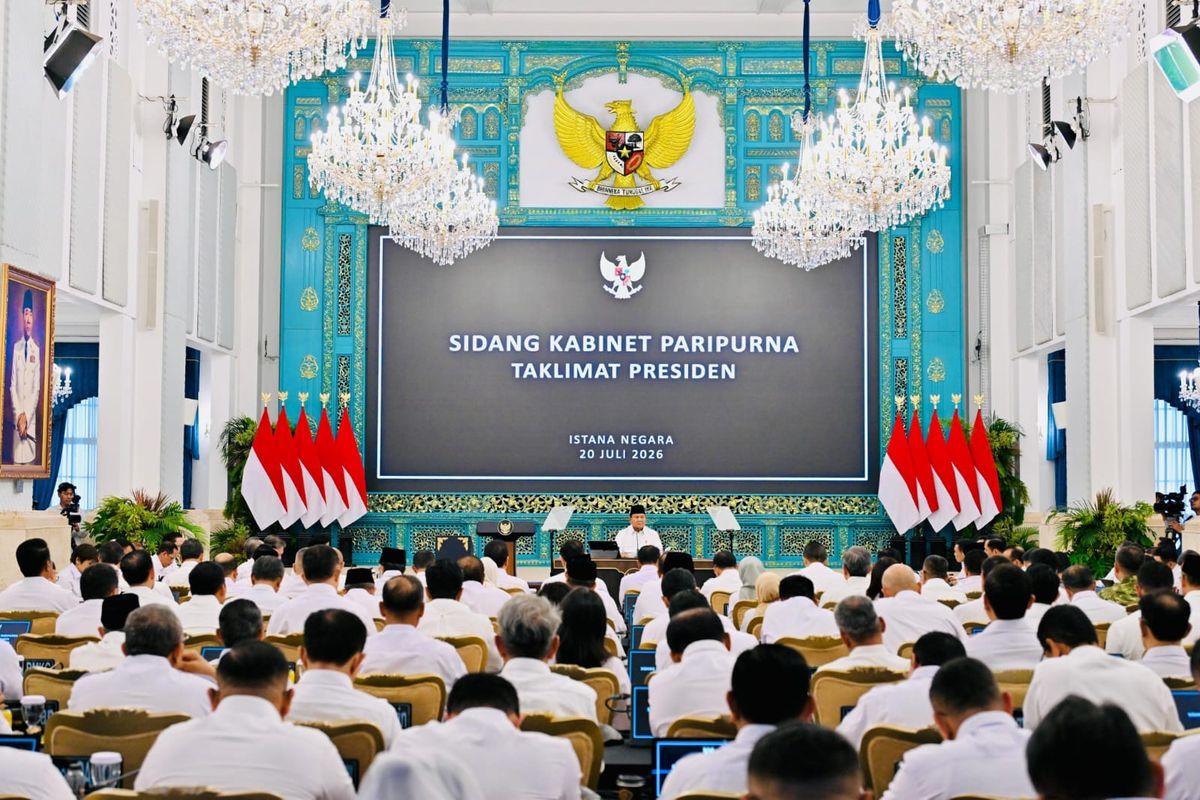
REVELATION of alleged surveillance of President Prabowo Subianto by several high-ranking police officers has shocked the public.
On November 3, 2026, the Indonesian National Police’s Criminal Investigation Agency (Bareskrim) reportedly named three suspects with the initials LSP, ASN, and EH in the case of illegal surveillance against the president, state officials, political figures, civil society organizations, media, and entrepreneurs.
One of the suspects, LSP, is said to have held strategic positions within the police and government.
According to circulating information, the alleged surveillance occurred throughout 2025-2026, using a system of eavesdropping without the necessary legal procedures.
Although legal proceedings are ongoing and the presumption of innocence must be respected, this case raises fundamental questions: how could the communication of the head of state possibly be targeted for surveillance by the very apparatus responsible for maintaining national security?
In fact, Indonesian presidents are not strangers to becoming targets of surveillance. In November 2013, the public was stunned by the revelation of intelligence documents showing that Australian intelligence had monitored the phone communications of President Susilo Bambang Yudhoyono (SBY), First Lady Ani Yudhoyono, and several high-ranking Indonesian officials in 2009.
This disclosure led to serious diplomatic tensions between Jakarta and Canberra.
The Indonesian government recalled its ambassador from Australia and temporarily halted various defense and intelligence cooperation agreements.
This incident highlighted that surveillance of a head of state is not merely a privacy issue, but can also impact diplomatic relations between countries.
Long before that, the United States was rocked by the Watergate scandal. This began on June 17, 1972, when five individuals were arrested for breaking into the headquarters of the Democratic National Committee at the Watergate complex in Washington, D.C.
They had connections to the reelection campaign of President Richard Nixon.
Subsequent investigations revealed the involvement of Nixon's inner circle and attempts to cover up the crime. The escalating political crisis ultimately forced Nixon to resign on August 9, 1974.
These three events have different contexts. Watergate is related to the abuse of power for domestic political gain.
The surveillance of SBY involved foreign intelligence activities that affected diplomatic relations.
Meanwhile, the alleged surveillance of President Prabowo concerns potential abuse of authority by state security apparatus.
Yet, all three illustrate the same issue: the misuse of surveillance capabilities can threaten information security, trust in state institutions, and political stability.
In international relations studies, intelligence is one of the instruments of state power. States seek to obtain information regarding military capacities, political policies, economic strategies, and the interests of other states to support decision-making.
From the realist perspective articulated by Hans J. Morgenthau, states consistently strive to protect their national interests amid an international system lacking a supreme authority to guarantee the security of each state.
Thus, gathering strategic information becomes an essential tool in international relations.
However, national security interests do not automatically justify all forms of surveillance. Legality, authority, and oversight remain fundamental principles, especially in democratic states.