
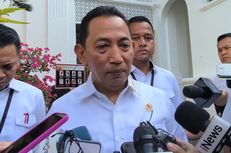
Coup Motive of Listyo Sigit Suspected to Retain the Kapolri Position: How Logical Is It?
-
News
-
Just now
This article was translated by AI. Read the original article on Kompas.com. See Original

JAKARTA, KOMPAS.com - The Executive Director of Amnesty International Indonesia, Usman Hamid, stated that the Draft Law on Interception (RUU Penyadapan) needs to be expedited and aligned with Human Rights standards.
He emphasized that this legislation must be prioritized to prevent instances like the interception of President Prabowo Subianto by his own subordinates: former National Police Chief General Listyo Sigit Prabowo, Head of the Legal Division of the National Police Inspector General Ahrie Sonta, and Senior Police Instructor Inspector General Eko Hadi Santoso.
"All these steps must be taken immediately to ensure that civil society can operate in an environment free from the fear of unlawful surveillance by the authorities," Usman stated in a press release on Thursday (5/11/2026).
Usman outlined several key considerations for the Draft Law on Interception.
First, it must ensure that every interception is subject to judicial authority. Second, there must be clear procedural protections.
Third, execution must be transparent. Fourth, there should be strong layered oversight.
"Without these measures, illegal interceptions could occur again to silence opposition," he added.
In addition to issues related to interception legislation, he urged the police and other state institutions with interception authority to exercise restraint.
He insisted that the use of technology should be carefully regulated until sufficient protections are in place to prevent abuses.
"A moratorium on the use of Pegasus spyware by the police and BSSN must be implemented immediately until there is a Human Rights-compliant Interception Law," he stated.
This call was echoed by Gurnadi Ridwan, a researcher from the National Secretariat of the Indonesian Budget Transparency Forum (Seknas FITRA).
The Interception Law is deemed essential to ensure a comprehensive legal framework for all state agencies authorized to conduct surveillance.
This includes stipulations regarding limits of authority, authorization procedures and mechanisms, and independent oversight.
"As well as mechanisms for complaints and redress for victims of arbitrary intercepts," he said.
Gurnadi further explained that Indonesia currently lacks a specific regulatory framework that comprehensively governs the procurement and usage of spyware by state institutions.
This includes limits of authority, authorization mechanisms, and oversight of its usage.
Meanwhile, the regulation regarding interceptions and communication interception is still scattered across various sectoral laws and internal agency regulations, including Police Regulation No. 5 of 2010.
"This situation reflects the absence of uniform regulatory standards to ensure that the procurement and use of digital surveillance technology by state authorities is conducted transparently, accountably, and in accordance with human rights principles," he noted.
According to Kompas.id, the Draft Law on Interception has been included in the 2026 Priority National Legislation Program (Prolegnas Prioritas 2026).
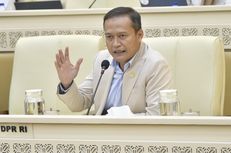
The DPR (House of Representatives) considers this bill important to comprehensively, firmly, and accountably regulate interception practices in law enforcement and citizens' privacy rights protection.
The government and the DPR agreed to amend the 2026 Priority National Legislation Program during a Working Meeting of the Legislative Body (Baleg) with Deputy Minister of Law Eddy Hiariej and representatives from the Regional Representative Council (DPD) in the Parliament Complex, Jakarta, on Thursday (27/11/2025).