
10 New Draft Laws Added to the 2025-2029 National Legislative Program: On AI, Defense, and Antispionage
-
News
-
7 minutes ago
This article was translated by AI. Read the original article on Kompas.com. See Original
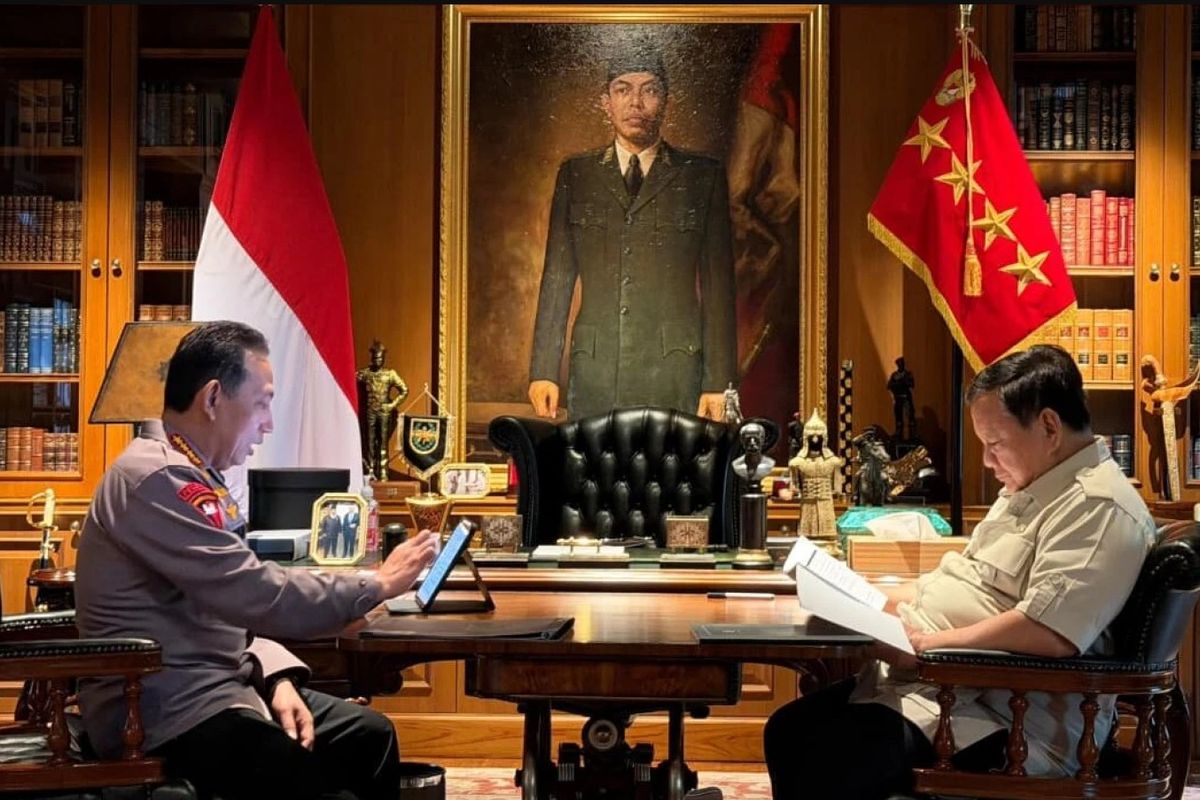
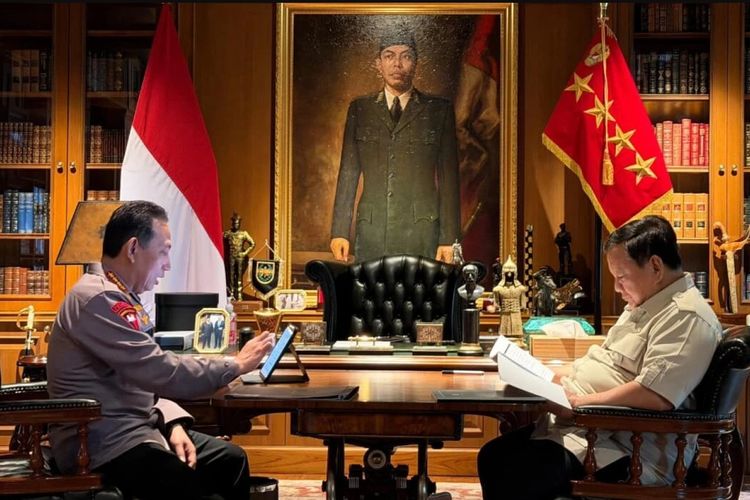
READING news about General Listyo Sigit Prabowo and several National Police generals being named suspects over alleged illegal wiretapping of President Prabowo Subianto, my thoughts immediately go to the Javanese wayang play titled “Karna Tanding.”
The play “Karna Tanding” is one of the most emotional and legendary stories in wayang, sourced from the epic Mahabharata (the Baratayuda War).
This tale recounts the grand duel between two brothers: Duke Karna (the commander of the Kurawa faction) against Prince Arjuna (the commander of the Pandawa faction).
Both are sons of Dewi Kunthi. However, they belong to opposing factions and must fight, due to their differing loyalties.
Both characters are expert archers, each possessing a special arrow. Karna wields the “Kuntawijayadanu,” while Arjuna possesses the “Pasopati.”
Karna advances to the battlefield in a chariot driven by Prabu Salya, while Arjuna’s chariot is driven by Sri Kresna.
Unfortunately for Karna, during the showdown of archery skills, the wheel of his chariot becomes stuck in the mud due to a Brahmin's curse. Karna dismounts to fix the wheel.
Seeing this moment, Kresna advises Arjuna to take advantage of it. Ultimately, Arjuna releases the “Pasopati,” striking through the chest of Duke Karna.
Undeniably, Arjuna harbors doubts and feels remorse, remembering Karna is his biological brother.
Of course, there is no direct correlation between the declaration of General Listyo Sigit Prabowo as a suspect in a serious case and the play “Karna Tanding.”
However, the “grammar” of the story is intriguing, feeling somewhat similar or parallel.
It’s difficult to deny that over the past two years, the Indonesian political landscape has felt like it has “two twin suns.” The first sun is formal (de jure), represented by Prabowo Subianto as the President of the Republic of Indonesia.
Prabowo certainly has independent authority. He can make decisions without the shadow of anyone else.
In the traditional Javanese philosophical perspective, Prabowo possesses full legitimacy, often referred to as having “wahyu kedaton,” which cannot be divided.
The second sun is Joko Widodo, the seventh president whom Prabowo has replaced.
I read that Jokowi seems reluctant to relinquish power. Although officially replaced by Prabowo, he appears to overshadow Prabowo's administration.
Of course, Jokowi would deny this.
To borrow a quip from the people of East Java: “The president of Indonesia is Jokowi, while Prabowo is just his successor.”
A successor does not automatically erase the predecessor.
In the context of the relationship between Prabowo and Jokowi, the phenomenon of the two twin suns is easy to interpret.
The two met and united on the political battlefield of two consecutive presidential elections.
In fact, Prabowo accepts the authority as president, accompanied by Jokowi's eldest son, Gibran Rakabuming Raka, as his vice.
The public understands that Gibran holds no significant political value as vice president without Jokowi’s backing.
The process itself was expensive and controversial.
In addition to violating laws and ethical norms, which drew criticism from many circles, Jokowi chose to oppose Megawati Soekarnoputri and the PDI-P, the party that has been his and his family's political support base.
In other words, Jokowi's contribution to Prabowo's power should not be underestimated.
Perhaps, Jokowi feels that without his involvement, Prabowo would still be considered a loser.