

National Police Postpones Ethics Trial for Inspector General Slamet Uliandi, Suspect in Wiretapping and Treason Case
-
News
-
1 minute ago
This article was translated by AI. Read the original article on Kompas.com. See Original
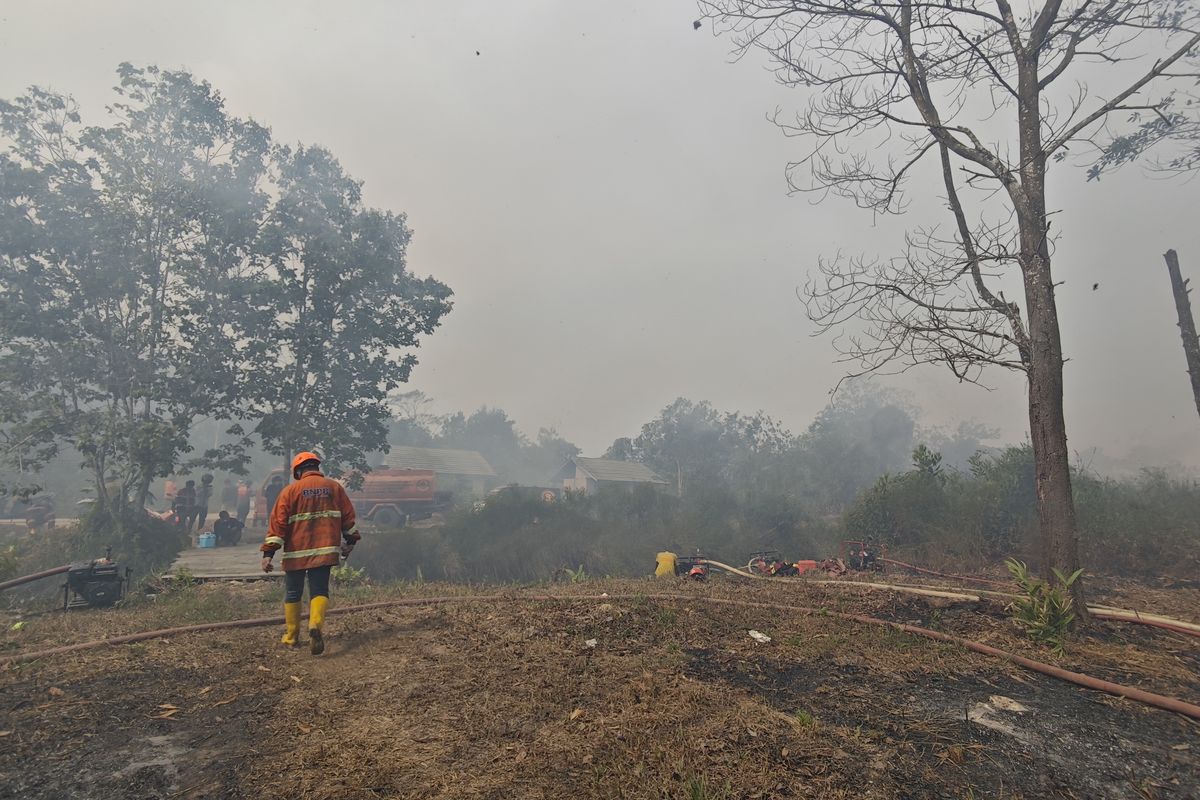
JAKARTA, KOMPAS.com- Fire outbreaks that are burning forests and land in several regions of Indonesia have not been fully extinguished. As firefighting operations continue, the number of hotspots has actually increased in some areas.
This situation indicates that the issue of forest and land fires (karhutla) cannot be resolved simply by extinguishing the flames already consuming forested areas.
Prevention measures and oversight of activities that could potentially trigger fires must also be strengthened.
Data from the National Disaster Mitigation Agency (BNPB) as of Wednesday (4/11/2026) recorded 864 hotspots in various regions. The area still under management has reached 1,615 hectares.
Acting Head of the BNPB Data, Information, and Disaster Communication Center Berton S.P. Panjaitan revealed that the increase in hotspots is especially significant in Central Kalimantan (Kalteng) and South Sumatra (Sumsel).
In Central Kalimantan, the number of hotspots increased by 50% to 425 compared to the previous day. The area still being handled also increased by 21% to 664 hectares.
"In Central Kalimantan, the number of hotspots increased by 50% to 425 from yesterday, and the area under management is 664 hectares, which also experienced a 21% increase," said Berton during a press conference at the BNPB Office in East Jakarta on Wednesday.
Similar increases were noted in South Sumatra. The BNPB recorded an additional 60 hotspots, an increase of approximately 186% compared to the previous day. The area of burned land still under management reached 105 hectares, up by 66%.
In Jambi, the number of hotspots rose by 150 or 134%. The area still being managed amounts to 403 hectares.
Meanwhile, East Kalimantan recorded a decrease of 85 hotspots. However, the area of burned land being managed increased to 182 hectares.
"In East Kalimantan, there is a decrease of 85 hotspots, while the area burned has significantly increased to 182 hectares," Berton stated.
The rising number of hotspots in several regions underscores a fundamental issue in handling karhutla.
Although firefighting is necessary to stop the flames, such efforts will not be enough if the causes of the fires and the weaknesses in prevention are not addressed.
The Chairman of the Regional Representatives Council (DPD) Sultan B Najamudin believes that the handling of karhutla needs to shift from a reactive approach to a more comprehensive strategy, from upstream to downstream.
"The solution to handling karhutla cannot be reactive anymore; it must be comprehensive from upstream to downstream, involving indigenous communities, local governments, and strengthening intersectoral synergy," Sultan said in a statement on Wednesday (4/11/2026).