

DKPP Highlights KPU's Inconsistent Statements Regarding 'Gibran's Education Article'
-
News
-
5 hours ago
This article was translated by AI. Read the original article on Kompas.com. See Original
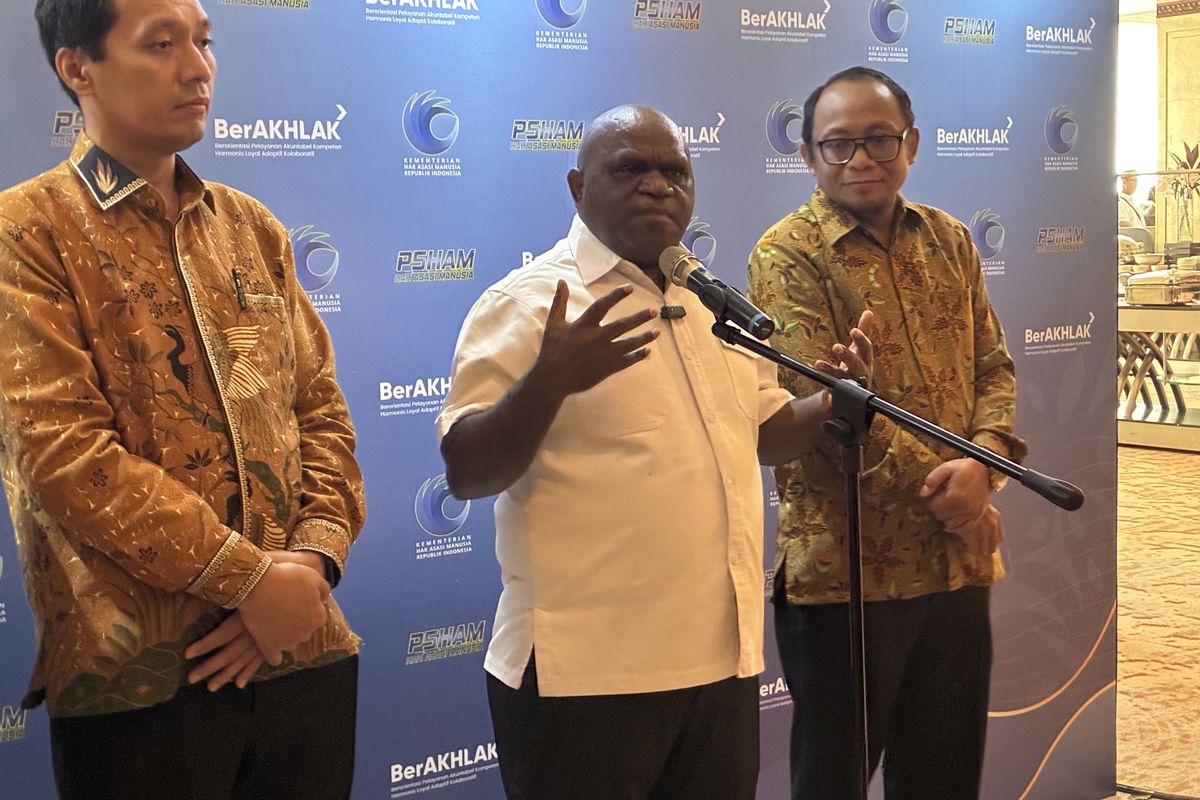
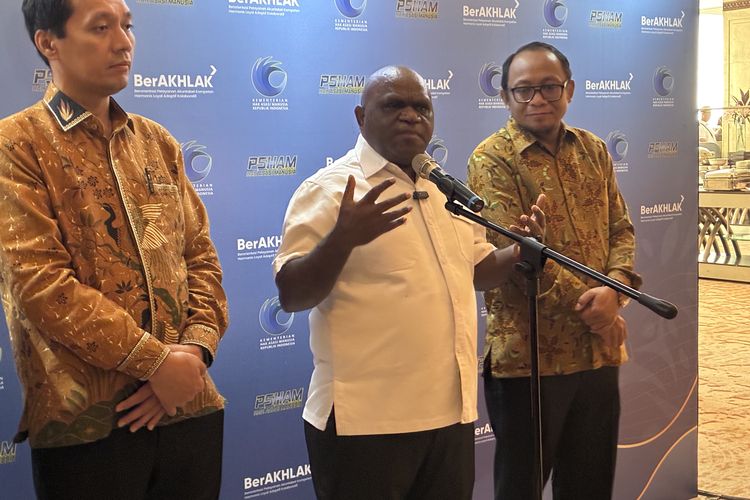
JAKARTA, KOMPAS.com - Minister of Human Rights (HAM) Natalius Pigai stated that the illegal wiretapping allegedly conducted by former National Police Chief General Listyo Sigit Prabowo and two high-ranking police officials represents a serious issue that threatens human rights, national defense, and state security.
Pigai asserted that the alleged wiretapping is a real threat to the rights of privacy, safety, and security of all citizens indiscriminately.
"This is clearly a real and serious threat to human rights, national defense, and security. There is a right to privacy involved, as well as safety and security that are under threat. If the President is treated this way, we can only imagine how it is for our people," said Pigai in a press release on Wednesday (4/11/2026).
Pigai reminded that the right to privacy and self-protection is a constitutional right guaranteed by the 1945 Constitution of the Republic of Indonesia, particularly in Article 28G paragraph (1).
This guarantee is also related to Article 28E paragraph (3) of the 1945 Constitution concerning the freedom of association, assembly, and expression, as well as Article 32 of Law Number 39 of 1999 on Human Rights, which protects the freedom and confidentiality of communication, including electronic means.
Similar protections are explicitly stated in Article 12 of the Universal Declaration of Human Rights (UDHR) and Article 17 of the International Covenant on Civil and Political Rights (ICCPR), which has been ratified through Law Number 12 of 2005.
These provisions prohibit arbitrary or unlawful interference with an individual's private life and communications.
Furthermore, Pigai emphasized that wiretapping conducted arbitrarily and unlawfully constitutes a violation of the right to privacy, which is a fundamental right protected by the Constitution.
He continued, the alleged wiretapping of President Prabowo Subianto and several others is a serious matter that concerns not only the right to privacy but also poses potential threats to national defense and security.
As the head of state, head of government, and the highest authority over the Indonesian National Armed Forces (TNI), the President has a constitutional responsibility to uphold the sovereignty and safety of the nation.
"Therefore, wiretapping of the President's communications, particularly concerning national strategic interests, poses a danger to national security and disrupts government operations," he said.
In light of this, Pigai urged the police to thoroughly investigate the case in a professional, transparent, and accountable manner, including exploring the possible involvement of other parties.
He stated that the law enforcement process must be conducted objectively to ensure legal accountability for anyone proven to have committed violations and to prevent similar practices from recurring.
"We encourage the police to thoroughly investigate this case," Pigai added.
Pigai insisted that all state institutions must ensure the thorough investigation of this case, supported by effective oversight and accountable law enforcement while adhering to human rights principles.























