

Fear of Being Rich or Fear of Getting Caught?
-
News
-
17 minutes ago
This article was translated by AI. Read the original article on Kompas.com. See Original
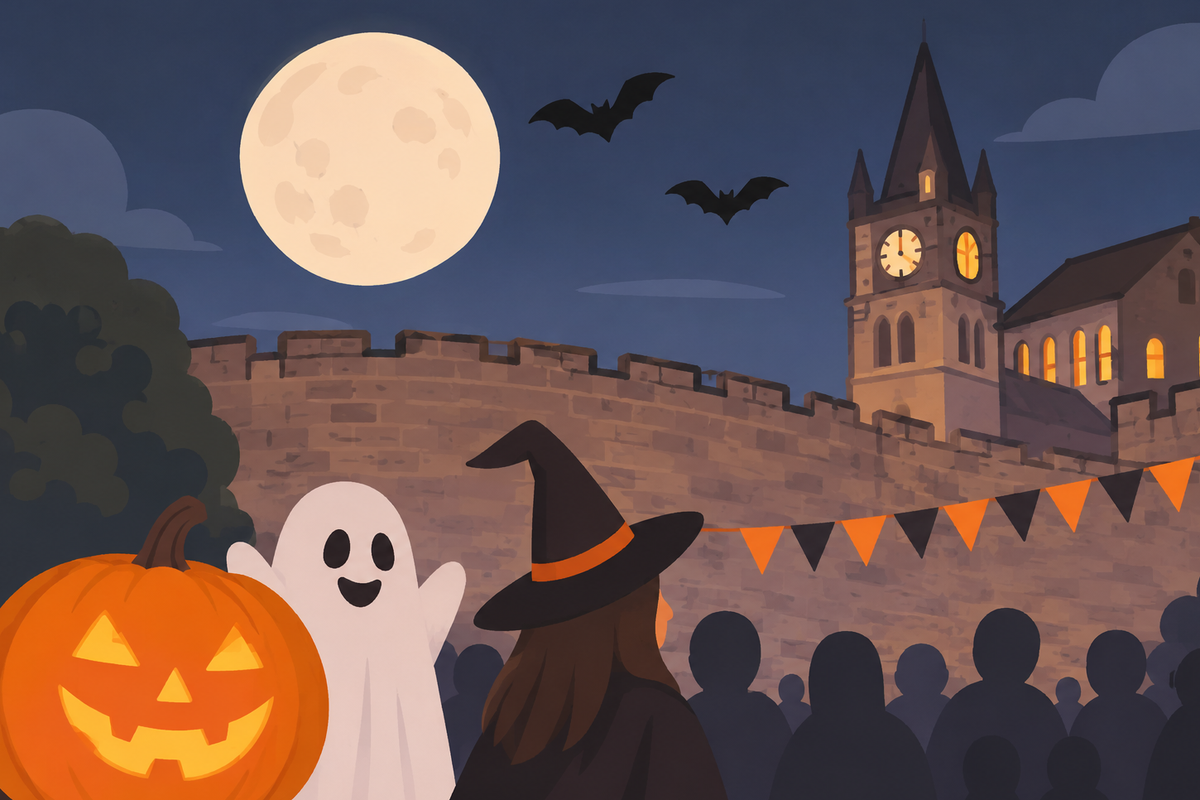
HALLOWEEN is often envisioned as a costume party and candy celebration that seemingly originated in America.
In reality, it has roots in Samhain, a Celtic festival from medieval Ireland.
The name means "end of summer," and it marks one of four quarterly markers in the local calendar.
For agrarian societies, Samhain was a practical moment.
Crops were gathered, supplies were recorded, communities were organized for winter, and livestock was slaughtered to reduce feed costs during the lean months.
It pairs with Beltane. While Beltane celebrates the sun and life, Samhain welcomes the long nights and darkness.
The symbolic dimension is equally important. Samhain is understood as a liminal festival, a time when normal orders are suspended, and the boundary between the human world and the supernatural is believed to fade.
Spirits and otherworldly beings emerge from ancient mounds, and many Irish mythologies are set on that night. Large bonfires are lit for protection.
There’s one analytical note from the start. The direct line from Samhain to modern Halloween is more a popular narrative than a well-established conclusion.
Thus, it’s more honest to read Samhain as one layer of Halloween rather than its single origin.
Here lies the core question of this piece: What remains of Samhain, and what has been reshaped since?
Halloween has never been limited to a single meaning, as each era and group has infused it with their own interests.
The church was the first to frame it anew. The term Halloween comes from All Hallow' Eve, the night before All Saints' Day on November 1, followed by All Souls’ Day, when prayers are offered for the souls in purgatory.
This pattern is common throughout cultural history. Traditions that are hard to erase are often absorbed and reinterpreted.
That interpretation has now divided again. Neo-Pagans view Halloween as a way to touch the realm of myth and come to terms with the fear of death, while some fundamentalist Christians denounce it as devil worship and create alternatives like Hallelujah Nights or Holyween.