

Prabowo Gathers Gerindra Cadres in Hambalang, Dasco and KDM Attend
-
News
-
2 hours ago
This article was translated by AI. Read the original article on Kompas.com. See Original
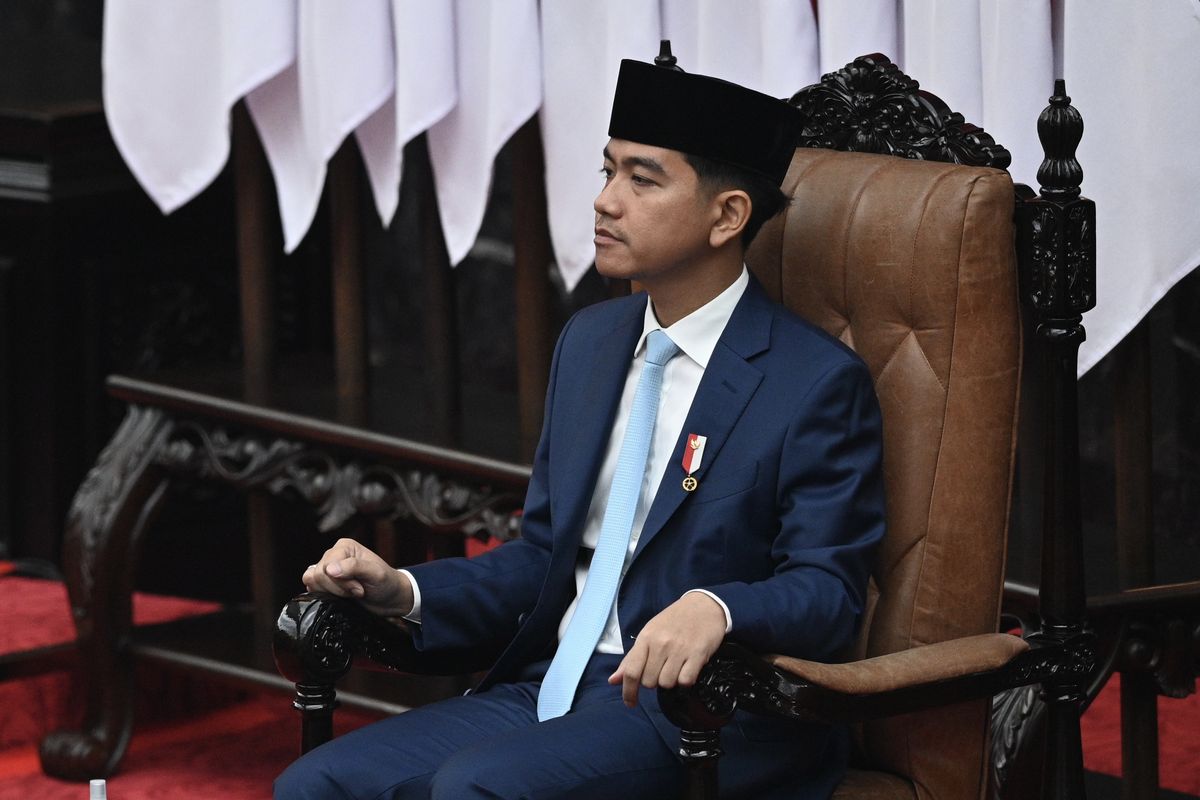
THERE is irony in state life. A certificate issued in 2019, when its holder had not yet held a national position, has now become a legal issue touching on the status of the Vice President.
The letter was never intended as a political decision. However, when its validity was annulled by the court, the ensuing questions pertained to the future of authority.
The Supreme Court, on Friday (30/10/2026), granted a cassation request in case Number 742 K/TUN/2026 regarding the Educational Equivalence Certificate of Gibran Rakabuming Raka.
In the brief ruling published through case information from the Supreme Court, the panel of judges annulled the previous court’s decision and adjudicated it themselves, granting all of the plaintiff's claims.
This ruling alters the legal status of the certificate in question. However, the implications for the Vice President's position are not as straightforward as one might think.
Does the annulment of a document related to candidacy requirements automatically invalidate the legitimacy of the office? Or has the appointment closed all possibilities of questioning those requirements?
Both questions cannot be answered merely by following the flow of political debate. Administrative law and constitutional law operate differently. They are interconnected, but do not always yield the same legal outcomes.
In administrative state law, a decision made by a government official is not valid merely because it is issued by a state institution.
Its validity depends on the official's authority, the procedures followed, and the substantive compliance with the law.
The Law Number 30 of 2014 on Government Administration establishes these elements as a basis for assessing the legality of government decisions.
The educational equivalence certificate represents an administrative decision with legal consequences. Through this document, education authorities recognize the educational level attained by an individual.
This recognition must not be granted indiscriminately, particularly when the document is then used to fulfill the requirements for holding public office.
Therefore, the Supreme Court's ruling that accepted the cancellation of the certificate must be seen as part of the judicial oversight mechanism of governmental administrative actions.
However, there is a matter that needs clarification. The annulment of an administrative decision can occur due to errors in authority, procedure, or substance. Each has different characteristics and legal consequences.
If the error lies in the authority of the issuing official, it does not necessarily mean that the factual situation explained in the document is incorrect. Likewise, procedural defects do not always imply substantive requirements have not been met.
On the other hand, if the court finds that the basis for educational equivalence does not meet legal provisions, the issue is more fundamental.
This is why a complete legal reasoning from the Supreme Court is important to examine.
The brief ruling that has been announced explains the case's outcome. However, the reasons why the panel of judges annulled the certificate have yet to be confirmed until a complete copy is available.
In a state governed by law, court decisions must not be interpreted beyond what has been decided.
The issue becomes more complicated when the annulled certificate was once related to the candidacy requirements for Vice President.
Article 169 letter r of Law Number 7 of 2017 on General Elections stipulates that presidential and vice-presidential candidates must possess at least a senior high school education or its equivalent.
This provision is a substantive requirement. That means, merely submitting educational documents is insufficient. The documents must validate a condition that meets the statutory requirements.
However, there is a difference between the evidential documents and the facts they intend to prove.
An educational equivalence certificate is an administrative instrument, while educational qualifications are substantive conditions that are the object of administrative recognition.
Annulment of the evidential instrument may affect the basis for that recognition. However, such annulment is not always synonymous with proving that an individual’s educational qualification was never fulfilled.
In Gibran's case, this concern is particularly significant since the Constitutional Court previously touched on educational document issues in Decision Number 01/PHPU.PRES-XXIV/2026.