

Block 700,000 Business Entities, Ministry of Law Ready to Unblock if Data is Updated
-
News
-
14 minutes ago
This article was translated by AI. Read the original article on Kompas.com. See Original
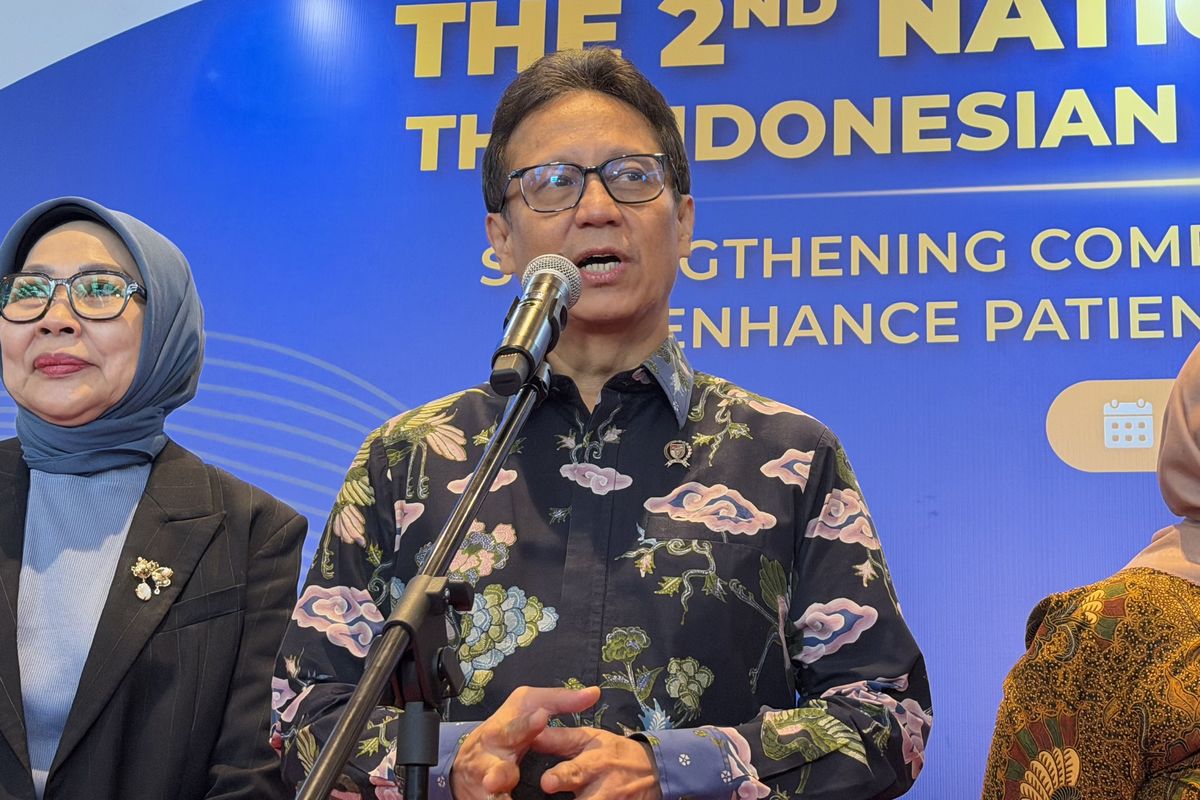
JAKARTA, KOMPAS.com - Minister of Health Budi Gunadi Sadikin stated that Indonesia will struggle to provide healthcare services for its 280 million population if it continues to rely solely on a curative approach.
Budi emphasized that this concern prompted the government to shift towards a promotive and preventive healthcare approach, such as the Free Health Check (CKG) initiative.
"As a banker, I see that if the Ministry of Health's healthcare program continues in the traditional curative manner, we will not be able to finance healthcare in Indonesia," Budi remarked during the XVI National Congress of the Indonesian Public Health Experts Association at the DPR/MPR Complex in Central Jakarta on Friday (30/10/2026).
Budi pointed out that a preventive and promotive approach is also significantly more cost-effective.
He compared healthcare spending in several countries focused on curative care with those focused on preventative measures.
For instance, healthcare expenditure per capita in the United States reaches a staggering total of $11,900 per year.
Despite this high spending, the life expectancy in the U.S. is only 79 years.
This expenditure is considerably larger compared to Cuba, where the healthcare spending per capita is just $1,900, yet the life expectancy is the same at 79 years.
"I even told the former U.S. Health Secretary, Bob Kennedy, that when I turn 70, I will consider changing my citizenship from the U.S. to Panama or Cuba. Why? Because Panama and Cuba have nearly the same average lifespan as America, which is 79 years, and their spending is only $1,900," Budi explained.
Meanwhile, Japan's healthcare spending per capita stands at $5,500 per year, with a higher life expectancy than the U.S. at 84 years.
Singapore, on the other hand, has a lower healthcare expenditure of $3,300 per year, with a life expectancy the same as Japan's.
"Singapore, which is currently somewhat unhealthy due to pollution, has a life expectancy of 84 years, just like Japan, but spends $3,300," he added.
As for Malaysia, the healthcare spending per capita is $430, with a life expectancy of 76 years.
In contrast, Indonesia's healthcare spending is only $130 per capita per year, with a life expectancy of 74 years.
If Indonesia aims to match Malaysia's healthcare spending, it would require at least $84 billion in additional healthcare expenditures.
This means Indonesia needs to increase its healthcare spending by $300 per capita per year, multiplied by the population of 280 million.
Currently, Indonesia's healthcare expenditure is at Rp 640 trillion.
"Why does Japan spend less than America yet have a longer life expectancy? Because Japan's strategy is focused on keeping its population healthy rather than just treating them when they are sick, ladies and gentlemen. Singapore similarly focuses on maintaining the health of its people, not solely treating sickness. That’s why it is called the Minister of Health, not the Minister of Sickness," Budi concluded.