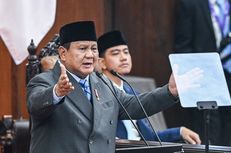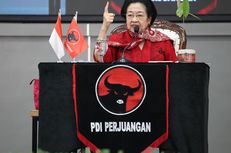
Megawati Rejects Proposal for Three-Term Presidency: I Affirm No!
-
News
-
9 minutes ago
This article was translated by AI. Read the original article on Kompas.com. See Original

DECISION Number 19 P/HUM/2026 from the Supreme Court has reignited the debate regarding the relationship between the state and the health profession.
This discussion not only concerns professional organizations but also the future of the Indonesian Health Council (KKI), collegium, and the Professional Discipline Assembly (MDP) as part of the reform in national health governance.
Some quarters view the strengthening of professional independence as justification to minimize government involvement in managing these institutions.
There is even a growing perspective that independence can only be realized if professional bodies are completely detached from government structures.
Professional independence is a crucial principle in the provision of healthcare services.
However, independence should not be equated with unchecked institutional freedom, especially when the authority exercised concerns public interest, patient safety, and the rights of medical and health personnel.
The fundamental question is not simply who has the right to control the health profession but who is responsible when that authority is misused.
Before the enactment of Law Number 17 of 2023 on Health, the governance of the medical profession involved the Indonesian Medical Council (KKI), collegium, professional organizations, and the Medical Honorary Disciplinary Assembly of Indonesia (MKDKI).
The existence of these institutions has made significant contributions to the development of competency standards, registration, professional education, and enforcement of medical discipline.
When the authority to set standards, regulate competence, oversee, and enforce discipline is concentrated within interconnected professional environments, the risk of conflict of interest cannot be ignored.
Professional autonomy, which was initially intended to protect professional decisions from external interference, can become institutional exclusivity if not accompanied by effective oversight and correction mechanisms.
It is certainly incorrect to conclude that all previous professional institutions exercised their authority arbitrarily.
However, it is equally erroneous to consider the old system perfect solely because it advocates for independence.
Institutional reform must begin with the willingness to evaluate the weaknesses of the previous system rather than from the desire to maintain or revert authority to certain groups.
KKI, collegium, and MDP have different functions, but all are part of an interconnected ecosystem of health profession governance.
The council runs functions related to the regulation and fostering of professionalism among medical and health personnel.
The collegium plays a role in scientific development and competency standards, while MDP enforces professional discipline.
The state has a constitutional obligation to ensure decent health services as reflected in Article 28H paragraph (1) and Article 34 paragraph (3) of the 1945 Constitution.
The government is required to guarantee system accountability, while professional bodies must have sufficient freedom to carry out their scientific functions objectively.
The Supreme Court’s Decision Number 111/PUU-XXII/2024 and Number 182/PUU-XXII/2024 are significant in structuring the institutional relationship of the health profession.
Meanwhile, Decision Number 156/PUU-XXII/2024 clarifies the role of MDP’s recommendations in legal proceedings related to health services.
These decisions should be understood based on the objects of scrutiny, legal considerations, and the rulings themselves.
In administrative law, the validity of an appointment decision must be assessed based on the authority of the official issuing it, the procedures followed, the substance of the decision, and the legal provisions in effect at the time of the decision.
Disputes regarding the validity of MDP member appointments brought before the state administrative court should also be placed in that framework.