
Densus 88 Arrests 15 Terrorists from NII, JAD, and AD Networks
-
News
-
10 minutes ago
This article was translated by AI. Read the original article on Kompas.com. See Original
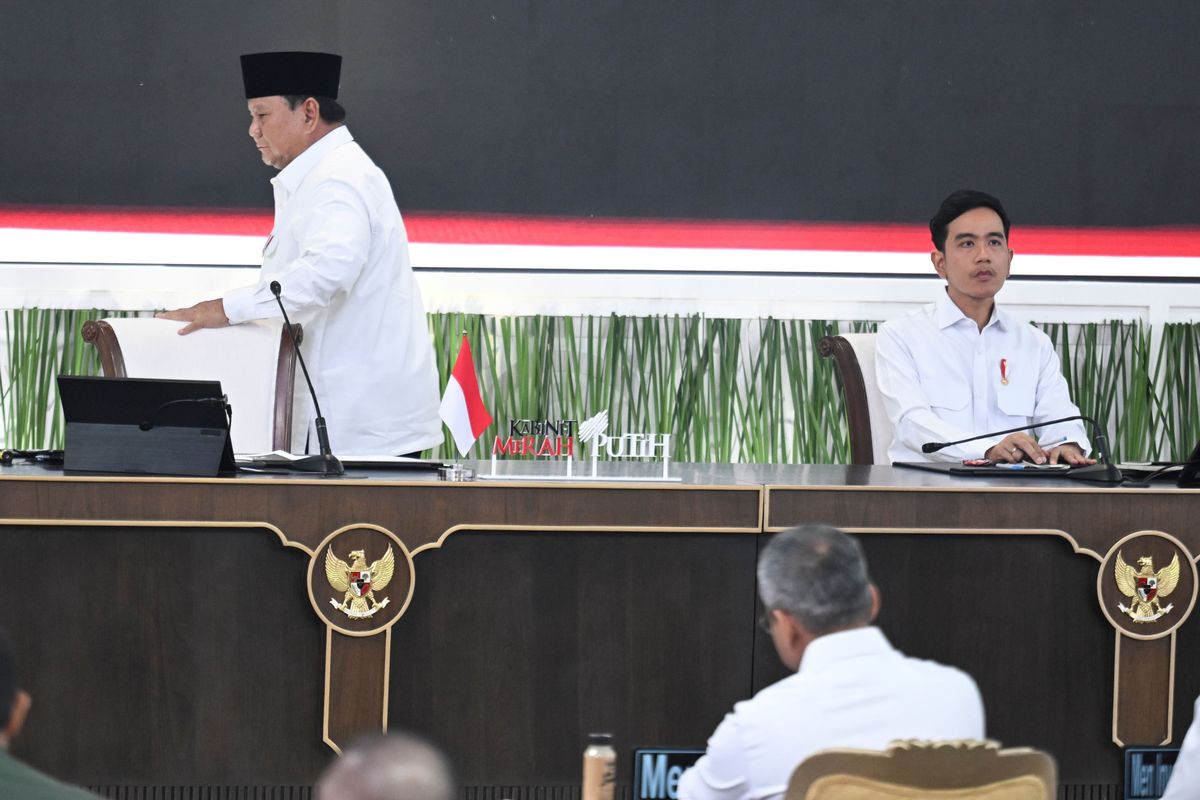
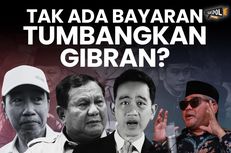
THE Vice Presidential seat of Gibran Rakabuming Raka is once again the target of political pressure. The Constitutional Court's ruling on October 6, 2026, which was initially expected to provide clarity on the educational qualification dispute, instead sparked a new debate.
A letter purportedly from members of the House of Representatives (DPR) regarding Gibran's dismissal has circulated in parliament. Several civil society activists have since urged the DPR to utilize its investigative rights.
However, such uproar is not evidence that the impeachment process has begun. The letter in question has not been confirmed as the official stance of the party, and public aspirations do not automatically translate into DPR decisions. The gap between demands and constitutional decisions remains significant.
This raises an intriguing political question: Is the pressure a demand for accountability, a test of coalition strength, or an attempt to weaken Gibran's political influence?
The answer cannot be derived merely from guessing who stands to gain the most. Politics needs to be understood through verifiable actions, rather than mere suspicions.
Since his candidacy in the 2024 Presidential Election, Gibran has brought along two sources of legitimacy that do not always align.
Alongside Prabowo Subianto, he has secured a mandate from a majority of voters. However, the path to his nomination left controversies that have yet to fade from public memory.
The Constitutional Court's Decision Number 90/PUU-XXI/2023 opened the door for regional heads under 40 years of age to run for the presidency or vice presidency.
Subsequently, the Honorary Council of the Constitutional Court imposed severe ethical sanctions on Anwar Usman and removed him from his position as Chief of the Court.
These two events do not nullify the election results, but they explain why questions regarding procedural propriety continue to arise.
There is also the Jokowi factor. Family ties lead to Gibran being perceived as a successor to a portion of the previous president's political influence. This perception both benefits him through networking opportunities and exposes him to vulnerabilities.
Criticism aimed at Gibran can easily be interpreted as criticism of Jokowi's legacy, even though their targets may not always align.
Electoral mandates deserve respect, but such mandates do not erase the public's right to question the candidacy process.
Democracy requires both: acceptance of election results and the courage to scrutinize the quality of the processes that produce them.
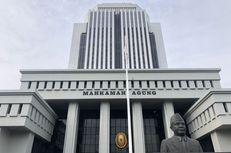
In Ruling Number 01/PHPU.PRES-XXIV/2026, the Constitutional Court stated that the petitioners' requests could not be accepted due to legal standing issues.
In its considerations, the Court also outlined the problem of foreign educational document verification that could serve as a basis for equivalency with secondary education.
These two aspects should not be conflated. Considerations regarding evidence do not equate with the ruling that Gibran is found to have used a fake diploma, does not meet the requirements, or must vacate his position. No such ruling exists.
Conversely, the ruling of inadmissibility is also not a substantive answer that resolves all administrative concerns.
A careful reading prevents the public from arriving at two exaggerated conclusions: that the vice presidential position has become void or that no further issues remain to be clarified.
In a rule of law, the distinction between considerations, rulings, and legal consequences is not merely a technical matter. This distinction prevents court decisions from being reduced to political slogans.
Following the ruling, a letter dated October 7, purportedly from DPR member Tonny Tesar of NasDem, proposing Gibran's dismissal, began circulating.
NasDem leadership denied that the letter represents the party's official stance. As its authenticity has yet to be directly confirmed, the letter should not be regarded as evidence of a pre-agreed impeachment agenda.
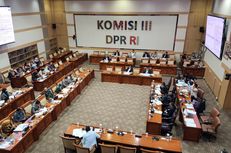
On October 12, the Civil Collective Alliance met with Ahmad Doli Kurnia to advocate for the DPR's investigative rights concerning Gibran's educational qualifications. This clearly indicates the expression of aspirations.
However, agreeing to a meeting does not equate to endorsing an investigative right, let alone initiating a dismissal process.
Both incidents show how legal issues have entered the political arena but still demonstrate a lack of elite coordination aimed at ousting the vice president.
This distinction is crucial to ensure that public criticism is not easily branded as a conspiracy and that political maneuvers are not baselessly accused.
In coalition politics, controversial issues can indeed serve as tools for measuring bargaining positions. Actors not intending to displace officials may leverage debates to assert influence.
However, such analyses remain hypothetical until actions, communications, or decisions supportive of them emerge.
Prabowo's supporting coalition is broad enough to sustain the government, but breadth does not automatically extinguish competition.
Parties can collaborate within the cabinet while maintaining their identities and weighing their electoral prospects. Today's cooperation does not negate calculations regarding the next election.
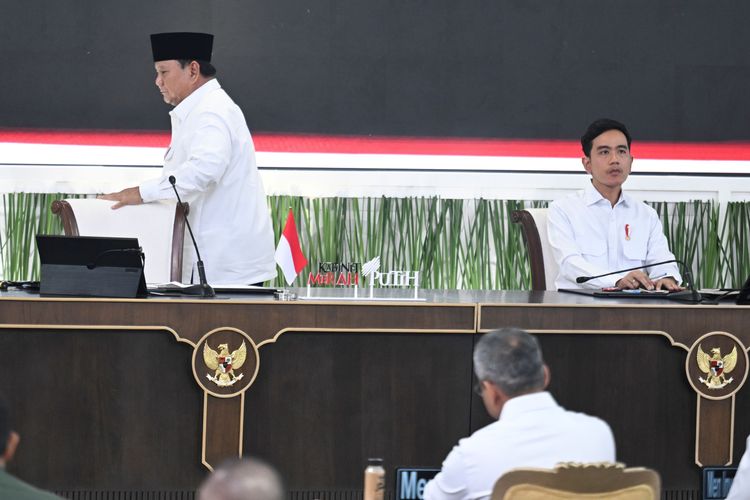
Gibran's position is sensitive due to his being at the intersection of Prabowo's mandate and Jokowi's shadow.
However, concluding that any criticism of him constitutes a planned attack on Jokowi is just as erroneous as assuming every defense of him is merely a dynastic protection.
A more reliable measure would be institutional actions: whether factions propose official motions, whether the DPR makes decisions, and whether coalition support changes.
Without such indicators, the uproar could still signify merely a discourse competition, not a shift in power.
Investigative rights and impeachment are two distinct mechanisms. Investigative rights serve as a monitoring instrument with particular conditions and objects. It is not a shortcut to removing a vice president.
Article 7A of the 1945 Constitution regulates the reasons for the president and vice president's removal, including specific legal violations, immoral acts, or failure to meet qualifications.
Article 7B establishes a layered process involving the DPR, Constitutional Court, and People's Consultative Assembly (MPR). DPR requests to the Constitutional Court require the backing of at least two-thirds of the members present in a plenary session attended by at least two-thirds of DPR members.
Even if the Constitutional Court validates the DPR's stance, the final decision still must be processed in the MPR in compliance with constitutional criteria.
Thus, a ruling in an election result dispute does not automatically replace the evidentiary requirements in impeachment mechanisms.
Herein lies the distinction between political criticism and legal consequences. The public is free to demand explanations and accountability. The DPR is empowered to exercise oversight in accordance with regulations.
However, political demands, no matter how forceful, do not in themselves terminate a term resulting from a general election.
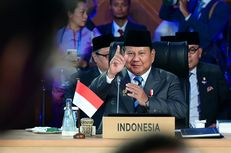
For Prabowo, this controversy presents a challenge in coalition management. The president must ensure the government continues to function while not shutting down space for criticism regarding his vice presidential candidate’s nomination.
These two interests do not conflict if each institution performs its duties within its authority.
Prabowo also has a vested interest in demonstrating leadership independence. However, this independence need not be displayed by distancing himself from Jokowi or undermining Gibran.
It is more reasonable to measure it by the quality of decisions, the ability to manage differences, and the policy outcomes perceived by the public.
Ongoing uproar incurs political costs. Elite attention is diverted to positional issues, while the public awaits answers regarding jobs, purchasing power, education, and healthcare services.
The government cannot continue to ask the public for patience simply because power supporters have yet to conclude their influence calculations.
The Gibran case should encourage improvements that extend beyond the fate of an official. Candidate eligibility checks need to be transparent. The independence of constitutional justice must be maintained.
Political parties need to demonstrate that adherence to procedures is not just a stance when outcomes are favorable.
For Gibran's critics, the challenge is to bring objections through legitimate channels with verifiable evidence.
For his supporters, electoral victory must not be treated as immunity from public scrutiny.
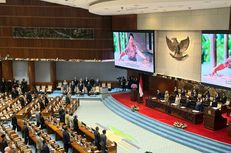
For the DPR, societal demands need to be addressed institutionally, not allowed to devolve into speculation without resolution.
There is a fundamental difference between overseeing power and shaking power for the sake of uproar itself. The former improves democracy; the latter can lead the public to become increasingly cynical about politics.
However, distinguishing between the two requires evidence and a willingness to listen, not mere loyalty to one’s own camp.
The vice presidential seat may be open for debate, but the fate of a constitutional office is not determined by the intensity of demands.
Conversely, certainty in the term cannot serve as an excuse to avoid accountability. It is among these two principles that democracy is tested.
The ultimate question is not who is most successful in shaking Gibran or who is the most resilient in defending him.
The question is, after all political energy has been expended debating the seat of power, what truly changes for the citizens who elected them?