
Prabowo at ASEAN Summit: 104 Companies Under Investigation for Forest Fires, 11 Charged
-
News
-
41 minutes ago
This article was translated by AI. Read the original article on Kompas.com. See Original
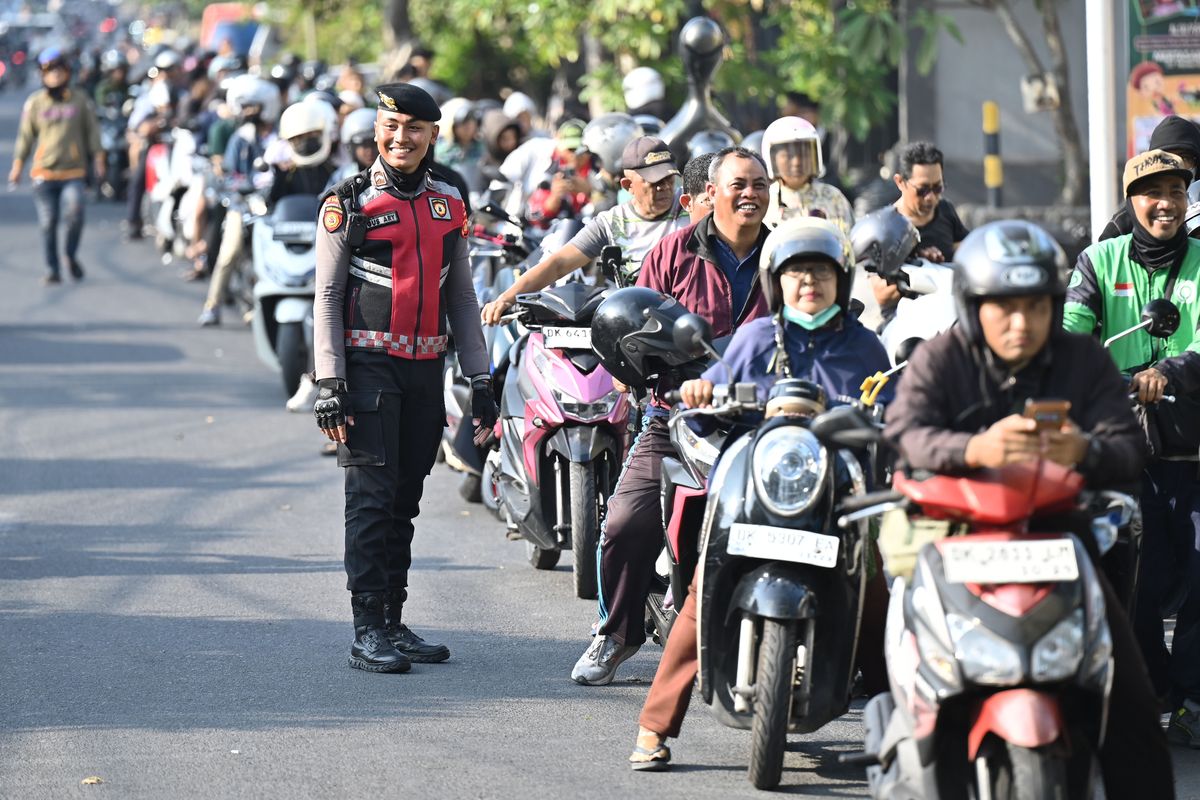
QUEUE of vehicles at various gas stations in Bali in October 2026 sends a message that goes far beyond just fuel issues.
Energy reveals its true position: the lifeblood of the economy.
The disruption in cargo loading at ports, cited as one of the triggers for stalled distribution, serves as a reminder that nationally guaranteed supplies might not be available when and where the public needs them.
Energy resilience is often misunderstood as simply adequate production, imports, reserves, and price stability.
However, availability without reliable distribution does not equate to true resilience.
This vulnerability intertwines with the national energy structure. BPS data shows that Indonesia's natural gas and oil imports throughout 2025 reached around $32.74 billion.
Meanwhile, government data indicates that the primary energy mix for 2024 is still dominated by coal, oil, and gas; with renewable energy comprising only about 14.68 percent.
Dependence on fossil fuels exposes the economy to risks from global prices, exchange rates, and logistical disruptions simultaneously.
However, Indonesia's issue is not solely a dependency on imports.
The geographic nature of the archipelago creates distribution challenges that cannot be resolved with a single national stock figure.
Disruptions at one port or shipping link can have varying impacts on industrial regions, tourist areas, and remote islands.
In the framework of Wassily Leontief's input-output analysis, energy serves as an input that connects nearly every sector of the economy.
When its distribution is interrupted, the effects ripple through transport, trade, industry, agriculture, and tourism.
The social costs are not fully reflected in pump prices.
Controlled fuel prices can become economically expensive if consumers have to sacrifice time and income to acquire them.