

When Megawati Reminisces About Her Early Journey in Politics, Choosing Central Java as Her Constituency
-
News
-
3 hours ago
This article was translated by AI. Read the original article on Kompas.com. See Original
WHEN artificial intelligence (AI) had not yet predominantly taken over our daily lives, there were still many entertainment spaces and means to unwind.
This included simply searching or seeking out information available on the internet.
At that time, every process still occupied a dialectical space that provoked common sense to critically analyze every available answer.
However, with the freedom for everyone to open social media channels and produce content independently, the boundaries between fake information, published information, and objective truth have become increasingly complex methodologically.
Yet in this realm, common sense could still be utilized to filter through the myriad of information products circulating.
As a result, social dialogue spaces remain open as there is still hope for finding avenues for expression, whether to provoke comments, responses, or simply to showcase their personal timelines.
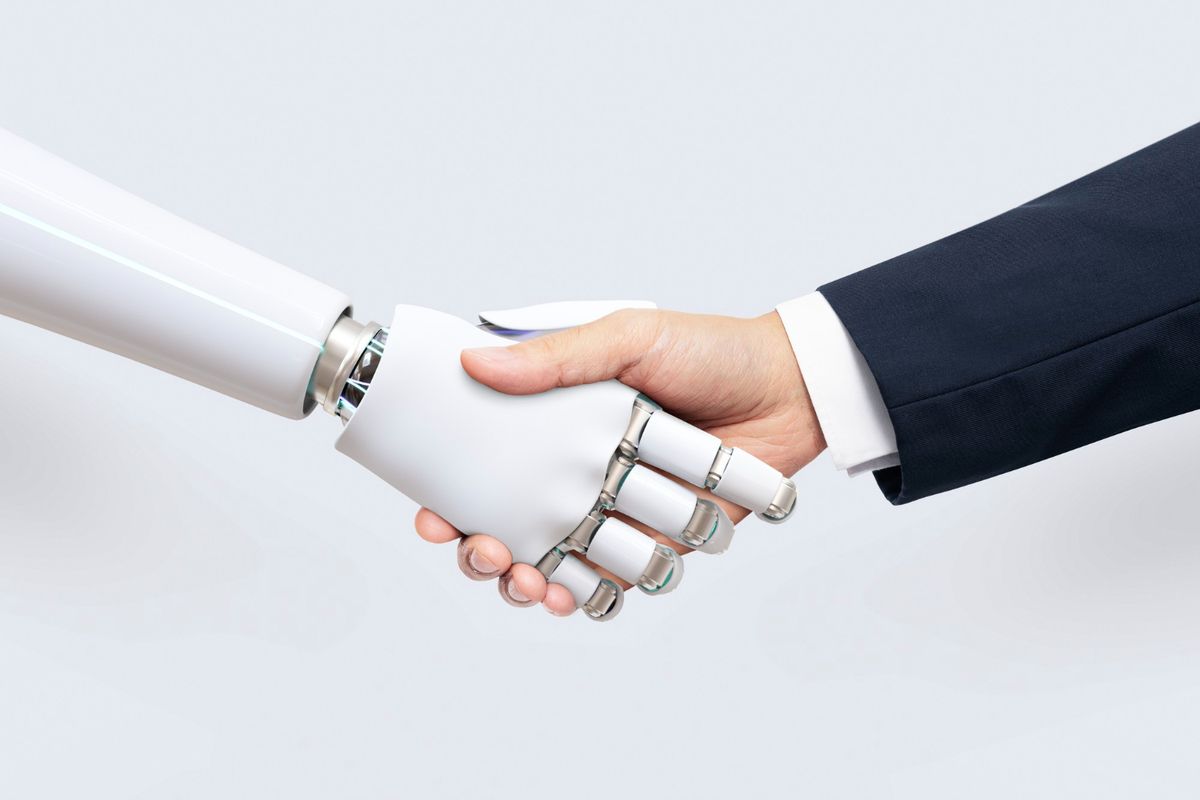
However, this condition shifted with the arrival of artificial intelligence, which has become a new reliance for many.
Here, AI has created a shift in relationships where humans use machines as outlets to express their concerns and communicate their feelings, both positive and negative.
It is worth reflecting that this relational change did not simply emerge.
It has arisen through a long evolution of human culture and history.
Let us briefly cast our minds back to that early time, when humans gathered around wood-burning stoves to cook and laugh together.
Then came the era when people watched television and sang along, leading to a time when eyes still gazed at entertainment but were customized individually, causing once fluid and engaging communication to diminish, and previously active interactions to become silent and passive.
In an era when people grew accustomed to airing grievances on social media and received a variety of responses, the term engagement emerged as a phrase representing the illusion of communication between subjects in the virtual space.
In reality, these interactions were directed at the object of the social media handling machine.
This reality was further confirmed by research data from DiRI in July 2026, which indicated that 59.4 percent of Generation Z (Gen Z) had expressed their personal feelings to artificial intelligence, covering issues such as education, love, future prospects, health, and family matters.