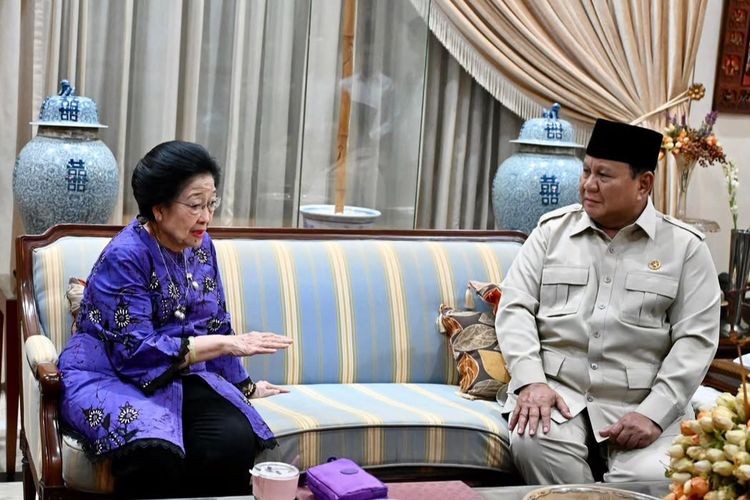


When Megawati Reminisces About Her Early Journey in Politics, Choosing Central Java as Her Constituency
-
News
-
6 hours ago
This article was translated by AI. Read the original article on Kompas.com. See Original
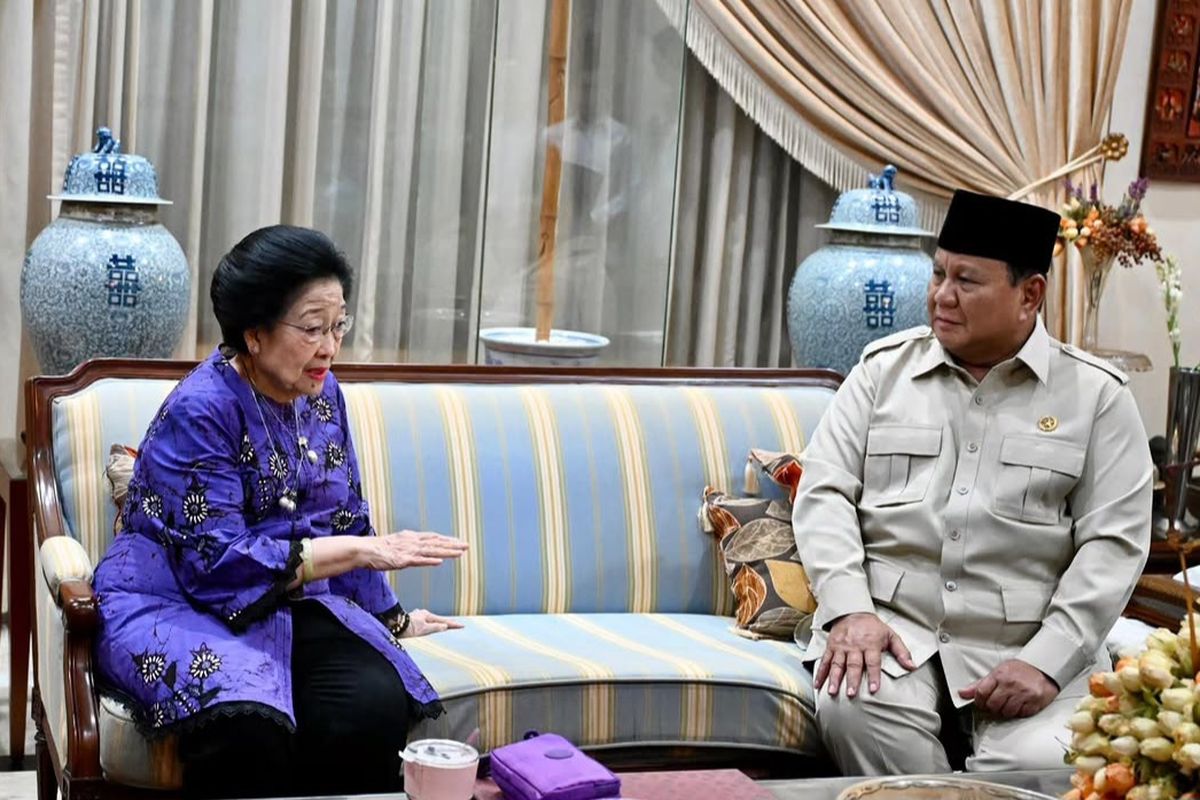
GERINDRA and the PDI Perjuangan (PDIP) have the electoral capital to establish a new political axis.
Meanwhile, the PSI and the Gibran controversy showcase limitations in transforming personal influence into political power.
The political landscape for 2029 is beginning to reveal some intriguing shifts.
Gerindra and the PDIP, two parties with distinct histories, voter bases, and interests, have the potential to become pivotal forces in the upcoming power contest.
At the same time, President Jokowi and Vice President Gibran Rakabuming Raka are facing significant challenges.
Proximity to the power center does not automatically guarantee electoral strength, especially when party vehicles and questions of political legitimacy arise.
On Thursday, October 22, 2026, in the podcast Gaspol! Kompas.com, Andi Widjajanto interpreted the controversy surrounding Gibran's degree as part of a long-term political operation originating in Solo, with potential ramifications extending to 2029.
The Senior Advisor to LAB45 also suggested that the possibility of a coalition between the PDIP and Gerindra should not be dismissed given their ideological alignments as nationalist forces.
This statement is not a coalition announcement. However, Andi's reading is noteworthy as it intersects with electoral shifts and the need for power consolidation ahead of the elections.
If Gerindra and the PDIP find common strategic interests, the 2029 configuration could diverge from longstanding expectations.
Conversely, political strength anchored in individual figures and personal connections may lose bargaining power without support from a formidable party machinery and adequate voter backing.
Survey results from October 2026 provide initial insights.
Poltracking, through a survey conducted between September 30 and October 7 involving 1,220 respondents, recorded Gerindra's electability at 22.9 percent and the PDIP at 13.4 percent.
Voxpol, which conducted a survey from October 3 to 12 with 1,200 respondents, recorded Gerindra at 21.1 percent and PDIP at 16.1 percent.
These figures should not be seen as predictions for the 2029 elections, and the electability gap between the two parties varies across organizations.
Nevertheless, the positioning of Gerindra and the PDIP as the top two parties in both surveys indicates tangible political capital.
When combined, preferences for the two parties reach 36.3 percent according to Poltracking and 37.2 percent according to Voxpol.
Gerindra enjoys an advantage as the presidential party, capable of relying on organizational consolidation and its governmental track record to expand support.
On the other hand, the PDIP has distinct strengths, such as a durable voter base, a national organizational network, and extensive experience in both government and opposition.