Experts Urge MPR Verification Team to Assess Legality and Constitutional Requirements for Vice Presidential Candidate
-
News
-
3 minutes ago
This article was translated by AI. Read the original article on Kompas.com. See Original

Social vulnerability works like a crossroads, where various layers of identity, gender, age, and socioeconomic class intersect.
In a cultural framework still steeped in patriarchy, women are often placed in subordinate positions.
This vulnerability multiplies as old age begins to steal physical vitality, intermingling with a marginalized social class background.
The elderly woman on that stage is a mirror reflecting a condition of layered vulnerability.
She does not hold the microphone, lacks the space to defend herself, and has lost the agency to articulate her self-worth in front of the cameras.
As feminist philosopher Audre Lorde reminds us, differences in identity should create spaces for mutual growth and care, not domination.
Yet, the opposite occurs. Instead of being treated with the honor that elevates the elderly in eastern cultures, this existential vulnerability of the elderly woman is devalued and commodified as a tool for entertainment.
Public laughter is ultimately produced in the most primitive way: by mocking those who are least able to fight back.
This cultural inequality becomes even clearer when we examine the power relations on stage.
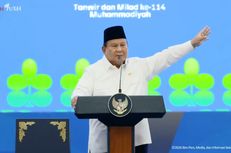
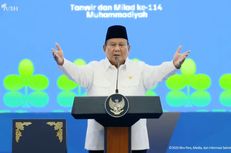
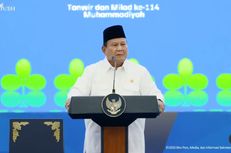
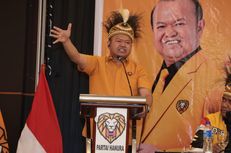
The speaker stands tall with charismatic authority, controlling the microphone and the psychological atmosphere of thousands of attendees who regard him with reverence.
As explained by Teun A. van Dijk in critical discourse analysis, the symbolic power of elite groups operates through total control over access to public discourse.
Those who hold the podium possess the privilege to dictate definitions, representations, and moral boundaries of who deserves praise and who can be laughed at.
In this imbalanced discourse atmosphere, the stage subtly splits into two contrasting poles.
The "us" (in-group), empowered, superior, and entitled to laugh, and the "other" across the way, alienated, submissive, and open to mockery.
The issue is compounded because the speaker is not a circus clown, but rather an authority figure with moral religious authority.