

Gibran, PDI-P, and Old Wounds from the 2024 Presidential Election
-
News
-
16 minutes ago
This article was translated by AI. Read the original article on Kompas.com. See Original
WHEN economic turmoil, extreme climate anomalies, global geopolitical dynamics, world energy issues in the global supply chain, and the threat of dehumanizing technology collide simultaneously, we are no longer facing a single crisis that can be managed in a linear fashion.
Indonesia is entering an era of polycrisis—a concept sharpened by economic historian Adam Tooze and adopted by the World Economic Forum to describe a condition when multiple global and domestic crises not only occur simultaneously but also intertwine, influence each other, and collectively create a far more destructive impact than the sum of each crisis standing alone.
This is no longer about storms coming one after another; this is a perfect storm that strikes from all directions at once.
In Indonesia, polycrisis manifests itself like a tangled thread, where each tug only tightens knots elsewhere.
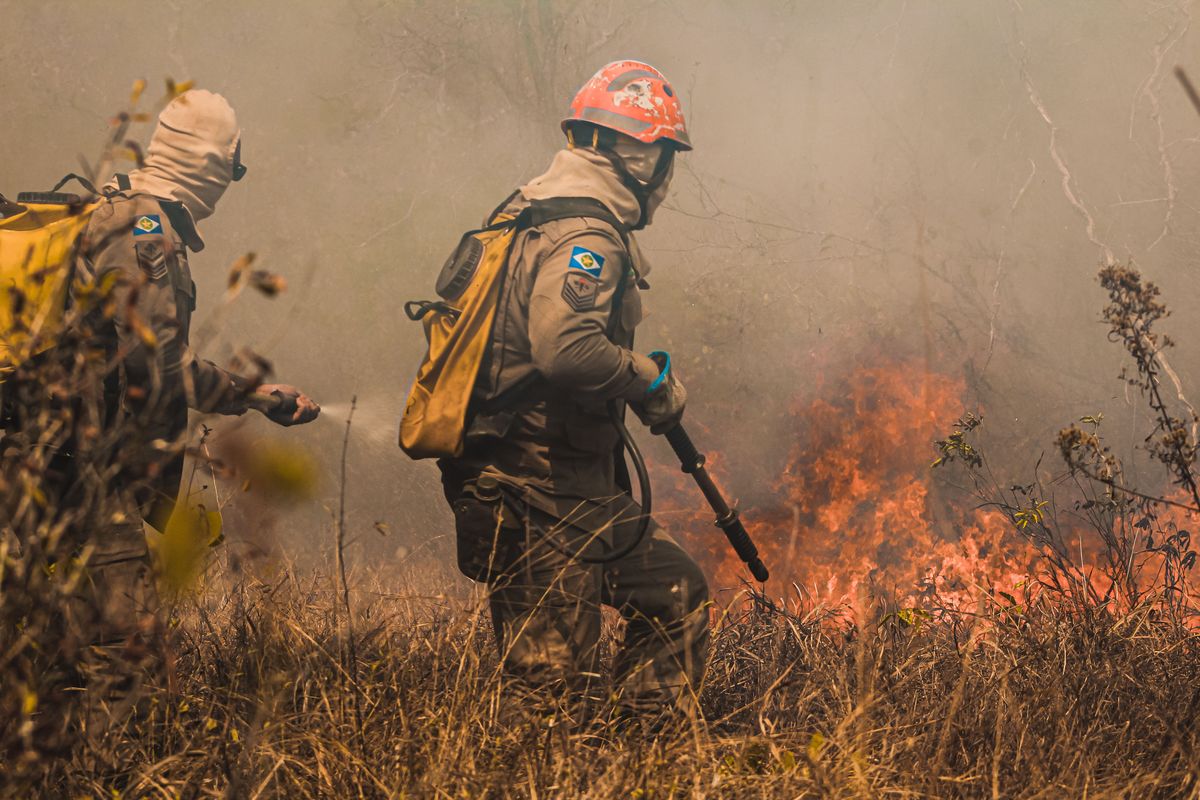
Issues such as prolonged flooding in some regions, severe drought in others caused by climate change, and “disasters” of forest and land fires triggering protests from neighboring countries have led to the failure of harvests of strategic food commodities like rice, corn, and soybeans.
This crop failure instantly triggers inflation in basic necessities, drastically affecting millions of households.
Fortunately, this has not been accompanied by an energy crisis, such as shortages of gas for households and fuel.
Additionally, there is a wave of layoffs in labor-intensive sectors eroding public purchasing power massively and putting pressure on the middle class, which has been the backbone of domestic consumption.
Capital has fled abroad due to decisions made by several foreign factories to relocate to other countries.
The pressure on society has become heavier due to rising tax burdens.
When the fiscal space of the state budget is already constrained by debt repayments and routine spending that is nearly non-compressible, the government's capacity to fund social safety nets and disaster response and climate adaptation programs is also hampered.
Each crisis acts as a trigger for the next in a spiraling chain that becomes increasingly difficult to break.
This situation raises a crucial question that can no longer be postponed: to what extent is our public governance architecture ready to respond to these interlocking systemic shocks?
Unfortunately, the answer to that question is not encouraging. The state's response to various successive crises often falls into a reactive pattern, which in crisis management literature is termed 'firefighting mode.'
New policies are formulated only after problems arise. This has become a very typical pattern of public policy formulation lately. Market operations are only conducted after basic product prices spike uncontrollably.
Social assistance is only disbursed after purchasing power plummets and social casualties occur. Flood management and its relationship to deforestation are only considered after a flood takes material and human victims.
Land management issues and disaster mitigation are only discussed when the fires persist in the case of forest fires.
The government chases after fires that have already flared up instead of building a prevention system to ensure those fires do not emerge in the first place.
The absence of anticipatory planning that is systemic and cross-sectoral represents the most glaring gap in our current national resilience strategy.
At least three structural factors perpetuate this reactive pattern. First, the short political cycle distorts policy priorities.
Public policy orientation in Indonesia is inherently tied to a five-year political horizon.
In such political calculations, populist policies that yield instant and visible effects in the public eye are far more favored than investments in long-term resilience whose benefits may not be felt for a decade or two.
Building systems for early warning of natural disasters, for instance, does not provide political-social validity for officials.
As a result, programs that should be anticipatory are deprioritized compared to infrastructure projects that are easier to utilize for campaign materials and image-building.