
Is There Still a Way to Prove Gibran's Diploma?
-
News
-
1 minute ago
This article was translated by AI. Read the original article on Kompas.com. See Original
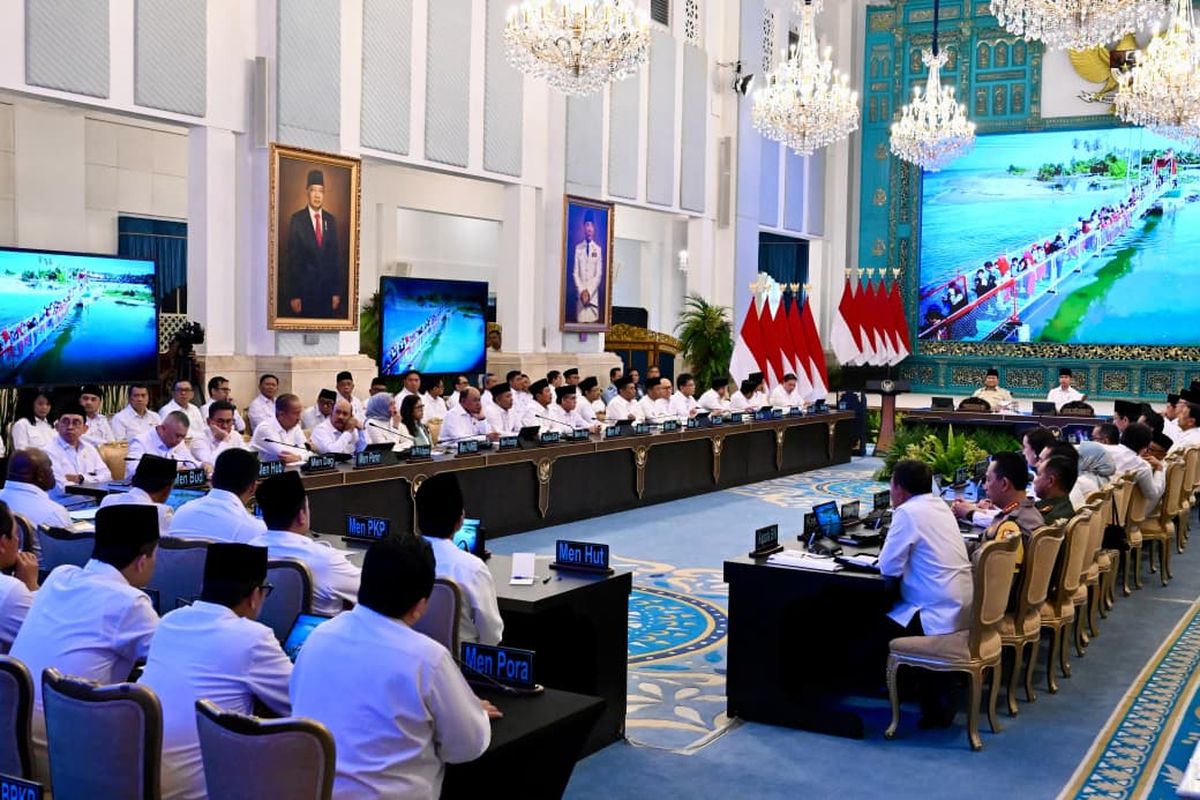
THERE is an interesting trend in the two years of President Prabowo Subianto's administration. The government has frequently formed task forces (Satgas) to address various issues.
It seems that every strategic problem requires a special team for prompt resolution.
The government has established Satgas for downstreaming and energy resilience, energy transition, forest area regulation, village cooperatives, layoffs mitigation, and post-disaster rehabilitation.
In the economic sector, the Strategic Government Program Acceleration Task Force (P2SP) was formed in 2025 and later reinforced by the Government Program Acceleration Task Force to Support Economic Growth Enhancement (P3-MPPE).
The creation of task forces is certainly based on certain reasons. Issues involving multiple agencies require integrated handling.
In emergencies, task forces can expedite decision-making and tackle bureaucratic hurdles.
However, as this special mechanism is increasingly utilized, we must ask: why have the existing ministries and agencies not been able to perform their tasks effectively?
One possible explanation is Prabowo's leadership style, which exhibits a command orientation. His military background is relevant to understanding this tendency.
In military organizations, clarity in the chain of command, discipline, and speed of action are vital elements.
When facing problems, units can be formed with specific tasks, leaders appointed, goals set, and all resources mobilized to achieve them.
This pattern has advantages, especially in emergencies. When disasters occur, for example, communities need rapid action. Overly lengthy coordination can exacerbate the suffering of victims.
The issue is that democratic government has a character different from military organizations. Democratic states operate through the division of authority, legal procedures, oversight, and decision-making processes that involve various interests.
In a command-oriented organization, orders from superiors are the main drivers. In contrast, democracy assumes institutions with the authority, capability, and responsibility to act based on legal mandates.
When command logic becomes the dominant approach in governance, officials may increasingly become accustomed to waiting for instructions.
The authority that they actually possess is not utilized optimally. Coordination between agencies risks devolving into dependence on presidential directions.