
Sugiono Ensures State Will Secure Future for Families of Fallen Karhutla Volunteers
-
News
-
37 minutes ago
This article was translated by AI. Read the original article on Kompas.com. See Original
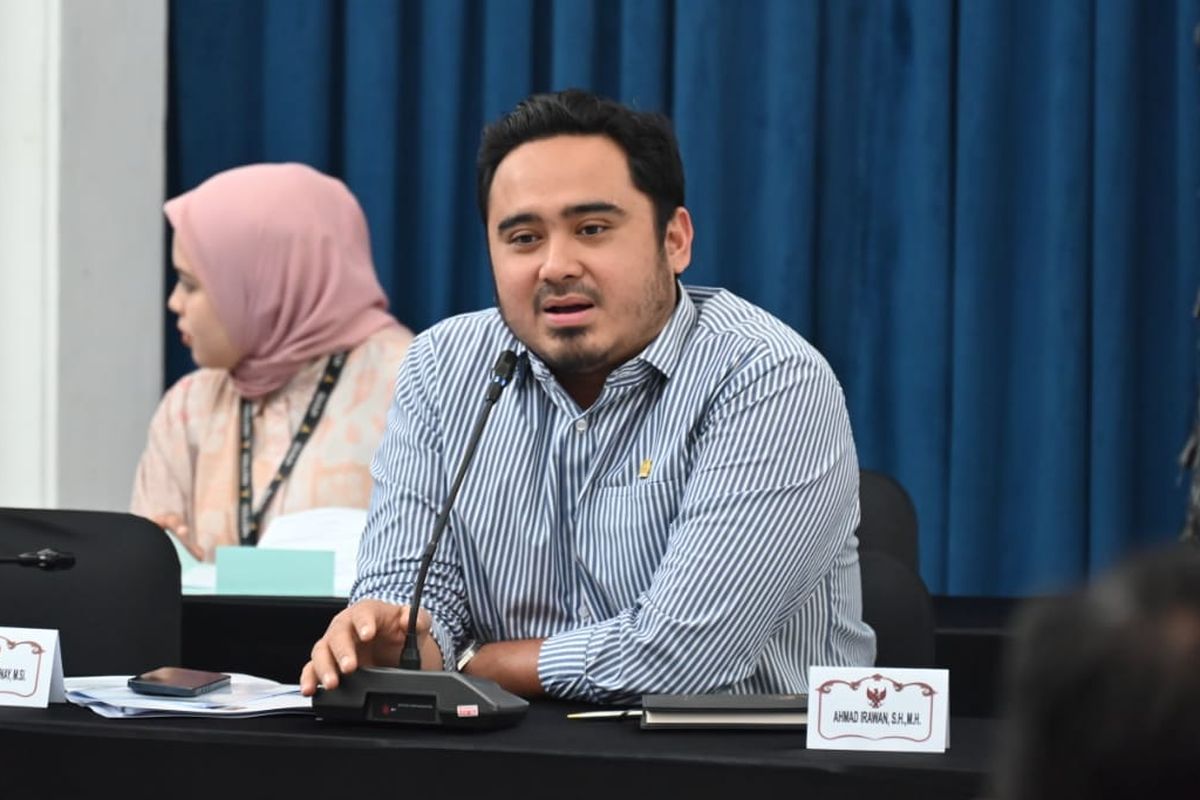
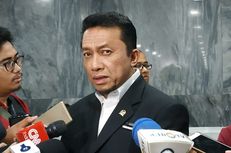
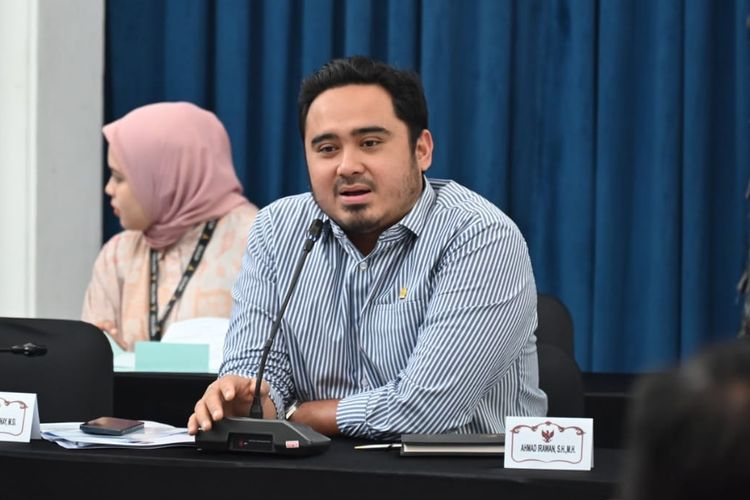
JAKARTA, KOMPAS.com - Ahmad Irawan, a member of Commission II of the Indonesian House of Representatives (DPR RI), revealed a proposal to increase the number of commissioners for the General Election Commission (KPU) and the Election Supervisory Body (Bawaslu) through a revision of the Election Law.
This proposal emerged from an evaluation of the organization of the 2024 elections, which is considered to have a high workload due to simultaneous execution.
“If we talk at the national level, the KPU and Bawaslu, there has been an evaluation that having only 5 members in Bawaslu is inadequate. Similarly, KPU with just 7 members is insufficient,” Irawan stated when contacted on Friday (23/10/2026).
Irawan explained that this evaluation was used by the DPR RI’s Expertise Agency in preparing the academic manuscript for the Election Bill.
Consequently, the current 7 commissioners in the KPU have the potential to increase to 9 members.
Meanwhile, the current 5 Bawaslu commissioners might be increased to 7 or 9 members.
“Yes, for the national level, it’s likely to increase to 9, considering the vastness of Indonesia. Bawaslu also might expand to either 7 or 9. However, it’s still just a draft, an academic manuscript,” Irawan explained.
“Later, we will listen to what input we receive. Of course, we will need to measure other criteria too. So, certainly, the principle of our elections must be efficient,” he added.
The Golkar politician emphasized that increasing the number of commissioners is necessary to meet the demands of organizing elections.
Moreover, Irawan noted that several stages take place simultaneously and require intensive handling.
“Elections have certain stages which tend to pile up at the end. Usually, these are at the stages of logistics distribution, polling, counting, and recapitulating votes—all these can become congested during implementation,” Irawan stated.
In addition to increasing commissioners at the central level, the DPR RI is also examining the possibility of adjusting the number of KPU and Bawaslu members at the regional level based on each area’s workload.
Irawan mentioned that the number of commissioners at the provincial and district/city levels does not have to be uniform across all regions. The DPR will consider several factors, such as the number of voters, area size, geographical conditions, and the scope of work.
“So it goes back to the required numbers in accordance with the workload,” he said.
Despite this, Irawan insisted that the increase in the number of KPU and Bawaslu commissioners has not reached a final decision.
This is because the substance is still included in the academic manuscript, which will serve as the basis for drafting the Election Bill.
“Certainly, we need to gather input from the public as a manifestation of meaningful participation,” Irawan concluded.