
When the Baduy Settlement Ignited in Flames...
-
News
-
45 minutes ago
This article was translated by AI. Read the original article on Kompas.com. See Original
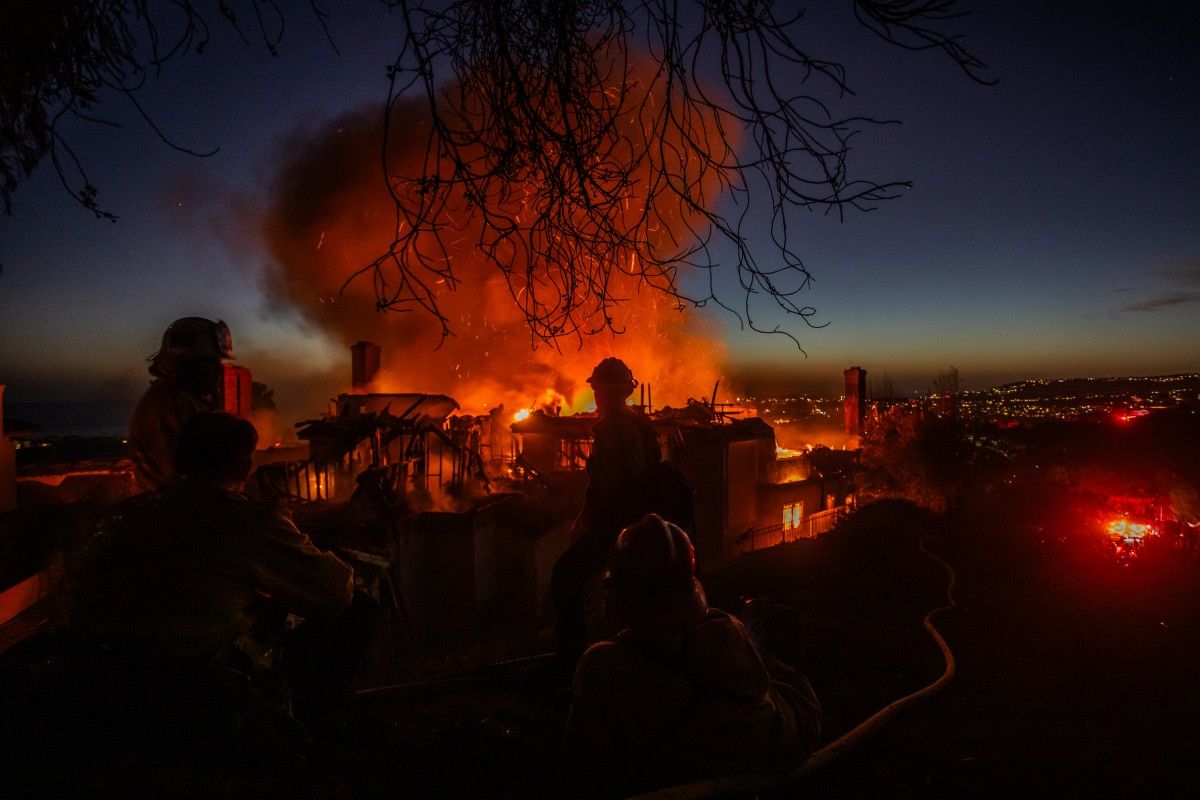
WHEN land that has been scorched by fire is quickly planted with palm oil, law enforcement must investigate not only who started the fire, but also who controls the land and profits from its use.
The smoke has not fully cleared, yet palm seedlings have already found their place to grow.
This picture emerged from several locations of burned forest and land in Indonesia throughout 2026.
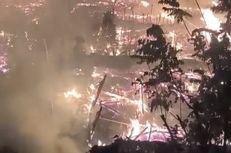
The fire left behind blackened earth, while land clearing and planting activities began to take shape.
This sequence of events raises suspicions that must not be dismissed with mere assumptions but require serious investigation.
In Dharmasraya, West Sumatra, land covering 5.9 hectares in the Limited Production Forest area of Bukit Lantak, Timpeh District, burned on September 15, 2026.
A month later, the site was found to have been planted with palm oil. Police cordoned off the area and launched an investigation.
Similar findings appeared in Pematang Pudu, Bengkalis, Riau, where approximately six hectares of Limited Production Forest area were allegedly cultivated without permission.
About 1.5 hectares had been cleared, and palm seedlings were found on site. A suspect was identified in connection with the land occupation and planting in the forest area.
In Sungai Awan Kiri Village, Ketapang, West Kalimantan, around 2,400 hectares were engulfed in flames.
Law enforcement teams sealed off the location and confiscated an excavator after discovering land clearing and plantation preparation activities.
The village government claimed the heavy machinery was used to clear old ditches.
This explanation needs to be verified against field evidence, not accepted or rejected before the investigation is complete.
These cases have different legal contexts and land conditions. However, the emergence of palm planting after the fires raises the critical issue of how to ensure that fires do not become a shortcut for seizing land, changing land use, or profiting from legal violations.
Forest and land fires cannot be separated from governance issues. Fires can arise from negligence, community activities, weather conditions, or deliberate actions. Thus, each case must be examined based on evidence.
However, when burned land is immediately opened and planted with economically valuable commodities, the investigation needs to move beyond identifying the source of the fire.
Who owns or controls the land? Who finances the clearing of the area? Where do the heavy machinery and seedlings come from?
Is there a land transaction, intermediaries, or parties giving orders involved? Is planting taking place in forest areas, concessions, or land that holds legal rights?
The answers to these questions can reveal whether the fire stands alone as an incident or is connected to efforts to gain economic benefits.
In August 2026, the Ministry of Forestry announced the designation of three suspects in the case of clearing the Bukit Rimbang Baling Wildlife Sanctuary area in Riau by burning it to plant palm oil.
Investigators also found evidence of land sales within the forest area.
In a separate case, a corporation was designated as a suspect for alleged encroachment in Mempawah, West Kalimantan.
These findings demonstrate that law enforcement must trace the series of activities and the parties involved.
Stopping at just the individuals who ignited the fires risks leaving other links unexamined, especially if there are parties coordinating, financing, or profiting from the land clearing.
Data reported by Inilah.com based on Criminal Investigation Agency records as of October 13, 2026, recorded 273 individual case reports with 223 suspects and approximately 5,157.89 hectares of burned land.
For corporate cases, there were 98 reports covering about 25,600.26 hectares of burned land, with nine companies listed as suspects.
These numbers highlight the importance of distinguishing the number of cases, the area affected, and the legal status.
They do not prove that all fires are related to palm oil, but they illustrate the vast areas that need investigation and the importance of probing corporate responsibility.
On September 7, 2026, President Prabowo Subianto called for investigators to examine suspected arson linked to the opening of plantations.
He also urged that the names of the corporations allegedly involved be traced, including the potential for revoking permits and rights to work the land.
This directive provides a clear political mandate. The challenge is to ensure that these orders result in publicly verifiable outcomes.
Law enforcement must not stop at sealing off locations or announcing investigations.
The public needs to be informed about the progress of cases, the status of the areas, the parties designated as suspects, and the legal basis for every action taken.
If violations are found, the criminal process and administrative penalties must be enforced according to regulations.
If allegations are not proven, the investigation results must also be explained transparently.
Examinations must differentiate between those who start the fires, those who control the land, and those who benefit.
These could be different individuals or legal entities. Without tracing ownership and profit flows, law enforcement risks only reaching those closest to the fire.
The palm oil industry cannot be painted with a broad brush. The Indonesian Palm Oil Entrepreneurs Association refutes that companies deliberately set fires and insist that land clearing without burning has long been practiced.
This denial needs to be placed within an evidence-based review. Companies following the law should not be accused without basis, while violators should not hide behind the industry's reputation.
The losses from fires do not stop at scorched trees. Communities breathe in smoke, economic activities are disrupted, wildlife habitats are threatened, and the state expends resources on extinguishing fires and managing their aftermath.
If land subsequently yields profits for certain parties without accountability for the damage, the ecological and social burdens fall on the community, while economic benefits concentrate among a select few.
Therefore, area restoration must be part of law enforcement.
Burned land should not automatically be deemed available for planting or repurposing.
Status of the area, land rights, permits, and recovery obligations must be reviewed before new activities are permitted to proceed.
Monitoring based on satellite imagery and field inspections must also link fire records to changes in land cover after the flames are extinguished.
The phrase that has recently become a joke among netizens regarding “after the smoke clears, the palm oil rises” may sound like a satire, but the reality on the ground demands more than such narratives.
The state must ensure that fires do not turn into profit at the expense of shared loss.
Moreover, the measure of success is not how many perpetrators are reported apprehended, but how far the law can uncover the entire chain of responsibility, restore the area, and prevent burned land from becoming a gateway for future violations.