
More Loved After Becoming a Former Leader
-
News
-
35 minutes ago
This article was translated by AI. Read the original article on Kompas.com. See Original

JAKARTA, KOMPAS.com - The fight against corruption in Indonesia has never solely involved bribery but also actions that harm the state’s finances.
The element of state loss is a crucial part of several definitions of corruption, particularly when public officials abuse their authority.
Now, the application of this element has sparked debate following a proposal to redefine corruption offenses based on international standards.
National Economic Council (DEN) Chairman Luhut Binsar Pandjaitan has suggested to President Prabowo Subianto that state loss should no longer be included in the definition of corruption.
Luhut argues that the United Nations Convention Against Corruption (UNCAC), which Indonesia ratified through Law No. 7 of 2006, focuses primarily on bribery.
"We refer to the UN Charter regarding the definition of corruption, where corruption is defined as bribery in the UN Charter, which Indonesia ratified 20 years ago. It doesn’t mention state loss," Luhut stated at Merdeka Palace in Jakarta on Wednesday (21/10/2026).
He noted that the President approved the DEN's study on changing the definition of corruption to align with international standards.
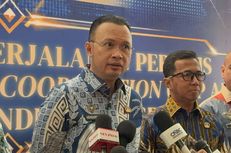
This proposal also garnered support from the Coordinating Minister for Law, Human Rights, Immigration, and Corrections, Yusril Ihza Mahendra.
According to Yusril, the definition of corruption in Indonesia needs updating as it makes government officials and state-owned enterprise (BUMN) executives hesitant to make business decisions that could lead to losses.
However, this proposal remains a topic of discussion and requires deeper analysis.
Justice Minister Supratman Andi Agtas stated that any changes to the law need prior discussion as they involve provisions in legislation.
So, is it true that UNCAC only regulates bribery and does not cover state losses?
What are the legal consequences if the element of financial loss to the state is removed from the definition of corruption offenses in Indonesia?
Criminal law expert from Trisakti University, Abdul Fickar Hadjar, argues that the view which claims UNCAC only regulates bribery as an act of corruption is incorrect.
He asserts that the convention addresses various actions that can be categorized as corruption.
"LBP's view is erroneous because the UNCAC definition of corruption is very broad," Fickar told Kompas.com on Thursday (22/10/2026).
While UNCAC does not provide a singular definition of corruption, it covers several criminal acts, including bribery of public officials, embezzlement or abuse of entrusted property by officials, influence peddling, misuse of office, money laundering, and obstruction of justice.
The provision on bribery of national public officials is outlined in Article 15 of UNCAC.
Article 17 addresses embezzlement, abuse, or misappropriation of wealth by public officials.
Misuse of office is regulated under Article 19, and money laundering is covered by Article 23.
According to Fickar, these various forms of corrupt acts cannot simply be separated from issues of state loss, whether directly or indirectly.
"Thus, corruption actions cannot be divorced from its elements of state loss, either directly or indirectly," he stated.
He believes that reading UNCAC requires a comprehensive understanding that considers all types of criminal offenses addressed in it, rather than solely focusing on the provisions regarding bribery.
A similar perspective was expressed by criminal law expert Albert Aries from Trisakti University.
He mentioned that UNCAC not only addresses bribery but also embezzlement and misuse or misappropriation of wealth by public officials for personal or third-party interests.
However, Albert clarified that UNCAC does allow member states to apply stricter anti-corruption provisions in their national laws.
He referred to Article 3, Paragraph 2 of UNCAC, which states that, unless specified otherwise, the application of the convention does not depend on the existence of a loss to state wealth.
Moreover, Article 65, Paragraph 2 of UNCAC allows parties to implement stronger measures in their domestic laws to prevent and combat corruption.
"Furthermore, Article 65, Paragraph 2 of UNCAC still allows member states to enact harsher regulations in their national laws to prevent and combat corruption, including in the context of Indonesia, the financial loss to the state as part of the definition of the offense," Albert explained to Kompas.com on Thursday.
Thus, according to Albert, the existence of the element of financial loss to the state in Indonesia's anti-corruption regulations does not necessarily contradict UNCAC.
The convention permits member states to establish stricter provisions according to their national legal needs.
The debate over redefining corruption does not stop at interpreting UNCAC.
The following question is how such a change would affect law enforcement processes if the element of financial loss to the state is removed from the definition of corruption offenses.
Albert noted that removing the element of financial loss to the state would alter the burden of proof in corruption cases that utilize this element as part of the criminal offense.
"If the element of financial loss to the state is removed from the legal definition, there would be no obligation to prove and demonstrate the existence of financial loss as a consequence of the corruption act," he stated.
He added that this change would also impact the legal framework regarding corruption offenses causing financial or economic harm to the state, as outlined in Articles 603 and 604 of the Criminal Code (KUHP).
These articles govern corruption offenses related to unlawful acts or abuse of authority that harm the financial or economic interests of the state.
If the element of state loss is eliminated from these definitions, the burden of proof in legal cases would no longer include the necessity to demonstrate financial loss as defined under current provisions.
However, these changes should be viewed within the context of the legal definitions outlined in the law.
Removing the element of state loss from a definition does not inherently mean that other corrupt actions lose their status as criminal offenses.
Fickar highlighted another consequence if state loss is no longer part of the definition of corruption offenses.
He noted that if an act is no longer categorized as a corruption offense based on the element of state loss but still creates legal issues, its resolution could shift into the civil law domain, depending on the nature of the act and applicable legal provisions.
He argues that resolving cases via civil channels may be time-consuming and face risks of bribery throughout judicial processes.
"If state loss is removed, even though those actions are still classified as criminal offenses, the result will place them as personal or individual losses, which are resolved more through civil law," Fickar cautioned.
Therefore, he contends that redefining corruption must consider its consequences on law enforcement mechanisms, including how the state recovers losses arising from unlawful acts.
Beyond the substance of the debate, the redefinition of corruption offenses is also linked to the legislative process.
Modifications to existing regulations cannot merely be enacted through government decisions, as they require discussion and mutual agreement among legislative bodies.
Fickar remarked that changing the definition of corruption must undergo a legislative process involving both the government and the parliament.
This process also needs to consider public aspirations regarding the direction of anti-corruption efforts.
"Substantively, both the government and parliament cannot carelessly draft or alter corruption laws merely based on individual preferences or desires," Fickar asserted.
"Rather, it should be examined through an extended process that gathers public opinion. For instance, it’s vital to understand if the public supports redefining corruption offenses without considering state loss. That’s really the point," he continued.
He added that substantively, the government and parliament must also take public sentiment into account to gauge public perspectives on the proposed removal of the state loss element from corruption offenses.
On the other hand, Yusril mentioned that a revision of the Anti-Corruption Law cannot be conducted in the near future as it is not yet included in the National Legislative Program (Prolegnas) Priority.
Nevertheless, he indicated that the government is ready to consider improvements to the law once the discussion process starts.
Yusril noted that changes in regulations are necessary to align anti-corruption provisions with legal developments and address emerging issues in their implementation.
"The principles have been approved by the President. I’ve heard this from Mr. Luhut, and once that’s established, it eases our job, alongside Mr. Supratman and other law enforcement officials, to start improving the anti-corruption law itself," Yusril stated.
Meanwhile, Supratman emphasized that the proposal for redefining corruption still requires thorough discussions as it relates to established legal provisions.
"And there will certainly be discussions surrounding these matters because they are in the law, so they will definitely need to be addressed first," Supratman said.