
Problems Arise from Flagship Programs and the President's Circle of Power
-
News
-
9 minutes ago
This article was translated by AI. Read the original article on Kompas.com. See Original
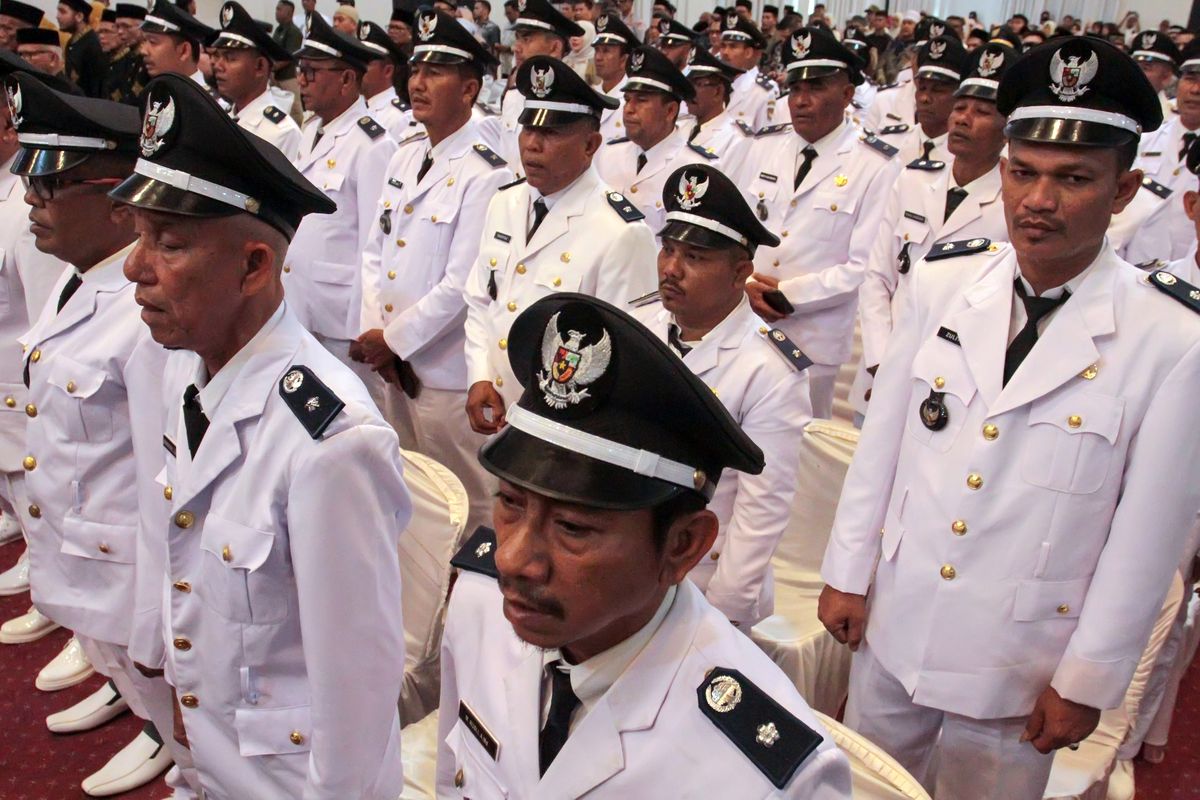
JAKARTA, KOMPAS.com - The Village Head Elections (Pilkades) are set to take place in several regions across Indonesia.
In various areas, candidates often have familial ties or strong kinship relationships, accompanied by diverse professions.
For instance, in Blitar, East Java, four couples are running in four different villages.
A similar situation is seen in Wonogiri, Central Java.
Beyond couples, the upcoming Pilkades in 50 villages is marked by close family ties in several areas, extending from father-son to uncle-nephew relationships.
In Semarang, Central Java, the scenario is somewhat different.
The Pilkades there include a variety of professions, ranging from the chairperson of the General Election Commission (KPU) to police officers and contract teachers.
Jojo Rohi, a member of the National Committee for Independent Election Monitoring (KIPP) Indonesia, stated that this phenomenon occurs because village elections are inherently linked to personal trust and kinship networks.
This situation becomes more pronounced when access and resources are controlled by incumbents who are often family members or relatives.
"Legally, it's not prohibited, but potential conflicts of interest should be heeded, especially if candidates are from within the administration or the apparatus," Jojo told Kompas.com on Wednesday (21/10/2026).
According to Jojo, conflicts of interest can arise when an elected village head leads based on their own "charisma." A village head, he explained, has control over the village fund budget from the state budget (APBN), which varies widely.
In 2024, the total will amount to IDR 71 trillion for 75,265 villages.
"In practice, village heads become central figures in its utilization," Jojo noted.
Professor of Regional Autonomy at the National Institute of Public Administration (IPDN), Djohermansyah Djohan, added that the allure of the village head position is also tied to the character of rural communities, especially in certain parts of Java where patron-client relationships and respect based on descent or social status remain strong.
In such environments, social and economic capital often serve as key resources for winning village head elections.