

Sugiono Ensures State Will Secure Future for Families of Fallen Karhutla Volunteers
-
News
-
56 minutes ago
This article was translated by AI. Read the original article on Kompas.com. See Original
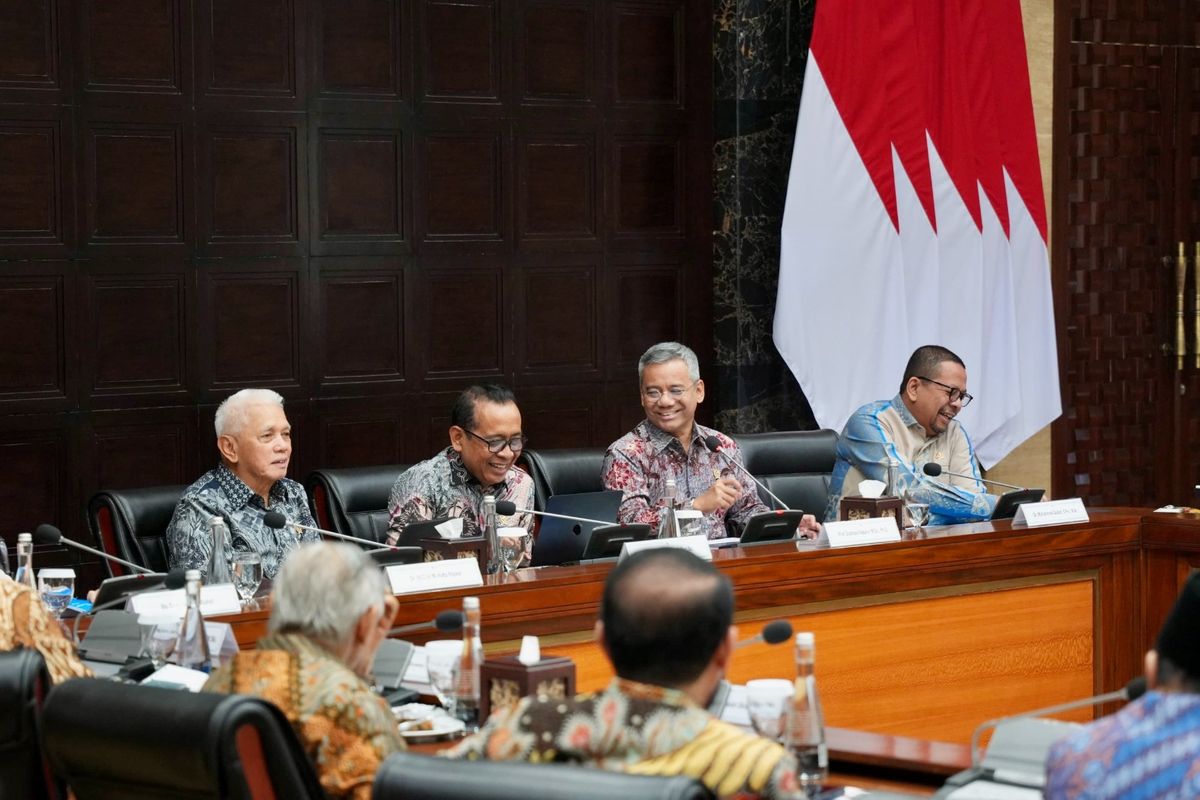
JAKARTA, KOMPAS.com - The Presidential Advisory Council of Indonesia (Wantimpres RI) held its third plenary meeting featuring Finance Minister Suahasil Nazara on Thursday (22/10/2026).
Wantimpres Chairman Pratikno elaborated that Suahasil was invited to discuss the structure of the State Budget (APBN), the national fiscal conditions, and the government's budgetary policy directions for 2026 and 2027.
“We want to obtain an overview of our fiscal policy structure,” Pratikno stated at the Main Building of the Ministry of State Secretariat in Jakarta, as quoted from his remarks on Thursday.
Pratikno emphasized that fiscal policy is interlinked with various areas of concern for Wantimpres RI, ranging from politics, law, and security to social welfare, as well as economic and financial matters.
“At Wantimpres, we have three areas: politics, law, and security; social welfare, religion, and culture; and economy and finance. However, fiscal matters are not only related to the economy and finance sector. Other fields are also very much interconnected with us,” he said.
Meanwhile, Suahasil, in his presentation before the Wantimpres members, detailed the development of the nation's economic and fiscal conditions throughout 2026 and provided an overview of the APBN structure for 2027.
Suahasil explained the trends in state revenues and expenditures, financing, and budget allocations for various sectors such as social protection, disaster management, education, health, and food security.
The Finance Minister also outlined the three primary functions of the APBN: allocation, distribution, and stabilization.
These functions serve as a basis for managing state finances to support economic growth, equitable welfare, and maintain economic stability.
“The government will continue to uphold the APBN as an instrument that stimulates the economy, protects society, and remains credible so that growth can be sustained, welfare can be enhanced, and economic stability can remain strong,” Suahasil stated.
Furthermore, Suahasil also explained the role of the Ministry of Finance in managing the APBN to support the implementation of various priority programs of President Prabowo Subianto.