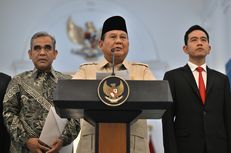

Toward a New Vice President: Prabowo Gathers Proposals, MPR Prepares for Election
-
News
-
22 minutes ago
This article was translated by AI. Read the original article on Kompas.com. See Original

JAKARTA, KOMPAS.com - Forest and land fires (karhutla) in Indonesia continue to have repercussions even in neighboring countries.
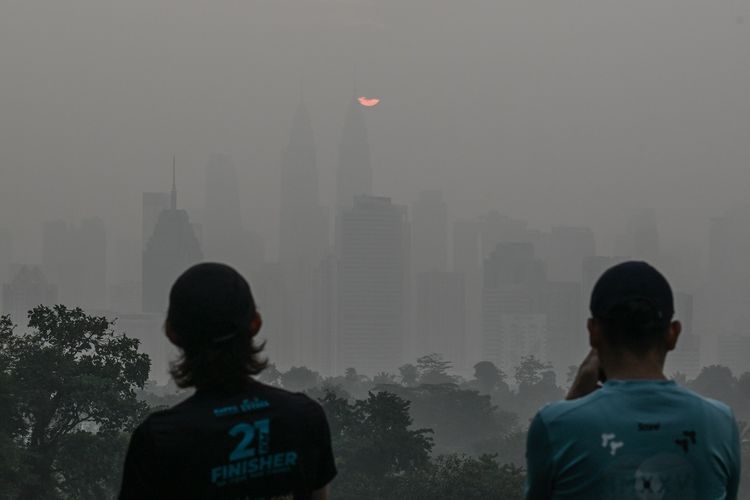
The smoke from several burning regions in Indonesia has spread to Malaysia and Singapore, raising cross-border issues amid domestic efforts to address karhutla.
In October 2026, fires were reported in various areas, including Palembang in South Sumatra, Palangka Raya in Central Kalimantan, and Raja Ampat in Southwest Papua.
Indonesia has ratified the ASEAN Agreement on Transboundary Haze Pollution (AATHP) through Law No. 26 of 2014 concerning the Ratification of the ASEAN Agreement on Transboundary Smoke Pollution.
This law was signed by the 6th President of Indonesia, Susilo Bambang Yudhoyono (SBY), on September 16, 2014.
The agreement creates a framework for cooperation among ASEAN countries in addressing transboundary smoke pollution.
However, addressing karhutla also relates to the authority of each country to prevent fires and take action against those responsible within their jurisdiction.
So, how does ASEAN handle cross-border karhutla? Does ASEAN have legal instruments to hold perpetrators accountable?
Teuku Rezasyah, a lecturer in International Relations at President University, believes that ASEAN currently lacks legal instruments that can impose sanctions on member states that fail to prevent forest fires and transboundary smoke pollution.
"ASEAN does not have legal instruments for enforcement," Rezasyah told Kompas.com on Wednesday (21/10/2026).
According to him, the provisions in the AATHP do not include a sanction mechanism that can be applied to member states that are unable to prevent forest fires and the spread of smoke.
The implementation also depends on the national laws of each country.
"So far, the AATHP has been more of a paper tiger, and difficult for often rapidly changing governments in ASEAN to implement," he stated.
He suggested that ASEAN should consider revising the ASEAN Charter, which was signed in 2007.
This discussion is necessary given the repeated impacts of karhutla on the environment and the achievement of Sustainable Development Goals (SDGs).