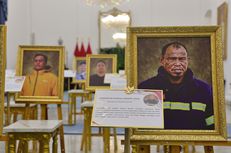
Sugiono Ensures State Will Secure Future for Families of Fallen Karhutla Volunteers
-
News
-
36 minutes ago
This article was translated by AI. Read the original article on Kompas.com. See Original
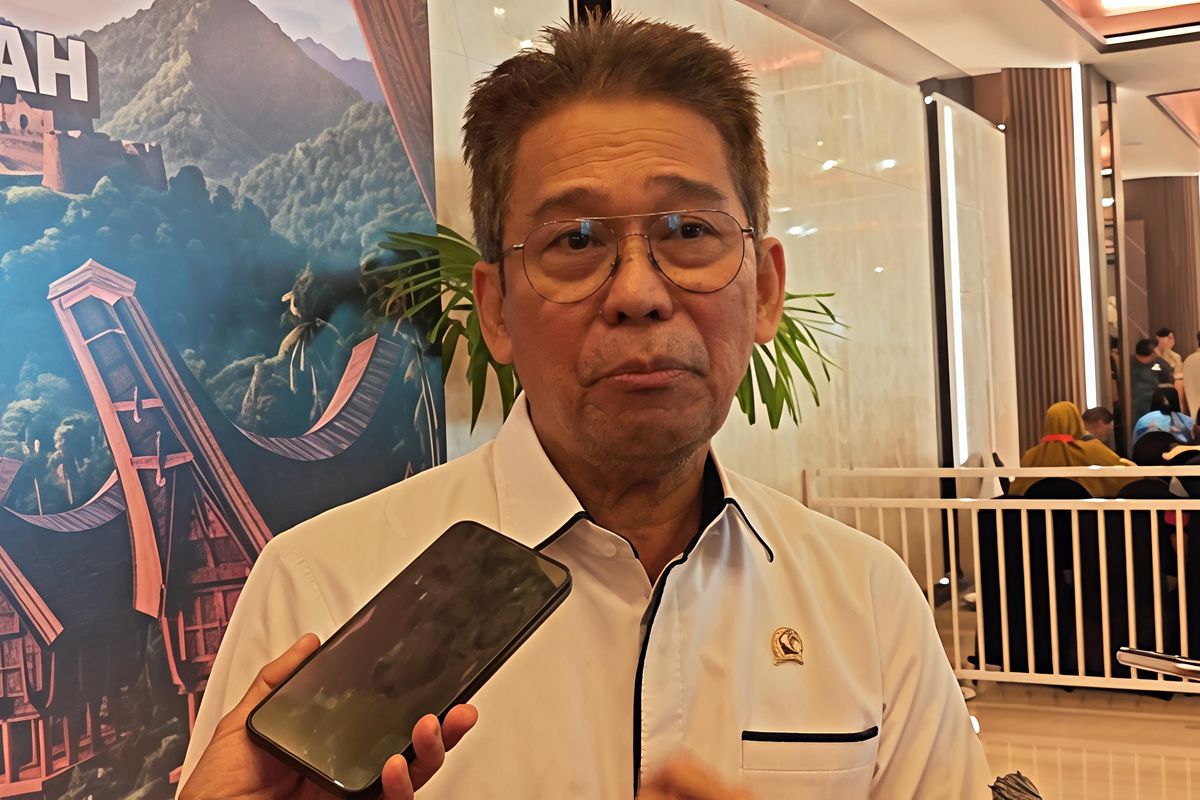
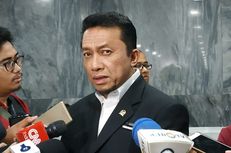
JAKARTA, KOMPAS.com - Deputy Chairman of the Corruption Eradication Commission (KPK) Johanis Tanak believes that the government should prioritize revising the Law on State-Owned Enterprises (UU BUMN) over following the proposal of National Economic Council Chairman Luhut Binsar Pandjaitan to remove the element of state losses from the Law on Corruption Crimes (UU Tipikor).
Johanis stated that revising the UU BUMN is necessary if the government wants to ensure that state-owned enterprises' assets are not considered part of state finances.
“If the government wishes for state-owned enterprises not to be classified as state finances, it is sufficient to amend the UU BUMN rather than changing the UU Tipikor by eliminating the definition of state financial losses or economic losses in the law governing Corruption Crimes,” Johanis told Kompas.com on Wednesday (21/10/2026).
He also noted that in terms of state-owned enterprises' operations, the government could stipulate in the UU BUMN that these activities are not classified as acts of corruption.
“Moreover, the Limited Liability Company Law already provides legal protection for directors as regulated in Article 97, paragraph 5 of Law No. 40 of 2007 on Limited Liability Companies, which is still in effect and has undergone substantial changes through Law No. 6 of 2023 regarding the Establishment of Government Regulations in Lieu of Law No. 2 of 2022 on Job Creation (UU Cipta Kerja),” he said.
Johanis explained that the United Nations Convention Against Corruption (UNCAC), ratified by Indonesia in Law No. 7 of 2006, does not prohibit or restrict articles within the Law on Corruption Crimes (UU Tipikor) for each UN member state.
Furthermore, actions that harm state finances or the economy can be classified as criminalization and law enforcement as defined in UNCAC.
“If the notion of state financial losses or economic losses within corruption crimes in Indonesia were to be removed, then the state would not have the right to prosecute individuals who engage in actions detrimental to state finances, generally perpetrated by state officials in collusion with third parties,” said Johanis.
He also mentioned that bribery and extortion in corruption cases generally relate to government procurement projects funded by state finances or foreign loans.
He stated that bribery between employers and contractors in government procurement leads to results that do not meet the specified criteria, thus causing losses to the state.
“There have been numerous cases of corruption that have harmed state finances, for example, in Basarnas where public funds were used for personal or corporate interests,” he said.
Previously, National Economic Council Chairman Luhut Binsar Pandjaitan suggested to President Prabowo Subianto that state losses should not be part of the definition of corruption.
This suggestion stems from a study by the Economic Council referring to the UNCAC, which Indonesia ratified through Law No. 7 of 2006.
“Yes, we are referring to the UN Charter regarding the definition of corruption, where the definition in the UN Charter ratified by Indonesia 20 years ago includes bribery. So, it does not address state losses,” Luhut stated at the Merdeka Palace in Jakarta on Wednesday (21/10/2026).
“The President also agreed with the study conducted by the team from the National Economic Council regarding the definition of corruption. It is essential to ensure that Indonesia's approach to addressing corruption meets international standards,” he added.
According to Luhut, Indonesia has traditionally classified state losses as corruption.
“Indonesia is the only country applying the issue of state losses as corruption, which makes it challenging for businesses like Danantara to operate, as every business inherently involves risks,” he concluded.