

Testing the Readiness of Districts/Cities to Manage C Mining Permits, from Supervision to Potential PAD
-
News
-
3 minutes ago
This article was translated by AI. Read the original article on Kompas.com. See Original
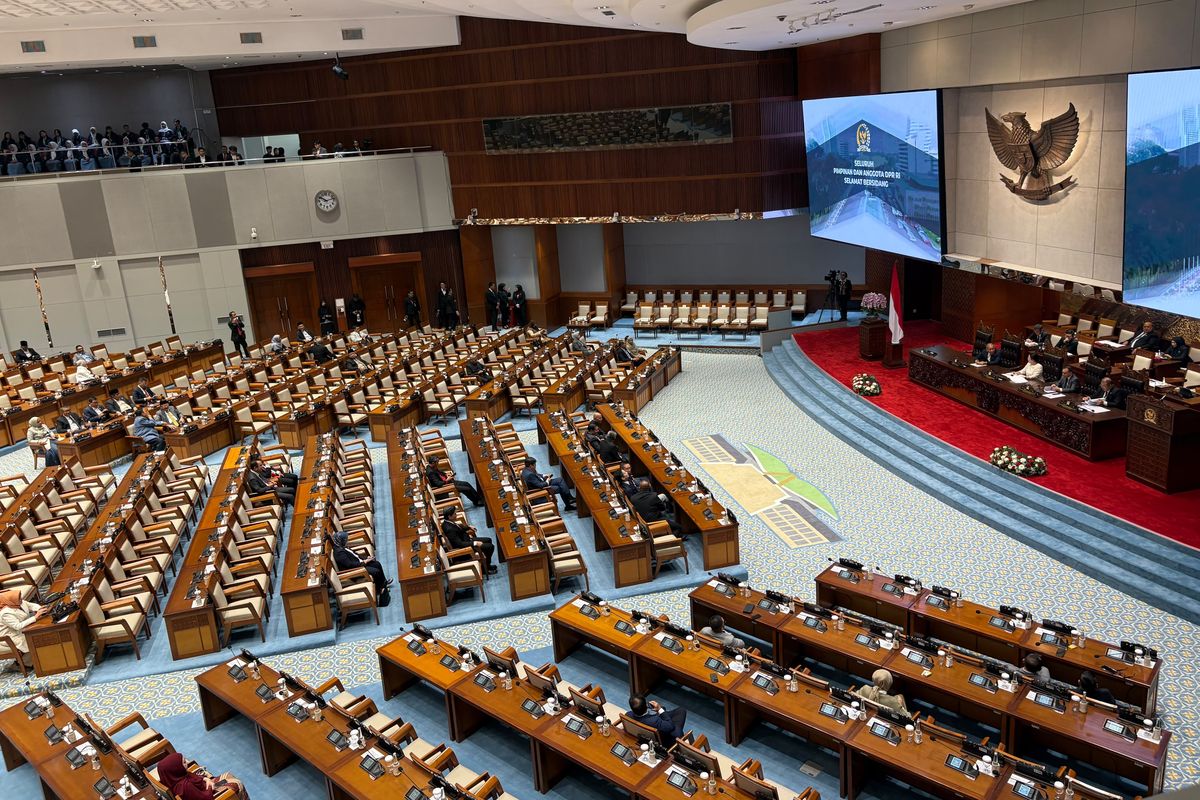
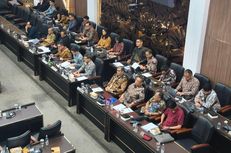
JAKARTA, KOMPAS.com - The Indonesian House of Representatives (DPR RI) holds the authority to create laws (UU), draft budgets, and oversee governmental operations as the legislative body.
However, during the two years of President Prabowo Subianto and Gibran Rakabuming Raka's administration, a number of political decisions made in parliament have occurred relatively quickly.
These decisions include discussions on multiple laws and approvals for public officials.
According to Kompas.com, at least four law revisions were seen as expedited, despite the DPR RI claiming to have involved public participation.
First, there was a revision of the Code of Criminal Procedure (KUHAP), following the previous approval of the Criminal Code (KUHP).
In fact, the DPR RI and the government started proposing comprehensive measures intensively on November 19, 2024.
The aspiration-gathering process began in January 2025 when the DPR's Expertise Body held public consultations regarding the KUHAP update.
However, by September 2025, there were still several articles under scrutiny.
Amnesty International noted anti-democratic provisions undermining the rule of law.
KUHAP was considered to expand the powers and authority of law enforcement, particularly the police, without adequate judicial oversight.
This was exacerbated when names of several NGOs were mentioned during discussions and feedback sessions.
The KUHAP draft was then officially passed in a plenary meeting on November 18, 2025, and signed by President Prabowo Subianto on December 17, 2025.
At that time, the Chairman of Commission III of the DPR RI, Habiburokhman, stated that the new KUHAP was 99.9 percent based on civil society input.
During the formation and discussions, at least around 100 groups were present to participate.
Some of these groups also identified themselves as the Civil Society Coalition, representing portions of civil society.
The secretariat team then created clusters based on the feedback received.
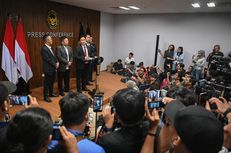
"In principle, yes, 100 percent, I mean, probably 99.9 percent of this new KUHAP is the input from civil society," said Habiburokhman at a press conference in the Parliament Complex, Senayan, Central Jakarta, on Tuesday (November 18, 2025).
He explained that one of the proposals included in the RKUHAP was the expansion of the objects of pretrial proceedings, including issues related to undue delay and detention postponement.
"Likewise with input from the University of Indonesia (UI) relayed by my colleague, Taufik Basari, regarding prohibiting torture and intimidation during interrogations. We included that," he clarified.
Furthermore, there was a revision of the State-Owned Enterprises (BUMN) Law that lasted from September 23 to October 2, 2025, or around 10 calendar days.
Specifically, the government only presented the bill's explanation to Commission VI of the DPR on September 23, 2025.
On the same day, the discussion schedule was agreed upon, and the Working Committee (Panja) was formed.
The Panja then discussed the material and the inventory of issues list (DIM) of the bill over the span of two days on September 24-25, 2025.
The first level discussions were completed by September 26, 2025.