

Assessing the High Logistics Costs of the Archipelago
-
News
-
40 minutes ago
This article was translated by AI. Read the original article on Kompas.com. See Original
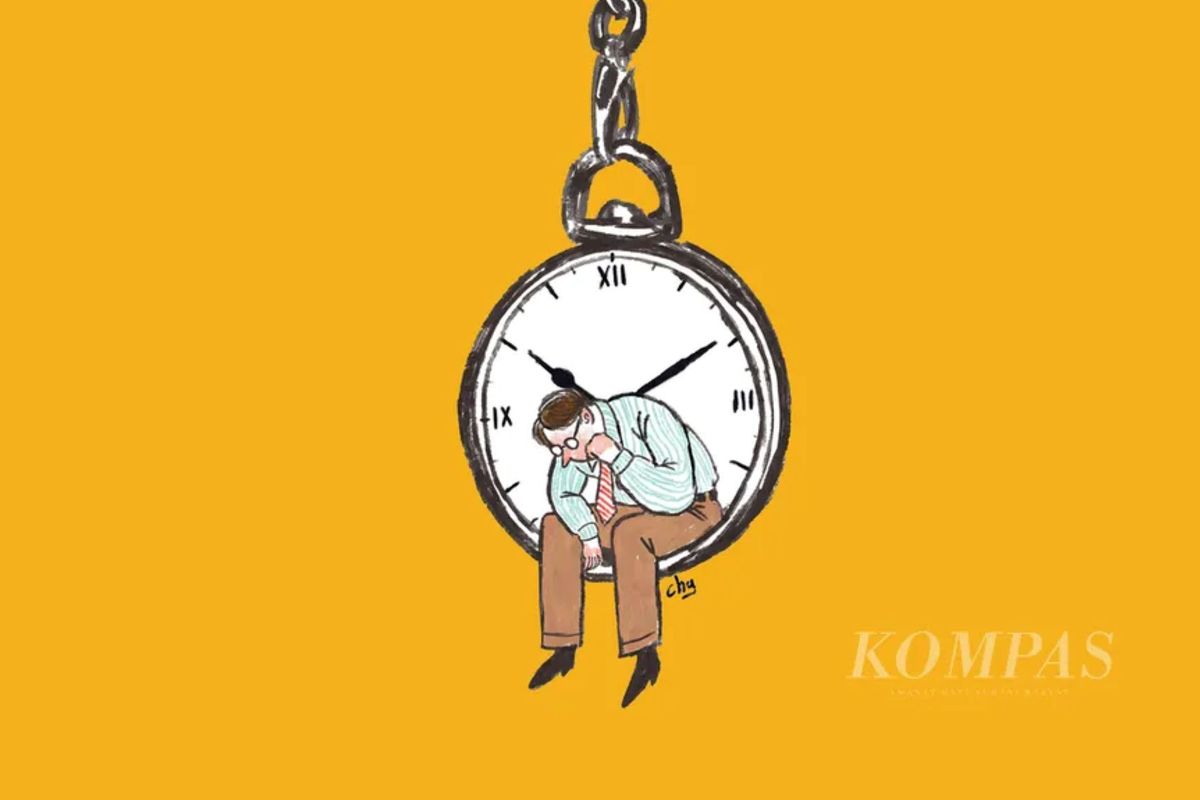
Digitalization has reduced many past hassles. However, the elimination of paper does not automatically mean the dissolution of bureaucracy.
Barry Bozeman and Jan Youtie coined the term robotic bureaucracy to describe a condition where automation leads to electronic forms, notifications, validation, and new procedures.
Peter Woelert also demonstrates that administrative burdens are heavily influenced by organizational designs and systems.
Therefore, the success of digital transformation should not be measured by the number of applications. A more relevant measure is simple: how many times does a lecturer need to enter the same data?
The principle should be once only. Data should be entered once at the correct source, verified, and then reused for various needs as authorized. SISTER, SINTA, BKD, SKP, credit points, certification, career services, and some accreditation needs should become increasingly interoperable.
Lecturers should not become manual integrators for various information systems.
Permendiktisaintek 52/2025 opens an important space as it not only regulates promotions but also outlines the Career Development Plans for lecturers that need to be continuously executed by universities.
This should be understood more broadly than merely creating lists of who can apply for Senior Lecturer or Professor next year.
Ideally, every lecturer should possess an Individual Career Development Plan for three to five years. Its contents need not be complex.
It should include current position, areas of expertise, competency gaps, development targets, planned works, and institution support needed.
However, those plans must not devolve into another form-filling exercise.
The plans should be paired with mentoring. Assistant Experts need guidance towards the Lecturer role, Lecturers towards Senior Lecturers, and potential Senior Lecturers towards becoming Professors require more strategic mentoring regarding expertise, quality of works, networking, academic leadership, and integrity. Mentors are not merely credit point auditors.
The questions should not end at “how much AK is lacking?” but rather “what field are you developing, what works do you wish to produce, and what support do you need?”
Technology can also progress further. SISTER can evolve into a career dashboard.
A Lecturer targeting Senior Lecturer status should be able to see their Cumulative AK, Conversion AK, Achievement AK, research proportions, specific requirements, SKP, BKD, formal education, and outstanding gaps.
The next stage can even shift from administrative gaps to development gaps.
Here, the more than 131,000 Lecturers previously mentioned gain significant meaning.
They are a reservoir of national academic talent. Universities should proactively identify who has growth potential, what their gaps are, who their mentors are, and what support they need to avoid stagnation.
Universities cannot just serve as counters for position applications. Institutions must foster an enabling environment through mentoring, seed grants, writing clinics, faculty development, statistical support, access to databases, collaborations, research administration assistance, and protected time according to their capabilities.
The support provided does not need to be the same for all lecturers. Researchers, educators, professional academics, and community service facilitators may need different forms of support.
Responsibility remains mutual. Lecturers must demonstrate initiative, discipline, and integrity in developing themselves.
Institutions provide opportunities, support, and feedback to enable that development.
The past three decades have shown significant changes. We have transitioned from stacks of papers to digital portfolios, from counting individual activities to Performance Ratings and Conversion AK, from mere performance to recognizing Achievement AK, and from numerical counting to focusing on research proportions and balanced academic duties.
The next phase should not involve adding more requirements in the name of quality. We need a system that is straightforward yet capable of maintaining quality.
Administration should be as simple as possible, data integrated, performance appreciated, academic achievements acknowledged, research continually advancing without compromising teaching and community service, and diverse talents given space.
Credit points remain necessary as they establish a measurable, transparent, and accountable system.
However, the goal of career development is not to make lecturers increasingly skilled at accumulating numbers.
The aim is to enhance their competencies, clarify their areas of expertise, improve their teaching quality, enrich their research significance, deepen their societal contributions, and develop their academic leadership.
A good career system does not merely begin functioning when a lecturer knocks on the HR door to apply for a position.
Careers are planned by lecturers, supported by mentors, facilitated by universities, aided by technology, evaluated fairly, and their achievements recognized proportionally.
When this process is functioning well, career advancement becomes a natural consequence of academic maturity.
For me, this is where the journey from four stacks of documents to academic development finds its true meaning.

























