

Assessing the High Logistics Costs of the Archipelago
-
News
-
39 minutes ago
This article was translated by AI. Read the original article on Kompas.com. See Original
BREATHE is fundamentally the core process of life and health, a bodily function so intrinsic that it occurs autonomously.
In everyday life, breath even serves as a marker of human existence, from the first cries at birth to when a family announces that someone has taken their last breath.
To someone in distress, we suggest they take a deep breath first; when the burden feels too heavy, we ask for space to breathe; and when worries finally subside, we say we can breathe easy.
Breathing easy becomes a tangible experience and a metaphor for life that brings us closer together, even though the comfort of inhaling does not inherently prove that the air is safe.
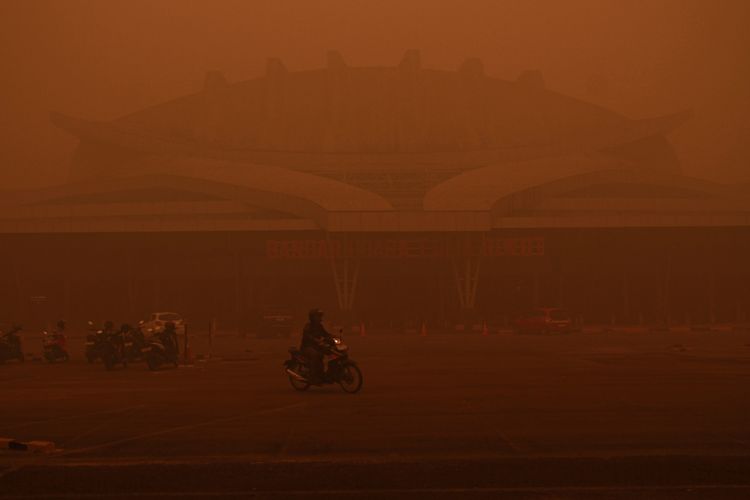
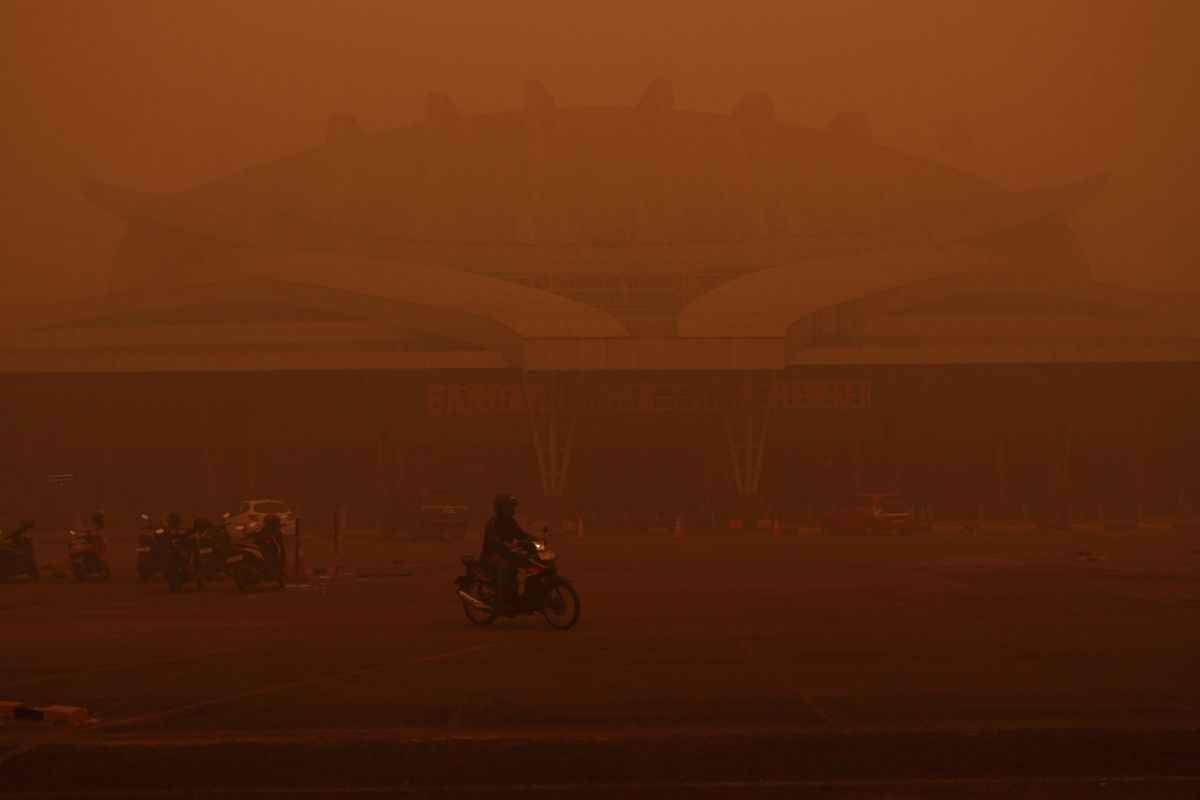
Therefore, breathing in the orange sky today poses a more fundamental question than whether one can still breathe, especially when that orange hue comes with haze from forest and land fires (karhutla).
When karhutla turns the sky orange, the bodies of residents face very real consequences from issues that might still be discussed in terms of coordination, authority, and management.
Medically, fine particulate matter PM2.5 from the smoke can penetrate deep into the lungs, while some may cross the lung barrier into the bloodstream and contribute to systemic inflammation.
From a public health perspective, the body becomes a meeting point between environmental conditions and social life: the source of the smoke may be far from home, but the need for medical care, time for child-rearing, and disrupted income must be managed closely by families.
Thus, it would be odd if the response to the orange sky quickly boiled down to a list of citizen obligations such as wearing masks, reducing activities, closing windows, and finding peace.
Daily wage workers cannot simply close the door on their kitchen needs, while small traders do not always have options to move their earnings into air-conditioned spaces with filtered air.
When protection requires someone to sacrifice income, health policies need to address how safety and livelihoods can be maintained simultaneously.
The orange sky from karhutla thus tests how far public health is prioritized in national policy.
However, this issue does not stop at the bodies of Indonesian citizens, as smoke does not honor sovereignty borders.
Fire may ignite in one area, while the health consequences are experienced by communities in other countries that did not participate in determining how that land is managed.
Here, karhutla becomes a global health issue: decisions that seem local can lead to cross-border exposure, while the ability to protect populations still depends on authority limited by territory.

























