

The Opening of Talent Transfer Market
-
News
-
Just now
This article was translated by AI. Read the original article on Kompas.com. See Original
BREATHE is fundamentally the core process of life and health, a bodily function so intrinsic that it occurs autonomously.
In everyday life, breath even serves as a marker of human existence, from the first cries at birth to when a family announces that someone has taken their last breath.
To someone in distress, we suggest they take a deep breath first; when the burden feels too heavy, we ask for space to breathe; and when worries finally subside, we say we can breathe easy.
Breathing easy becomes a tangible experience and a metaphor for life that brings us closer together, even though the comfort of inhaling does not inherently prove that the air is safe.
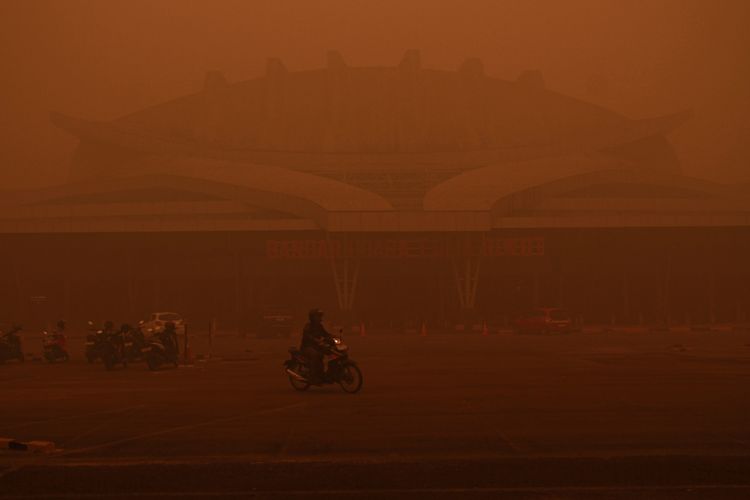
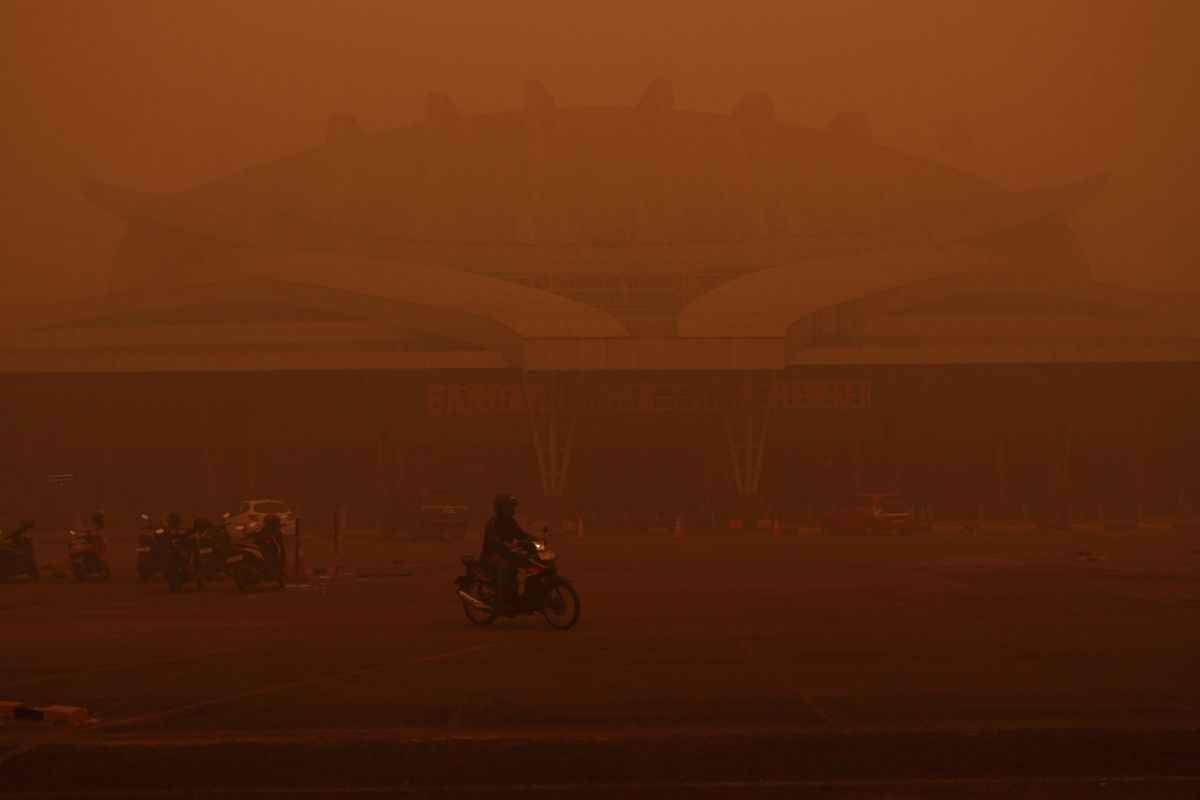
Therefore, breathing in the orange sky today poses a more fundamental question than whether one can still breathe, especially when that orange hue comes with haze from forest and land fires (karhutla).
When karhutla turns the sky orange, the bodies of residents face very real consequences from issues that might still be discussed in terms of coordination, authority, and management.
Medically, fine particulate matter PM2.5 from the smoke can penetrate deep into the lungs, while some may cross the lung barrier into the bloodstream and contribute to systemic inflammation.
From a public health perspective, the body becomes a meeting point between environmental conditions and social life: the source of the smoke may be far from home, but the need for medical care, time for child-rearing, and disrupted income must be managed closely by families.
Thus, it would be odd if the response to the orange sky quickly boiled down to a list of citizen obligations such as wearing masks, reducing activities, closing windows, and finding peace.
Daily wage workers cannot simply close the door on their kitchen needs, while small traders do not always have options to move their earnings into air-conditioned spaces with filtered air.
When protection requires someone to sacrifice income, health policies need to address how safety and livelihoods can be maintained simultaneously.
The orange sky from karhutla thus tests how far public health is prioritized in national policy.
However, this issue does not stop at the bodies of Indonesian citizens, as smoke does not honor sovereignty borders.
Fire may ignite in one area, while the health consequences are experienced by communities in other countries that did not participate in determining how that land is managed.
Here, karhutla becomes a global health issue: decisions that seem local can lead to cross-border exposure, while the ability to protect populations still depends on authority limited by territory.
Political maps divide governmental responsibilities, where various global studies indicate that these relationships have serious health and humanitarian consequences.
A study published in The Lancet Planetary Health in 2021, which analyzed data from 749 cities in 43 countries and regions, found that every increase of 10 micrograms per cubic meter of PM2.5 from fires over an average exposure of three days was associated with an approximately 1.9 percent increase in relative risk of all-causes mortality.
This finding represents an epidemiological relationship at the population level, indicating that even short-term exposure should be taken into account.
Distance from the source of fire, therefore, cannot be considered a guarantee that a community is free from its health impacts.
In the context of Southeast Asia, there is also significant research published in the journal Environmental Research Letters in 2016, modeling the impact of haze in September to October 2015 on residents of Indonesia, Malaysia, and Singapore.
They estimated thousands of additional deaths related to smoke exposure in the three countries, an estimate based on atmospheric modeling and exposure–risk relationships which carry uncertainties and should be distinguished from directly recorded death tolls.
The importance of this research lies in its ability to demonstrate that the management of fire sources has regional health consequences.
A plot of land may fall within one jurisdiction, while its health footprint transcends that jurisdiction.
Philosophically, this situation challenges the assumption that the obligation to ensure health can stop at citizenship.
A child breathing in smoke still has the same biological needs, wherever their passport is issued, while their family has no opportunity to consent to the risks carried by the wind.
Thus, sovereignty must be read alongside the responsibility for the consequences of decisions within one’s territory on lives beyond it.
Global health gives us a broader ethical measure: the success of managing the environment must also be evaluated by the reduction of risks accepted by others, a type of issue arising in today’s global health context.
Hence, regional cooperation is highly necessary in this tragedy of karhutla.
This is essential as it requires reaching prevention through data exchange on emission sources and air quality, modeling smoke movement, health impact research, and support for land management that reduces fire risks—not merely actions to extinguish sources of karhutla.
Knowledge of the source regions most affecting residents’ exposure could help prioritize actions, ensuring that cooperation yields health benefits before hospitals are left to handle the aftermath, precisely as the essence of public health is.
For Indonesia, the ability to prevent transboundary smoke represents an opportunity to demonstrate regional leadership diplomacy through protections felt by both citizens and neighboring nations.
The orange sky illustrates that humanity shares something more fundamental than diplomatic interests: the need to breathe without facing threats that should be manageable.
The depth of the breathing process as the sky changes color truly lies in the awareness that our safety is interconnected, thus making cross-border protection meaningfully significant as the air becomes safer to breathe together.
From there, Indonesia can begin a more dignified diplomatic legacy for the region: ensuring that the lives occurring above its land help safeguard the lives happening across its borders.

























