

The Gibran Nomination Hearing: Uncovering the Background and Origin of the "Educational Exemption Clause"
-
News
-
3 minutes ago
This article was translated by AI. Read the original article on Kompas.com. See Original
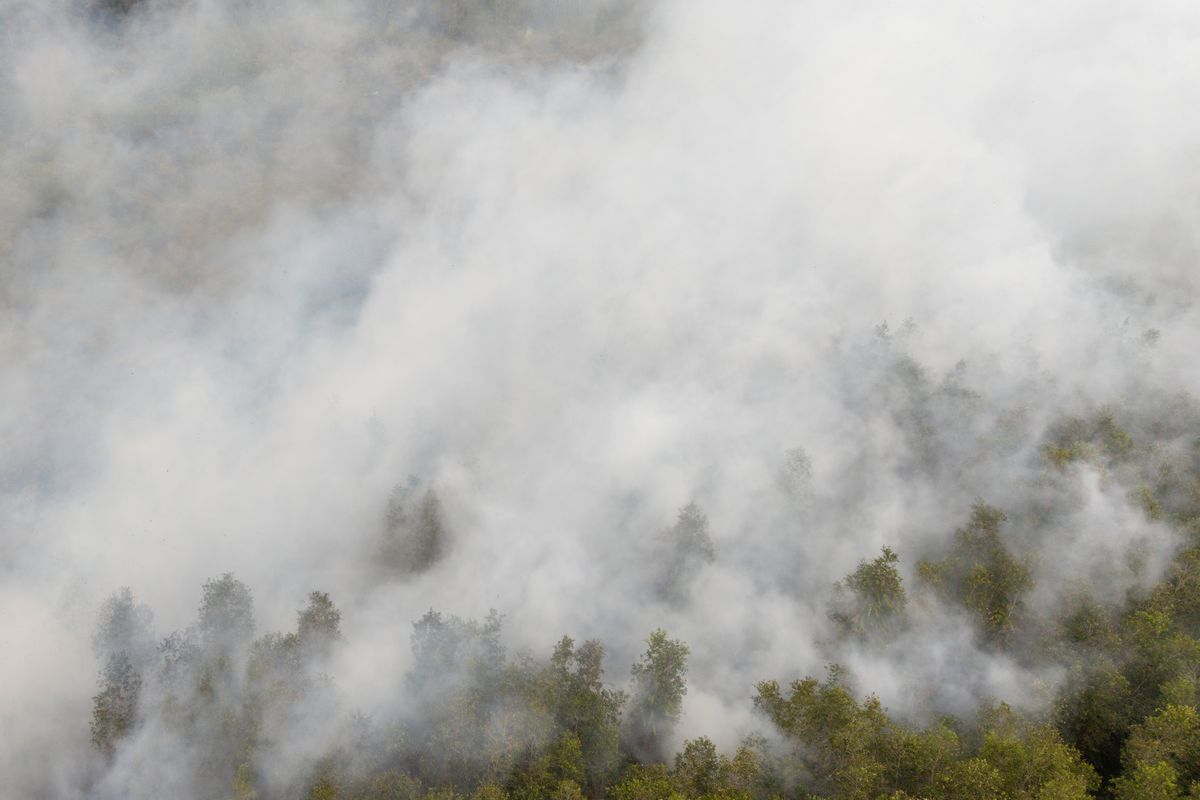
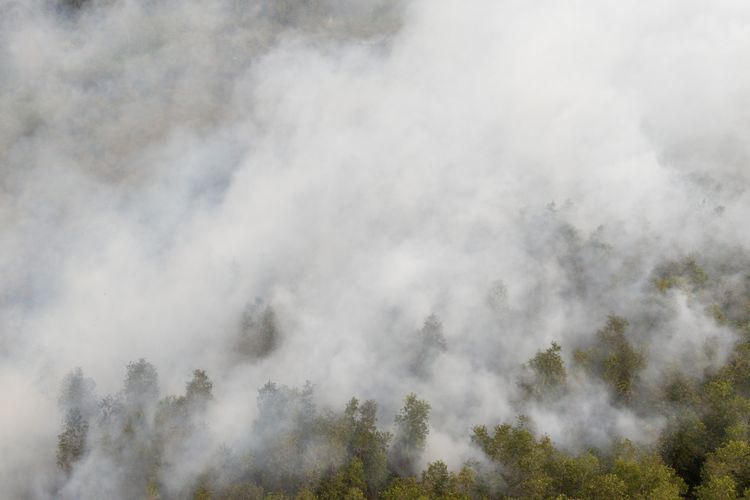
JAKARTA, KOMPAS.com - Forest and land fires (karhutla) have been a significant issue during the two-year tenure of President Prabowo Subianto and Vice President Gibran Rakabuming Raka.
Several regions continue to struggle with these disasters due to ongoing legal violations amidst the dry season.
According to data from the National Disaster Management Agency (BNPB) on Wednesday (13/10/2026), fire spots were still detected at 176 locations, while hotspots reached up to 7,678 across six provinces, namely Riau, Jambi, South Sumatra, West Kalimantan, Central Kalimantan, and South Kalimantan.
Meanwhile, various measures have been taken to address karhutla over the past two years under President Prabowo and Vice President Gibran.
Prabowo has repeatedly instructed to enhance firefighting operations.
In August 2026, for instance, the President requested additional military personnel, water-bombing helicopters, and cloud seeding operations to tackle karhutla in West Kalimantan.
At that time, the government planned to deploy three battalions of military forces, approximately 1,500 personnel from outside Kalimantan, equipped with six large helicopters, to the disaster areas.
As of October 14, 2026, a total of 53,848 personnel have been deployed across the six provinces.
So far, the area managed has reached 451.53 hectares, with 415.35 hectares handled on the ground and 36 hectares aerially.
The mission was concluded after the Indonesian government stated that the firefighting efforts by the Japanese Self-Defense Forces had helped prevent the spread of the fires.
Prabowo called on local governments, the military (TNI), and police (Polri) to educate the public that land burning is prohibited, while also assisting residents who need land clearing through organized mechanisms involving village governments, farmer groups, and cooperatives.
This policy is outlined in Presidential Instruction (Inpres) No. 11 of 2026 concerning the Strengthening of Enforcement Against Land Clearing by Burning and Forest and Land Fire Control.
The instruction was presented by BNPB Chief Suharyanto at the Presidential Palace in Jakarta on Monday (7/8/2026).
The central government also prohibited local governments from issuing regulations that allow land clearing through burning.
"Ensure that no policies, regional legal products, state administrative decisions, permits, approvals, or discretionary actions from either central or local government officials are issued or enforced that grant permission or can be interpreted as legalizing forest and/or land burning in violation of higher laws," the instruction stated.
For future prevention, the President has established the National Peat and Mangrove Management Agency (BPGMN).
This agency, formed by President Prabowo in September 2026, is also tasked with managing peat and mangrove ecosystems, which are highly flammable.
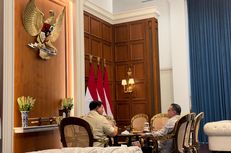
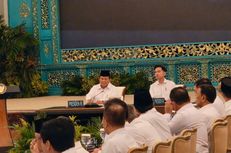
Forestry Minister Raja Juli Antoni stated that the establishment of BPGMN is a significant decision made during a meeting with numerous academics from various research institutions and universities at the Merdeka Palace, Jakarta, on Thursday (24/9/2026).
This agency replaces the previous body, the Peat and Mangrove Restoration Agency (BRGM), which was dissolved by the government last year. Unlike its predecessor, BPGMN will report directly to President Prabowo and will be staffed by scientists and professionals.
“The goal is prevention. Everyone recognizes that prevention is far more important, effective, and efficient than reactive responses,” said Raja Juli on Thursday.
BPGMN will be adequately funded to support fire prevention efforts, especially in the six provinces with peat areas: Riau, Jambi, South Sumatra, West Kalimantan, Central Kalimantan, and South Kalimantan.
“This is a good initiative and also shows the President's openness to receiving input, evaluations, and even criticism from scientists,” Raja Juli added.
Today, Thursday (15/10/2026), Prof. Dr. Setyawan Pudyatmoko was inaugurated by President Prabowo as Head of BPGMN, while Major General TNI Sriyanto was appointed as Deputy Head.
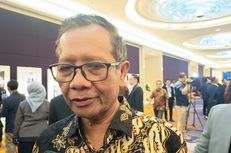
Member of the Indonesian Disaster Experts Association (IABI) Daryono stated that the formation of BPGMN is a positive step toward strengthening the management of peat and mangrove ecosystems.
However, the success of karhutla mitigation is not solely dependent on the establishment of this agency; it relies on the effective management of risks on the ground.
"Scientifically, the prevention of peat fires must start with maintaining its hydrological conditions. Wet peat is much harder to ignite than dry peat," Daryono told Kompas.com on Wednesday.
Daryono also noted that BPGMN needs to have a clear mandate for its work to be effective, along with scientific support, sustainable funding, and an evaluation system based on measurable indicators.
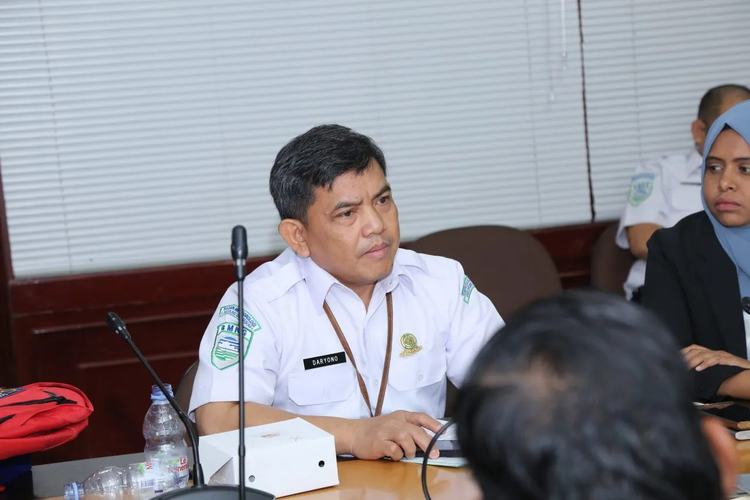 Former Director of Earthquake and Tsunami BMKG Daryono.
Its performance, he explained, can be assessed through groundwater levels, the area of peat successfully restored, the reduction in fire extent, and the decreasing occurrence of recurring fires.
BPGMN must also strengthen its coordination functions without causing overlaps in authority with existing agencies.
"In principle, the success of BPGMN is not measured by the size of the organization but by its ability to keep peat wet, prevent fires, and protect communities and ecosystems," Daryono clarified.
Furthermore, Daryono outlined five priorities that can be strengthened to prevent karhutla in the future.
First, restoring peat hydrology through drainage control, rewetting, and groundwater level monitoring.
Second, relying on an integrated early detection system using satellite data, hotspots, rainfall, peat moisture, and field monitoring.
Third, ensuring supervision of vulnerable areas, especially before and during the dry season.
Fourth, strengthening community empowerment through various means such as education, enhancing Fire Care Communities, and developing livelihoods without burning.