
The Fate of IKN After Being Excluded from the Government Work Plan
-
News
-
Just now
This article was translated by AI. Read the original article on Kompas.com. See Original
EXPERTS in urban planning and public policy analysis are beginning to face the same question: what is the real direction of development for the Nusantara Capital City (IKN)?
This question is not without reason. After the IKN project was rapidly developed during Joko Widodo's administration, its sustainability under President Prabowo Subianto's government now raises fundamental questions.
These questions include not only the extent of continued development but also the consistency of planning, certainty regarding the relocation of government apparatus, and the fiscal capacity of the government to support its sustainability.
It must be acknowledged that under Joko Widodo, the development of IKN progressed at an extremely high rate. The political decision to establish a new capital was quickly translated into bureaucratic agendas and large-scale infrastructure projects.
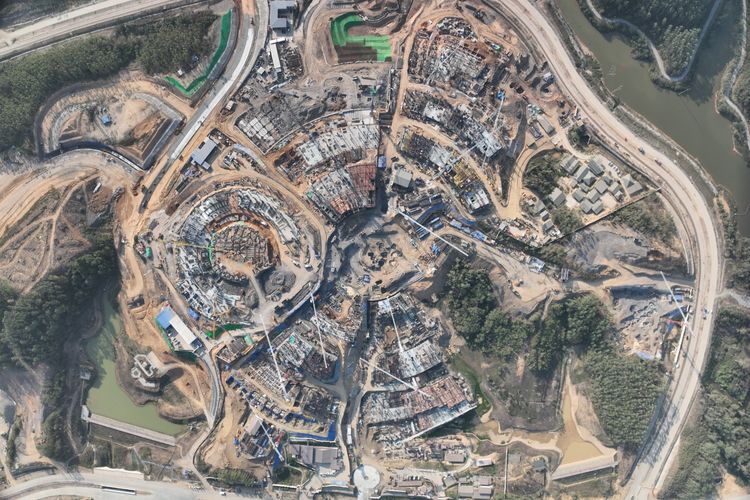
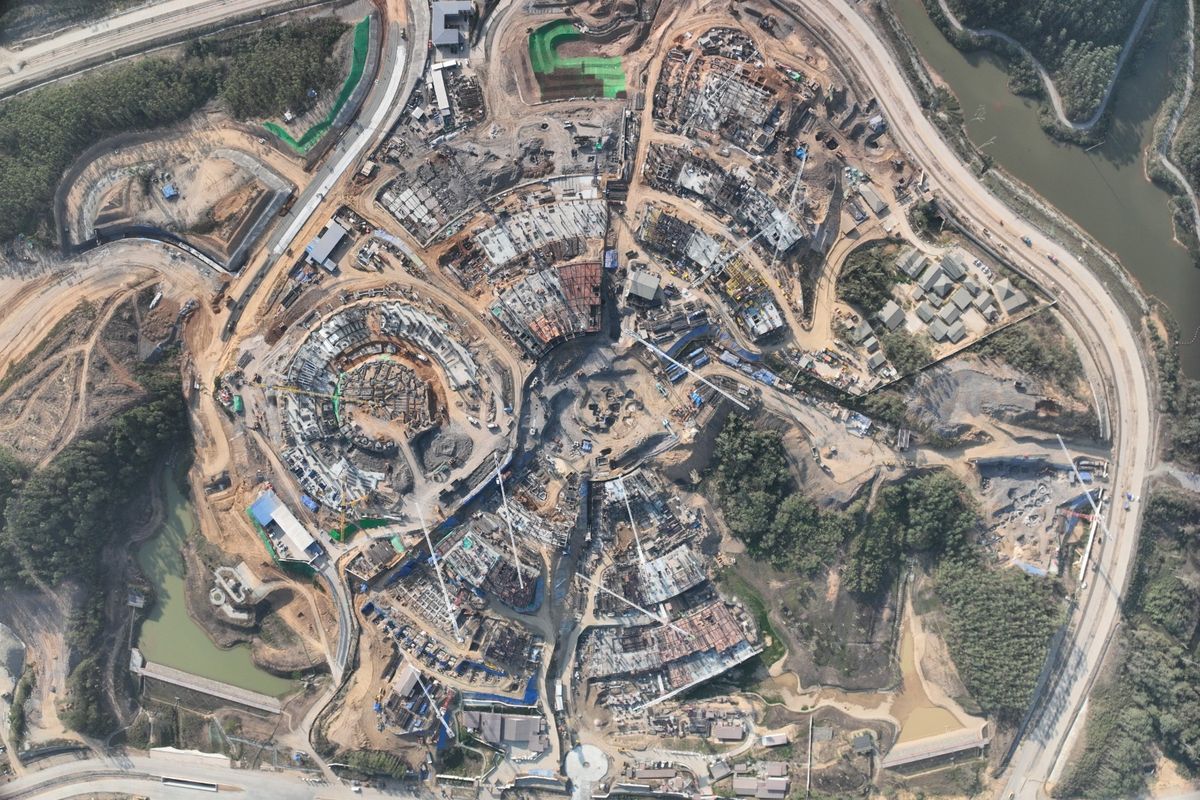
The government raced to achieve infrastructure progress, governmental buildings, the Central Government Core Area (KIPP), and the construction of a VVIP airport in IKN.
In fact, for the first time, the ceremony marking the 79th anniversary of Indonesia's Independence on August 17, 2024, was held in IKN.
The rapid pace of development demonstrated the strong political support the government had when a strategic decision was made by the President.
Bureaucracies moved, budgets were prepared, and various ministries/agencies were directed to support the substantial agenda of relocating the capital.
IKN is not merely a development project but one of the strategic policy legacies of Joko Widodo's administration.
However, as Prabowo Subianto's government takes over, the context of national development is beginning to reflect a different emphasis.
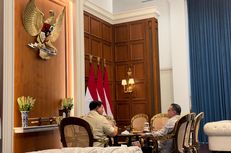
During his first visit to IKN after being inaugurated as President on Monday (12/1/2026), Prabowo sent positive signals regarding the continuity of the new capital's development.
However, the President's presence in IKN alone is not sufficient to resolve the more fundamental issue: how does the government position IKN among various national development priorities being pursued?
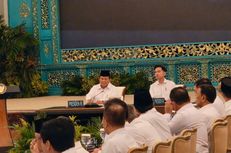
We understand that President Prabowo has several priority agendas under Asta Cita, including Free Nutritious Meals (MBG), Red and White Village Cooperatives, Free Health Checks, People's Schools, a three million home development program, and various initiatives to strengthen the economy and community welfare.
These programs require substantial fiscal support, institutional backing, and bureaucratic capacity.
In this context, a shift in developmental emphasis is evident. If the previous government prioritized physical infrastructure development, the current administration highlights service-oriented and community welfare development. I refer to this as "social infrastructure" development.
The question about IKN's development direction becomes even more relevant with news that the Deposit Insurance Corporation (LPS) has canceled its plan to build its headquarters in IKN.
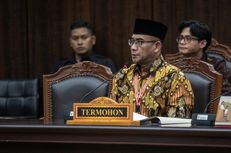
LPS Chairman Anggito Abimanyu stated on November 24, 2026, that the decision was made with consideration of the direction of the Government Work Plan (RKP), which no longer prioritizes IKN.
Previously, LPS allocated around IDR 400 billion for the provision of office space in IKN. Instead, LPS proposed a budget of approximately IDR 1.46 trillion for office space in Jakarta.
This budget covers the need for land procurement as well as the purchase of buildings following a needs and feasibility study.
This decision is significant. Looking back at Joko Widodo's administration, the LPS office complex, named Arthadhyaksa Building, had even begun construction with a groundbreaking ceremony on January 17, 2024.
At that time, Joko Widodo personally attended the event and expressed hope that LPS's presence in IKN would boost public, business, and investor confidence.
Now, that plan has been canceled. This change is not merely a matter of relocating a government agency's office.
Furthermore, LPS's decision reflects how shifts in government policy can influence institutional decisions that were previously designed based on assumptions of IKN's developmental sustainability.
This makes planning a crucial issue. What will happen to the buildings already constructed or the ongoing construction work?
Will these assets still serve other government functions, be transferred to other state agencies that need them, or risk becoming unproductive assets?
These questions should not be left unresolved. Every state investment must have clear benefits, functional sustainability, and accountable asset management.
We must not let political decision changes leave behind unresolved issues regarding state assets that are not being utilized optimally.