



Chair of Commission III of the House of Representatives Calls East Java Police Chief to Monitor Case of Bullying Against High School Student in Malang
-
News
-
6 minutes ago
This article was translated by AI. Read the original article on Kompas.com. See Original
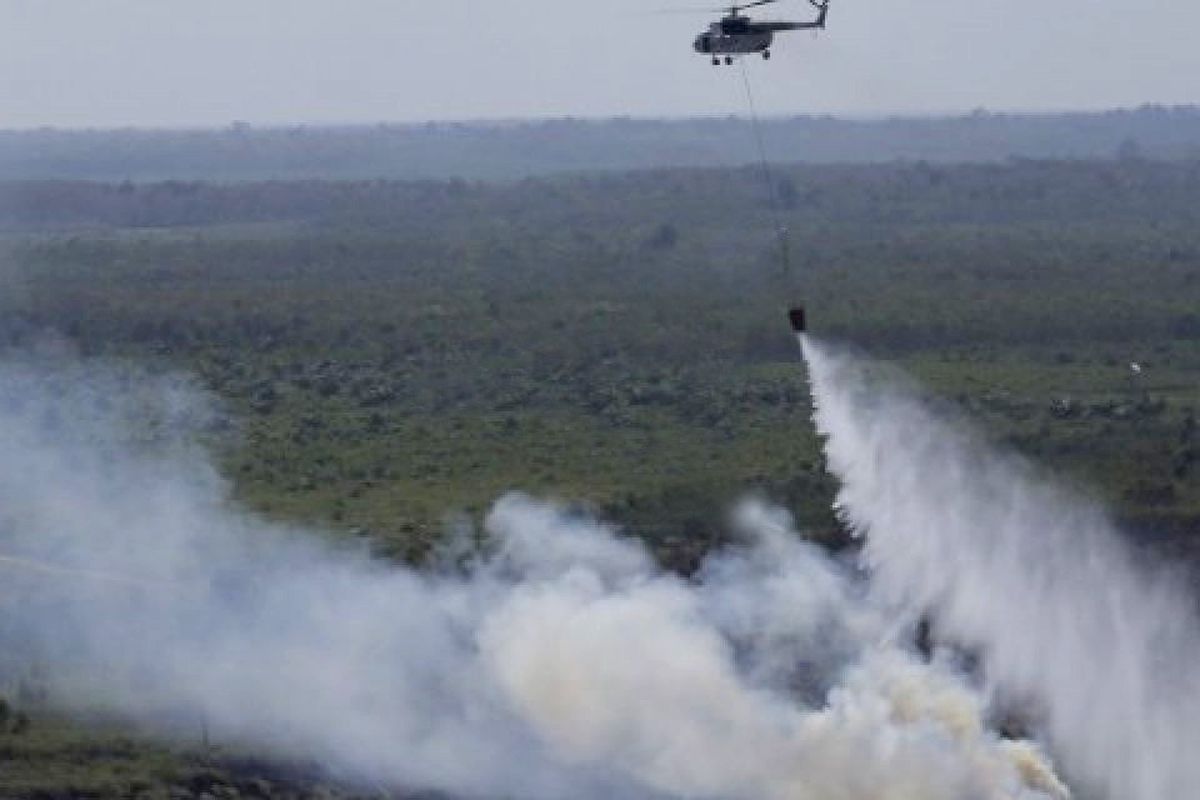
JAKARTA, KOMPAS.com - What measures is the government taking to extinguish forest and land fires (karhutla) that have caused so much suffering?
The Head of the National Disaster Mitigation Agency (BNPB), Suharyanto, stated that there are three steps necessary to expedite the extinguishing of karhutla.
These steps include testing alternative extinguishing technologies, redistributing air fleets, and strengthening ground extinguishing efforts.
The alternative extinguishing methods mentioned by Suharyanto include the use of dry ice and anti-chamas technology.
“First, we need to accelerate the trials of alternative extinguishing technologies. BNPB, together with other relevant ministries, needs to test the use of dry ice to help cool and suppress the smoldering embers beneath the peat surface,” Suharyanto told Kompas.com on Monday (12/10/2026).
Dry ice is said to assist in extinguishing fires in peatland areas.
In addition to dry ice, the BNPB is also promoting the testing of gel or special liquid extinguishers for peat, including anti-chamas, which serve as flame retardants.
According to the BNPB site, the Realiza Anti Chamas product is a powder that is dissolved in water before being sprayed onto the fire. The supplier of this material is Paolo Barroso from Brazil.
The material mixing takes place in tanker trucks, and Paolo Barroso assures that the tanks will not be damaged by the anti-chamas substance. This material is claimed to be non-toxic.
It turns into a gel upon contact with water and will break down after 72 hours.
This material is claimed to be ten times more effective at extinguishing fires than water.
According to Suharyanto, these technology trials need to measure extinguishing effectiveness, the ability to prevent fires from reigniting, and the impact on the environment and ecosystem, particularly in conservation areas.
The second step is to adjust air fleet placement based on field conditions.
Suharyanto noted that weather and visibility are crucial factors in determining aircraft and helicopter operation locations.
“If a base experiences low visibility and aircraft or helicopters cannot operate, we will immediately evaluate the possibility of moving the fleet to an alternative base where the weather conditions are more favorable,” he mentioned.
The relocation of the fleet, Suharyanto added, must be based on information from the Meteorology, Climatology, and Geophysics Agency (BMKG), base readiness, and the distance to priority fire points.
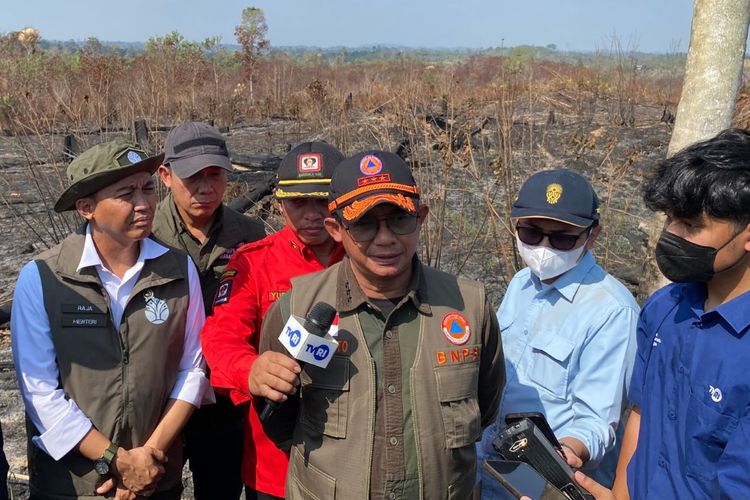 Head of BNPB, Lieutenant General TNI Suharyanto, inspecting karhutla in the IKN area on Monday (14/9/2026). Suharyanto assured that the government will allocate IDR 150,000 as an incentive for karhutla handling personnel.
The third step is to strengthen ground extinguishing efforts.
BNPB and the joint task forces will focus on priority fire points, particularly peatland and areas at risk of fire expansion.
“Combined personnel will remain focused on priority fire points, especially in peatland and areas that may expand into a fire, supported by pumps, hoses, water sources, appropriate heavy equipment, as well as watering and cooling peat until the embers are fully controlled,” Suharyanto explained.
However, implementing these three steps is not without challenges on the ground.
The characteristics of peat, limited access, and weather conditions make extinguishing operations require strategies tailored to the situation in each area.
Suharyanto outlined five major challenges faced in handling karhutla: the characteristics of peat land, low visibility, wind and weather conditions, water availability, and the difficulty of accessing fire points.
Regarding peat characteristics, he noted that fires can spread several meters below the ground's surface.
This makes fires difficult to detect and extinguish completely.
“Therefore, extinguishing must reach the layers of burning peat, along with watering and cooling to prevent the fire from reappearing,” he stressed.
The next challenge is low visibility due to smoke haze.

























