

Minister: Heart Disease Leads to Most Deaths Among Indonesians, 300,000 Each Year
-
News
-
4 minutes ago
This article was translated by AI. Read the original article on Kompas.com. See Original
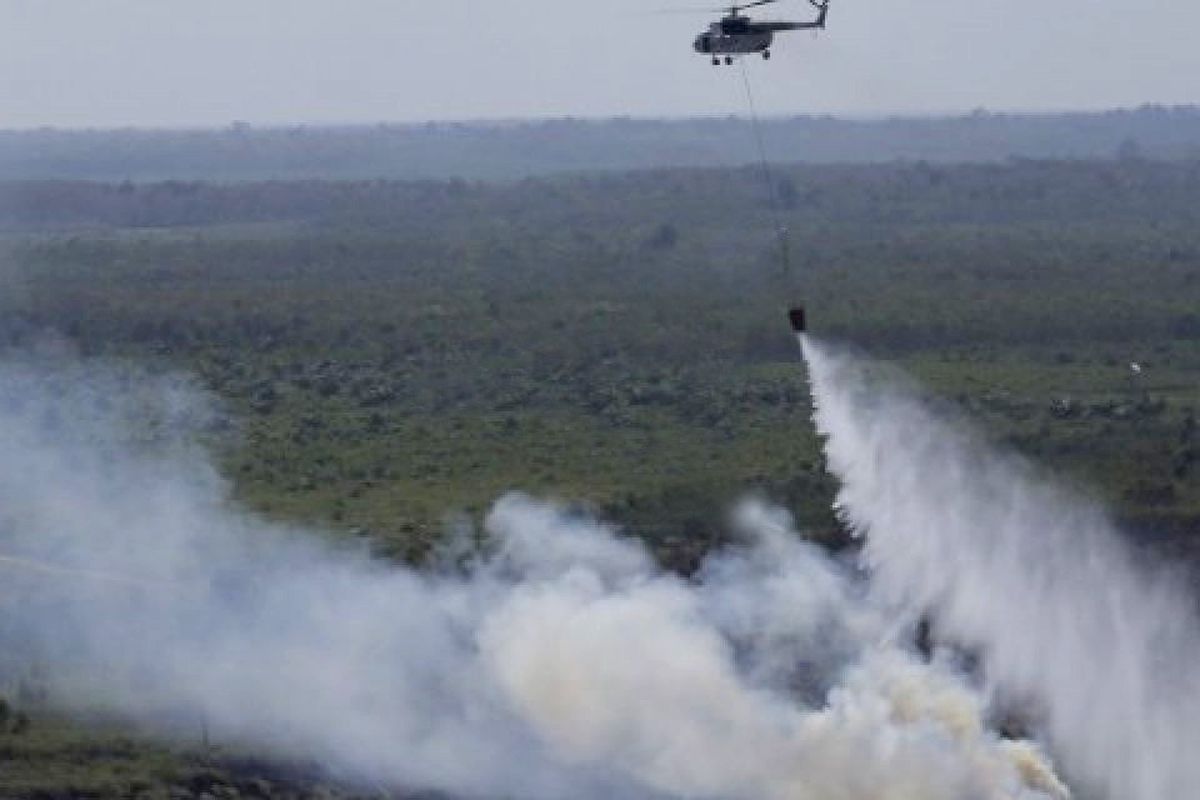
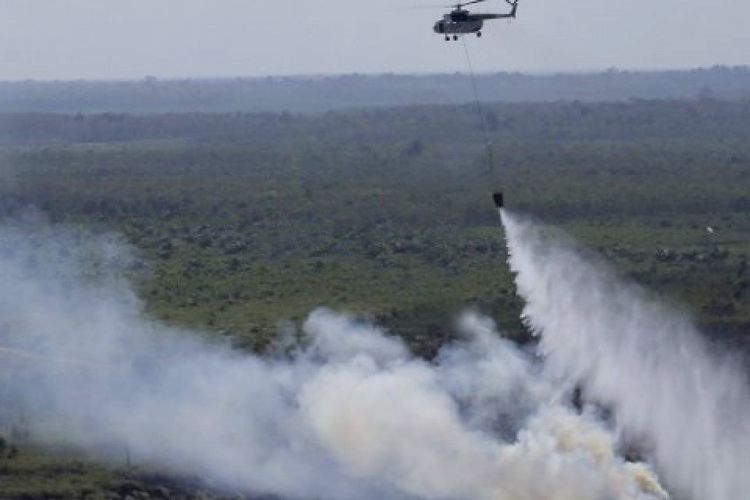
JAKARTA, KOMPAS.com - What measures is the government taking to extinguish forest and land fires (karhutla) that have caused so much suffering?
The Head of the National Disaster Mitigation Agency (BNPB), Suharyanto, stated that there are three steps necessary to expedite the extinguishing of karhutla.
These steps include testing alternative extinguishing technologies, redistributing air fleets, and strengthening ground extinguishing efforts.
The alternative extinguishing methods mentioned by Suharyanto include the use of dry ice and anti-chamas technology.
“First, we need to accelerate the trials of alternative extinguishing technologies. BNPB, together with other relevant ministries, needs to test the use of dry ice to help cool and suppress the smoldering embers beneath the peat surface,” Suharyanto told Kompas.com on Monday (12/10/2026).
Dry ice is said to assist in extinguishing fires in peatland areas.
In addition to dry ice, the BNPB is also promoting the testing of gel or special liquid extinguishers for peat, including anti-chamas, which serve as flame retardants.
According to the BNPB site, the Realiza Anti Chamas product is a powder that is dissolved in water before being sprayed onto the fire. The supplier of this material is Paolo Barroso from Brazil.
The material mixing takes place in tanker trucks, and Paolo Barroso assures that the tanks will not be damaged by the anti-chamas substance. This material is claimed to be non-toxic.
It turns into a gel upon contact with water and will break down after 72 hours.
This material is claimed to be ten times more effective at extinguishing fires than water.
According to Suharyanto, these technology trials need to measure extinguishing effectiveness, the ability to prevent fires from reigniting, and the impact on the environment and ecosystem, particularly in conservation areas.
The second step is to adjust air fleet placement based on field conditions.
Suharyanto noted that weather and visibility are crucial factors in determining aircraft and helicopter operation locations.
“If a base experiences low visibility and aircraft or helicopters cannot operate, we will immediately evaluate the possibility of moving the fleet to an alternative base where the weather conditions are more favorable,” he mentioned.
The relocation of the fleet, Suharyanto added, must be based on information from the Meteorology, Climatology, and Geophysics Agency (BMKG), base readiness, and the distance to priority fire points.
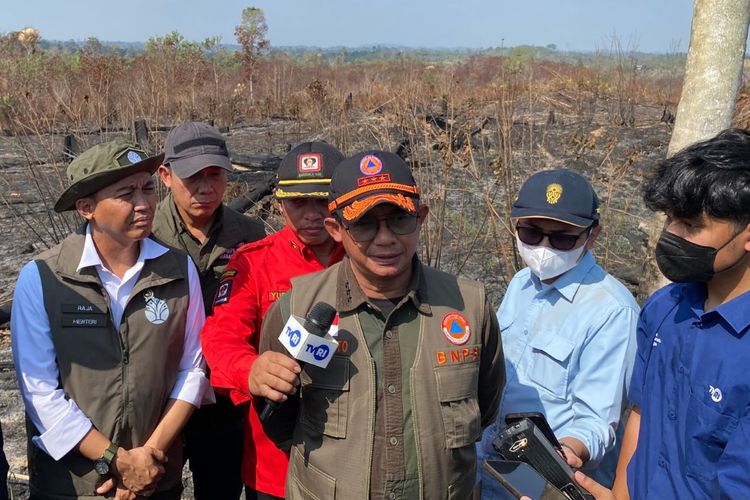 Head of BNPB, Lieutenant General TNI Suharyanto, inspecting karhutla in the IKN area on Monday (14/9/2026). Suharyanto assured that the government will allocate IDR 150,000 as an incentive for karhutla handling personnel.
The third step is to strengthen ground extinguishing efforts.
BNPB and the joint task forces will focus on priority fire points, particularly peatland and areas at risk of fire expansion.
“Combined personnel will remain focused on priority fire points, especially in peatland and areas that may expand into a fire, supported by pumps, hoses, water sources, appropriate heavy equipment, as well as watering and cooling peat until the embers are fully controlled,” Suharyanto explained.
However, implementing these three steps is not without challenges on the ground.
The characteristics of peat, limited access, and weather conditions make extinguishing operations require strategies tailored to the situation in each area.
Suharyanto outlined five major challenges faced in handling karhutla: the characteristics of peat land, low visibility, wind and weather conditions, water availability, and the difficulty of accessing fire points.
Regarding peat characteristics, he noted that fires can spread several meters below the ground's surface.
This makes fires difficult to detect and extinguish completely.
“Therefore, extinguishing must reach the layers of burning peat, along with watering and cooling to prevent the fire from reappearing,” he stressed.
The next challenge is low visibility due to smoke haze.
This limits the movement of aircraft and helicopters for patrolling, water bombing, and weather modification operations.
Aerial operations cannot occur if flight safety requirements are not met.
Thus, making use of every moment when the weather is favorable is crucial to maximize extinguishing efforts.
“We must utilize every opportunity when the weather allows us to conduct water bombing and weather modification operations, even if it means working at night,” said Suharyanto.
Strong winds can also accelerate the spread of fire and carry embers to other areas.
Meanwhile, hot and dry weather makes land increasingly prone to catching fire.
To anticipate these conditions, the BNPB prioritizes fire points that are likely to spread, strengthens firebreaks, and takes advantage of weather information to devise operational strategies.
Water availability is another issue, especially in peat and swamp areas, where water sources may not be close to fire points.
“Therefore, it is necessary to map water sources, prepare pumps and hoses, and arrange a water transport system so that ground extinguishing can be carried out sustainably,” Suharyanto commented.
Additionally, some fire locations are far from roads or difficult to access by land routes.
The task force team needs to establish priorities based on the potential for fire expansion and place personnel and equipment as close as possible to safe locations.
How adequate are the available personnel and fleets to speed up the extinguishing process?
Amid these challenges, Suharyanto assessed that additional personnel or water bombing fleets are not yet necessary based on the task force's evaluation in the field.
“Currently, based on the field task force evaluation, additional personnel or water bombing fleets are not required. The available strength is considered sufficient compared to the area of land on fire,” he said.
According to Suharyanto, weather modification operations must also be conducted based on an evaluation of needs and meteorological conditions.
“If the available support is still adequate, we need to optimize the resources at hand first, including ensuring that personnel work effectively and the air fleet can operate whenever weather conditions and visibility meet safety requirements,” he said.
Nevertheless, he emphasized that the need to handle karhutla is continuously evaluated dynamically.
If the fire area expands, new uncontrollable fire points arise, or the available extinguishing capabilities become insufficient, considerations for adding personnel, water bombing fleets, or weather modification support will be made as necessary.
He also stressed that efforts to prevent delays in handling must start from early detection and rapid response, before the fires expand to create cross-regional impacts.
However, accelerating extinguishing is not the only issue that needs addressing.
Amid the haze shrouding several areas, community safety also requires attention, ranging from health protection to adequate disaster management budgets.
Member of Commission VIII of the DPR, Selly Andriany Gantina, stated that the government must act quickly through early detection, integrated patrols, and the deployment of extinguishing teams as soon as fire points are identified.
According to Selly, ground and aerial extinguishing must be adapted to field conditions, especially in peatland areas at risk of recurring fires.
At the same time, the government needs to ensure that communities receive protection through air quality monitoring, provision of masks, healthcare services, and evacuation of vulnerable groups when needed.
“The government must not wait until the smoke spreads and the public suffers before taking action,” Selly told Kompas.com on Monday.
She added that the adequacy of budgets, personnel, and equipment should be assessed based on real needs in the field.
“Budgets must also be strengthened in prevention aspects, not just extinguishing. Every allocation should be measured for its effectiveness so that karhutla handling does not always suffer delays and repeat every dry season,” she said.
 Member of Commission VIII of the DPR RI, Selly Andriany Gantina.
In supervision functions, Selly stated that the DPR needs to request regular reports on fire points, fire area size, response speed, resource readiness, and impacts on the community.
According to her, supervision must also ensure effective coordination between the BNPB and BPBD in disaster preparedness and response.
“The government should not be more focused on responding to neighboring countries' criticisms than on protecting its own citizens. The safety of citizens must be the top priority, accompanied by regional coordination when the smoke crosses national borders,” said the PDI-P politician.
Meanwhile, Member of Commission IV of the DPR, Daniel Johan, urged the government to declare karhutla a national disaster so that budget support for handling the fires and affected communities can be maximized.
“Declare the status of karhutla as a national disaster; this is a step that the government must take right now. So that funding can be maximally allocated to addressing this disaster, including for affected communities, especially ensuring the safety of citizens in obtaining masks, oxygen, healthcare, vitamins, clean water, and food for remote residents,” Daniel told Kompas.com on Monday.
 Chairman of the DPP of the National Awakening Party (PKB), Daniel Johan, being interviewed at the DPP PKB Office, Jakarta, Friday (20/1/2023).
He acknowledged that the government has conducted water bombing, weather modification, and ground extinguishing.
However, he stated that the very dry and deep peat conditions make extinguishing efforts increasingly difficult.
Daniel also highlighted weak mitigation efforts before the fires occur.
Thus, he supports strengthening the budget for extinguishing while also meeting the basic needs of affected communities.
Attention should also be given to volunteers assisting in extinguishing efforts.
Daniel urged the government to ensure that volunteers receive food and drink, safety equipment, masks, and adequate extinguishing equipment.
He even proposed providing incentives for volunteers.
“The DPR certainly supports the government if it aims to declare karhutla a national disaster, as our top priority is the safety of all citizens in Kalimantan, Sumatra, and other affected areas,” he said.
Daniel revealed that the DPR has pushed for this status declaration since the fires first started.
However, according to him, the government has yet to declare it even now.
On the other hand, Daniel also called on the government to take strict action against those proven to cause forest and land fires.
He believes that law enforcement is not sufficient through administrative sanctions such as revoking business licenses.
“Heavy penalties for corporate perpetrators causing fires are needed, not only revoking business licenses but also holding owners personally accountable to ensure a deterrent effect,” said the PKB politician.
He noted that administrative sanctions alone are not enough to prevent repeated violations.
“If handling offenders consists solely of administrative sanctions, revoking licenses will not create a deterrent effect; there is no fear of breaking the law, as they can just create a new company afterward,” he added.
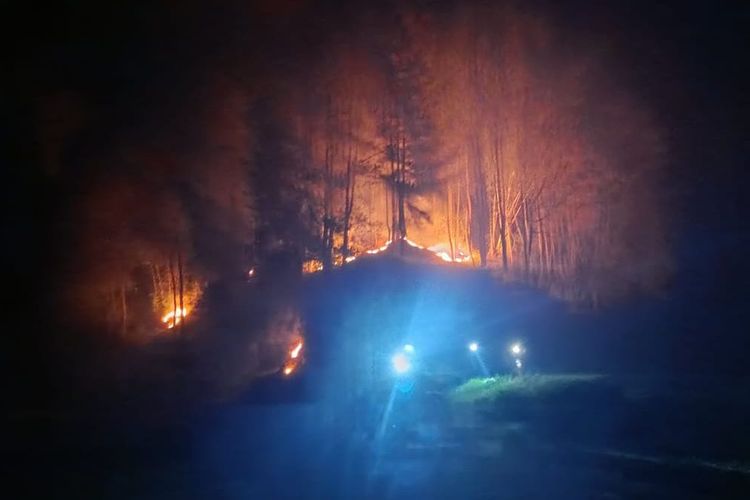 KARHUTLA: Fire in a pine forest area in Buntubunda Village, Mamasa District, Mamasa Regency, West Sulawesi (Sulbar).
Meanwhile, Selly emphasized the importance of professional examinations of corporate activities, land status, compliance with fire prevention obligations, and allegations of negligence or intent.
If violations are found, administrative, civil, and criminal sanctions should be applied according to legal provisions.
“However, enforcement must be based on evidence, not mere accusations,” Selly stressed.
According to Selly, handling karhutla cannot stop at extinguishing.
The government must also ensure environmental recovery, transparency in resulting enforcement actions, and prevention measures to avoid recurrence.

























