Is There Still a Way to Prove Gibran's Diploma?
-
News
-
1 minute ago
This article was translated by AI. Read the original article on Kompas.com. See Original

IN BANDUNG, on September 26, 2026, Joko Widodo revealed his membership card for the Indonesian Solidarity Party.
The former president announced he had joined since October 14, 2025. This announcement answered questions regarding Jokowi's political affiliation following his split from the PDI Perjuangan.
However, another question remains open: where is the political home of his eldest son, Vice President Gibran Rakabuming Raka?
Gibran's dismissal from PDI-P was announced in December 2024. A report by CNA discussing Jokowi's membership in PSI stated that Gibran's membership in PSI or any other party is still unknown to the public.
As of the investigation on October 9, 2026, his new membership has yet to be publicly confirmed. Proximity to certain parties alone is insufficient to ensure that status.
Indeed, a membership card is not the sole indicator of political power. One can have a broad network without being an official party member.
Conversely, someone can be recorded as a cadre without significantly influencing organizational decisions.
Gibran's situation lies somewhere in between: how far can his closeness to several parties translate into persistent organizational support?
The answer will determine the bargaining power he builds beyond the vice president position.
The vice president position adds to the platform and access that Gibran already possesses.
He meets the public, communicates with officials, and garners media attention. This opportunity provides a space to build credibility through measurable work. However, a platform does not automatically create a foothold.
The public may recognize a figure without supporting their political choices. They can appreciate Gibran's activities without viewing him as the best candidate for future positions.
Popularity, satisfaction with performance, and electoral intent need to be distinguished. Without adequate data, Gibran's recognition cannot be translated into a measure of personal electoral strength.
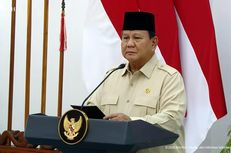
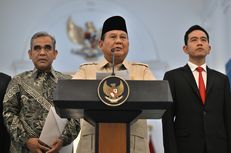
The challenge becomes more complex since he operates within a government led by Prabowo Subianto.
If the division of roles is unclear, the public will find it hard to distinguish the vice president's contributions from the government's overall work.
A multitude of visits is not a sufficient answer. The public needs explanations regarding the issues addressed and the results achieved.
From there, personal reputation can grow. Gibran doesn’t need to distance himself from the president to showcase his capabilities.
He actually needs to demonstrate how his role supports government efforts.
Recognized contributions provide a foundation for personal reputation. To become a political asset, that reputation must still be translated into voter support and organizational relationships.
Government-supporting parties have reasons to maintain operational continuity.
However, support for the Prabowo-Gibran administration does not automatically include all future political possibilities for Gibran.
Parties might support his role as vice president while preparing their own cadres for the next election.
This is where elite statements need careful interpretation. Support for Gibran in a controversy might relate to the government’s solidity or previous political decisions.
To assess long-term commitment, organizational decisions and collaborations should be examined.
Statements of support do not prove a party's willingness to deploy cadres, provide campaign resources, or advocate for nominations.
As 2029 approaches, calculations will depend on the positions contested.
If Gibran is reconsidered as Prabowo's running mate, discussions will involve electoral benefits and coalition balance.
If his political direction differs, the configuration of interests will change. The willingness to work together today does not resolve the negotiations about tomorrow’s nominations.
If coalition parties advance their own figures, Gibran will need to offer reasons that make them willing to compromise.
These reasons could include voter support, the ability to broaden acceptance, or trust built through work.
Personal relationships facilitate discussions, but parties relinquishing opportunities for their cadres also need to explain themselves to their organizations.
Coalitions must manage the differences between national interests and regional competition. Two parties can collaborate in government while still vying for votes or positions elsewhere.