



Prabowo Gathers Gerindra Cadres in Hambalang, Dasco and KDM Attend
-
News
-
1 hour ago
This article was translated by AI. Read the original article on Kompas.com. See Original
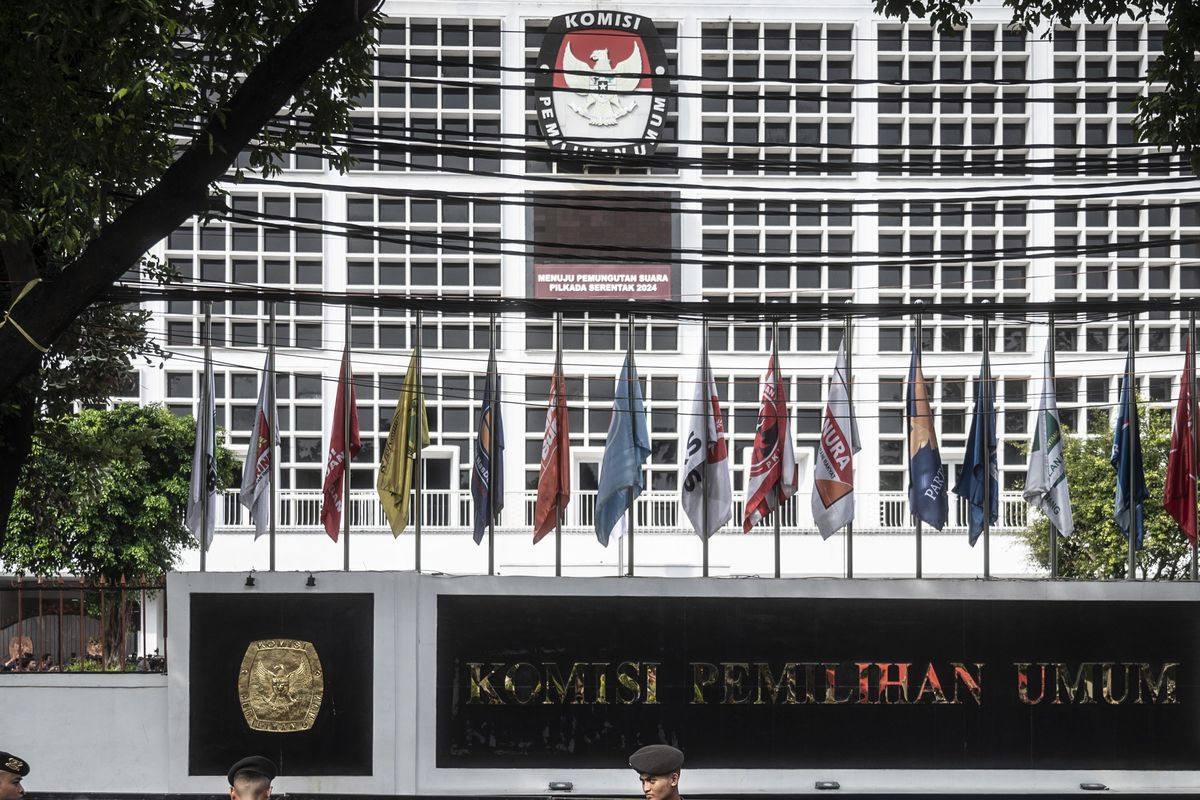
JAKARTA, KOMPAS.com - Before a candidate’s name appears on the ballot, a series of requirements must be confirmed. One of them is education.
Behind a diploma or educational equivalence document lies a fundamental question: does this document truly suffice to prove that a candidate meets the qualifications for nomination?
This is why there is a verification process for candidates at both legislative and presidential election levels.
The Constitutional Court (MK), in its ruling regarding the educational requirements for Vice President Gibran Rakabuming Raka, stated it found no diploma indicating that Gibran completed education equivalent to high school.
"After studying all the evidence presented by the parties and the facts revealed at the hearing, the Court found no documents showing that Gibran Rakabuming Raka possesses a diploma or certificate proving he has completed education abroad equivalent to high school or similar," said MK judge Arsul Sani during a session at the MK building on Tuesday (6/10/2026) evening.
This ruling is referenced under Case Number 01/PHPU.PRES-XXIV/2026 relating to the qualifications for Vice President Gibran Rakabuming Raka in the 2024 election.
However, this finding does not automatically alter Gibran's status as Vice President.
The MK stated it could not disqualify him because Gibran was no longer a candidate when this case was decided.
Nonetheless, the ruling leaves a significant task for election organizers, particularly the General Election Commission (KPU), in the presidential election process.
Before a presidential candidate and vice presidential candidate enter the contest, the KPU examines various administrative requirements submitted.
So, how should one interpret the direction of the MK's ruling for future elections?
KPU Chairman Afifuddin explained that his agency did not verify the substance of Gibran's educational equivalence documents because the letter was issued by the ministry authorized to validate foreign education.
This ministry is the Ministry of Education, Culture, Research, and Technology (Kemendikbudristek).
"KPU treated that equivalence letter as a valid document based on the presumption of validity, meaning that administrative decisions are considered valid until overturned by the relevant authority," Afif stated in a press release on Wednesday (7/10/2026).
According to Afif, KPU had at least three considerations during the checks.