

Prabowo: I Can Skydive from Tens of Thousands of Feet, but I'm Nervous Seeing a Syringe
-
News
-
1 minute ago
This article was translated by AI. Read the original article on Kompas.com. See Original
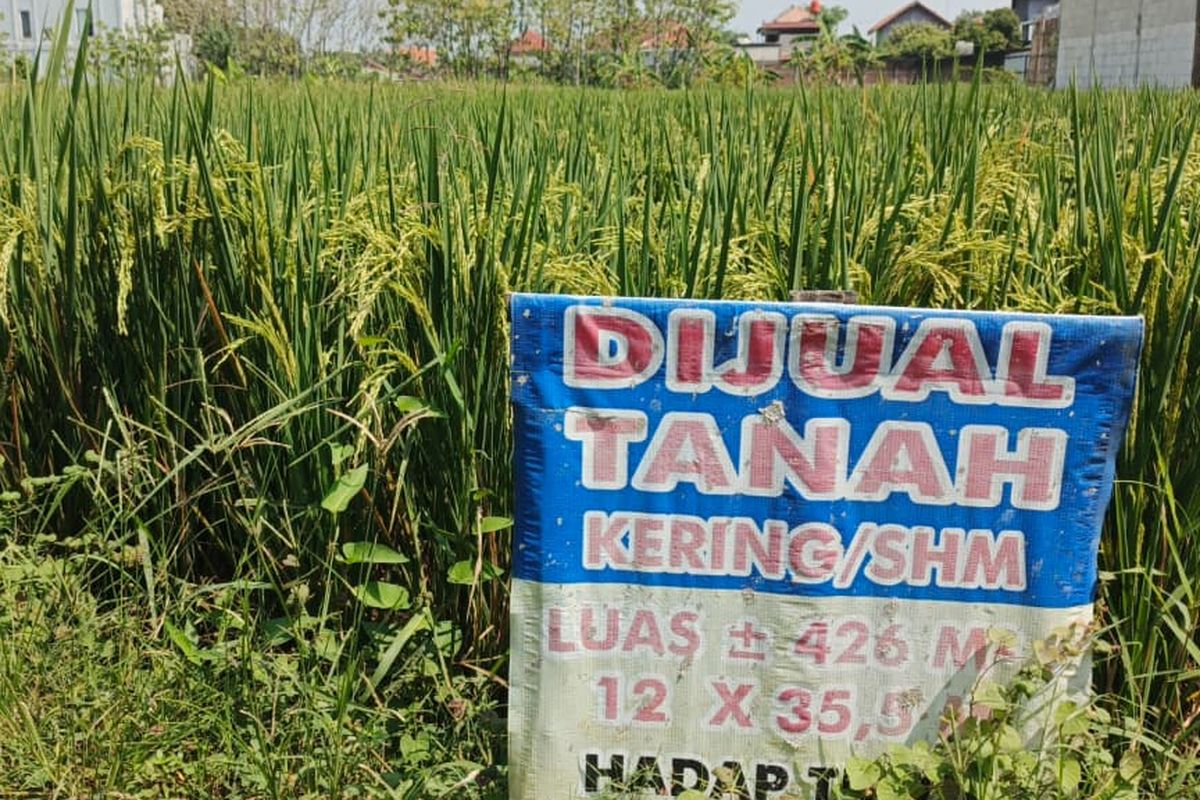
REFORM of agrarian policy has entered a new chapter following the enactment of the Agrarian Reform Law and the arrival of new leadership at the Agrarian Reform Organizing Agency (LPRA) with the inauguration of Police Commissioner General Dedo Prasetyo on October 1, 2026, by President Prabowo.
However, no matter how grand the agrarian reform agenda sounds in policy speeches, it ultimately hinges on very concrete issues experienced by the community.
Classic problems such as unclear land boundaries, overlapping land certificates, unresolved customary land claims, business permits encroaching on forest areas, and disputes that have been passed from one bureaucratic desk to another for years.
This reality shows that agrarian problems are not merely the result of regulatory or land administration deficiencies, but structural issues regarding inequality in land ownership, fragmented authorities, weak data integration and mapping, and an inadequate mechanism to ensure that every conflict truly has a resolution.
Indeed, agrarian reform was not intended solely as a certification program, but rather as a means to reorganize land ownership, use, and utilization structures to make them fairer, more productive, sustainable, and legally certain.
Therefore, the momentum generated by the new law and the establishment of new institutions should not merely result in an addition of institutions within the bureaucratic structure.
A far more important question is what model of agrarian reform agency is genuinely needed for the state to address agrarian issues at their root?
The LPRA should not grow into a 'super BPN' that takes over the technical powers of other ministries and agencies.
The challenge lies in building a national agrarian reform orchestrator that can bring together dispersed authorities, unify different data and maps, determine who should do what and by when, and ensure decisions are truly implemented.
Thus, the success of the agrarian reform agency should not be measured by the number of meetings, recommendations, or certificates issued, but by its ability to correct inequalities, resolve conflicts, protect community rights, including customary land, and deliver real legal certainty and justice in agrarian matters.
The magnitude of the issues can be seen from the land control structure. The 2023 Agricultural Census recorded around 27.8 million farmers using agricultural land in Indonesia.
Of this number, approximately 17.25 million are marginal farmers, meaning they control or use less than 0.5 hectares of land.
This figure indicates that the majority of farmers still operate within a very limited land control structure.
At the same time, agrarian issues continue to be a source of public complaints.
The Indonesian Ombudsman recorded 14,351 reports related to agrarian issues, particularly land and spatial planning, from 2021 to 2026.
In 2024, agrarian and land-related issues constituted 17.17 percent of the 10,846 complaints received by the Ombudsman.
The vulnerabilities in governance are also significant. In the 2022 Land Service Corruption Mapping report, the Anti-Corruption Commission (KPK) noted 31,228 land cases over the four-year period analyzed and uncovered 244 cases categorized as related to land mafia.
The same study also found 2,718 uncategorized land use rights certificates (HGU) covering approximately 1.5 million hectares that had not been adequately mapped at that time.
These figures highlight a critical point: agrarian issues are not a collection of isolated individual disputes.
Rather, they are connected to structures of land control, administration, data integrity, authority coordination, and the state's capacity to consistently resolve conflicts.
Therefore, if agrarian reform agencies are only established as additions to bureaucracy, we risk having new institutions yet still applying old methods.
The needed institutional model should not be a “super BPN”.
The agrarian reform agency does not need to seize all the powers of the Ministry of Agrarian Affairs and Spatial Planning (ATR/BPN), the Ministry of Forestry, local governments, law enforcement agencies, ministries that handle defense, or other institutions.
Land administration remains the jurisdiction of ATR/BPN. Forest areas remain under the authority of related ministries.
Local governments manage their own affairs. Criminal aspects continue to be handled by law enforcement agencies.
The major issue arises because a single piece of land often falls between multiple jurisdictions.
A parcel of land may have a certificate yet overlap with forest areas.
The same land might also fall under a business permit while simultaneously being claimed as customary land.
Additionally, in other regions, community land might overlap with government assets, spatial planning, strategic projects, or public interests.
If each agency operates based on its own database, maps, and sectoral logic, resolution can easily get caught in a waiting game.
Therefore, the new agrarian reform agency's model needs to be positioned as a national agrarian reform orchestrator.
Not an agency that does everything, but rather one that ensures all authorities operate in one direction toward a resolution.
The working principle can be summarized as: one case, one database, one problem map, one resolution process.
Each incoming conflict must first be classified based on subject, object, legal basis, conflict level, and relevant ministries and institutions.
Legal data must then be integrated with historical control records, physical data, forest areas, spatial planning, business permits, state assets, customary lands, and defense data where relevant.
With this model, communities will no longer need to search for which agency is responsible. The state must unify all of those authorities.
The issue of inter-agency coordination in Indonesia is not new. Coordination meetings can occur multiple times, recommendations can be issued, yet conflicts remain unresolved for years.
Hence, the new agrarian reform agency model needs to have at least three functions working as one cycle: recommendatory, directive, and evaluative.
The recommendatory function should not merely produce administrative suggestions. The agrarian reform agency must become the government's agrarian policy intelligence center, which can interpret agrarian issues by integrating legal, social, historical, economic, spatial, and geospatial aspects.
This analysis will yield evidence-based resolution options.
The second function is directive. This is often the missing part in agrarian conflict resolution.
Many cases have known problems, yet it is unclear who should do what.
The new model must allow recommendations to be translated into concrete actions, such as identifying which ministries or agencies are responsible, what actions must be taken, deadlines, and how success is measured.
If there are discrepancies in data, for example, a re-examination of documents, verification of rights history, re-measurement of boundaries, or map synchronization may be required.
For cross-sectoral issues, a roadmap for resolution should be developed along with clear responsibilities and timelines.
However, that authority must still adhere to the due process of law. The agrarian reform agency cannot replace the judiciary or unilaterally revoke rights.
Its function is to oversee the governance process, ensure administrative corrections are made, and escalate policy deadlocks to the President if necessary.
The third function is evaluative. This is where the focus of agrarian reform needs to change.
Previously, successes were relatively easy to showcase via the number of registered plots, the area redistributed, or certificates issued.
These indicators remain important, but do not address more substantive questions: does inequality reduce? Are conflicts truly resolved?
Do communities have the right to certainty? Does the welfare of agrarian reform recipients improve? Thus, evaluation must shift from mere administrative output to agrarian outcomes.
The new agrarian reform institutional model requires a case resolution system that can be traced from start to finish.
Every agrarian conflict should receive a Case Resolution Number from the time it is registered, then move through a clear flow: verification, mapping, audit, field inspection, mediation, recommendation, corrective action, implementation, and evaluation.
With such a system, communities can know the status of their cases, while the state can see which cases are stalled, which agencies have not followed up on decisions, and which conflicts have re-emerged after being declared settled.
Based on these resolutions, success measures should no longer stop at the number of reports received or recommendations issued, but rather at how many cases were truly resolved, how long the resolutions took, and whether the sources of conflict were successfully corrected.
However, this traceable resolution system will not function without an integrated and credible database.
Therefore, the LPRA needs to build a National Agrarian Reform Data System that integrates data on land parcels, land use rights (HGU/HGB), forest areas, spatial planning (RTRW/RDTR), mining and plantation permits, customary land, abandoned land, state assets, defense areas, and agrarian conflicts in one geospatial system.
The principle is one object, one spatial identity, and one data trail that can be verified.
At the same time, this integration should be strengthened through an Agrarian Integrity System that maintains a digital audit trail for every change in data, boundaries, status, and land decisions, such as who proposed, verified, approved, and based on which documents.
With this mechanism, preventing land mafia activities will no longer rely solely on enforcement after disputes arise, but will instead move towards early detection of data anomalies and administrative processes.
If agrarian reform aims to transition from mere administration to genuine conflict resolution, then customary land must be positioned as one of the most strategic agendas.
In many indigenous communities, the relationship with land is not built through individual ownership logic, but through genealogy, historical control, natural boundaries, customary law, community testimonies, and collective ownership across generations.
The issue is that such spaces often become locations where customary interests meet large-scale investments.
According to data from the Indigenous Peoples Alliance of the Archipelago (AMAN), in 2025, 135 cases of customary land encroachment were recorded, covering approximately 3.8 million hectares, with conflicts related to mining, plantations, energy, infrastructure, forestry, and agricultural projects.
In Central Sulawesi, in 2026, tens of thousands of hectares of customary territory were reported to overlap with mining permits and plantation land use rights (HGU).
These facts illustrate that customary land is not just a matter of cultural identity, but also a high-value economic space susceptible to becoming a meeting point between community rights, investments, natural resource exploitation, and development agendas.
This issue involves recognition of indigenous communities that cannot just stop at acknowledgment of their communities or identities.
Certainty must be translated into more operational questions regarding territorial boundaries, legal status, management authority, and conflict resolution mechanisms when there are overlaps with land use rights, forest areas, mining, plantations, strategic projects, state assets, or other public interests.
Here, the concept of a National Customary Land One Map becomes relevant, integrating community genealogies, historical control, anthropological evidence, natural boundaries, participatory mapping, GPS points, community testimonies, and geospatial data into one system that can be reconciled with licensing and spatial maps.
Here lies the true test of agrarian reform.
The issue is no longer whether Indonesia has a new institution but whether that institution can genuinely present a new way of working.
If the new institution merely adds more coordination meetings, letters, recommendations, and bureaucratic chains, this is actually at risk of becoming part of the problem it seeks to resolve.
The LPRA will find its meaning when it is able to break down sectoral barriers, unify data and maps, reconcile dispersed authorities, establish who does what and by when, and ensure that decisions are truly implemented.
Thus, agrarian reform requires not an agency that does everything independently, but one that can ensure the state operates as a single system when confronting agrarian issues.
Its measure of success must also change.
It should not be how many recommendations are issued, how many meetings are held, or how many certificates are distributed, but rather how many conflicts are truly resolved, how many unequal land holdings are corrected, how many community rights are secured, how much customary land is protected, how much space is closed off to land mafia activities, and whether agrarian reform ultimately improves community welfare.
That is where the new model of the agrarian reform agency should take shape, not in the extent of authority collected, but in the effectiveness of state authority being brought together to achieve resolutions.
For society does not need yet another agency to receive complaints; they need a state that can ensure every land issue has a resolution and every conflict reaches its conclusion.

























