

Klaten Chicken Soup Amidst Hamenang Corruption Case
-
News
-
42 minutes ago
This article was translated by AI. Read the original article on Kompas.com. See Original
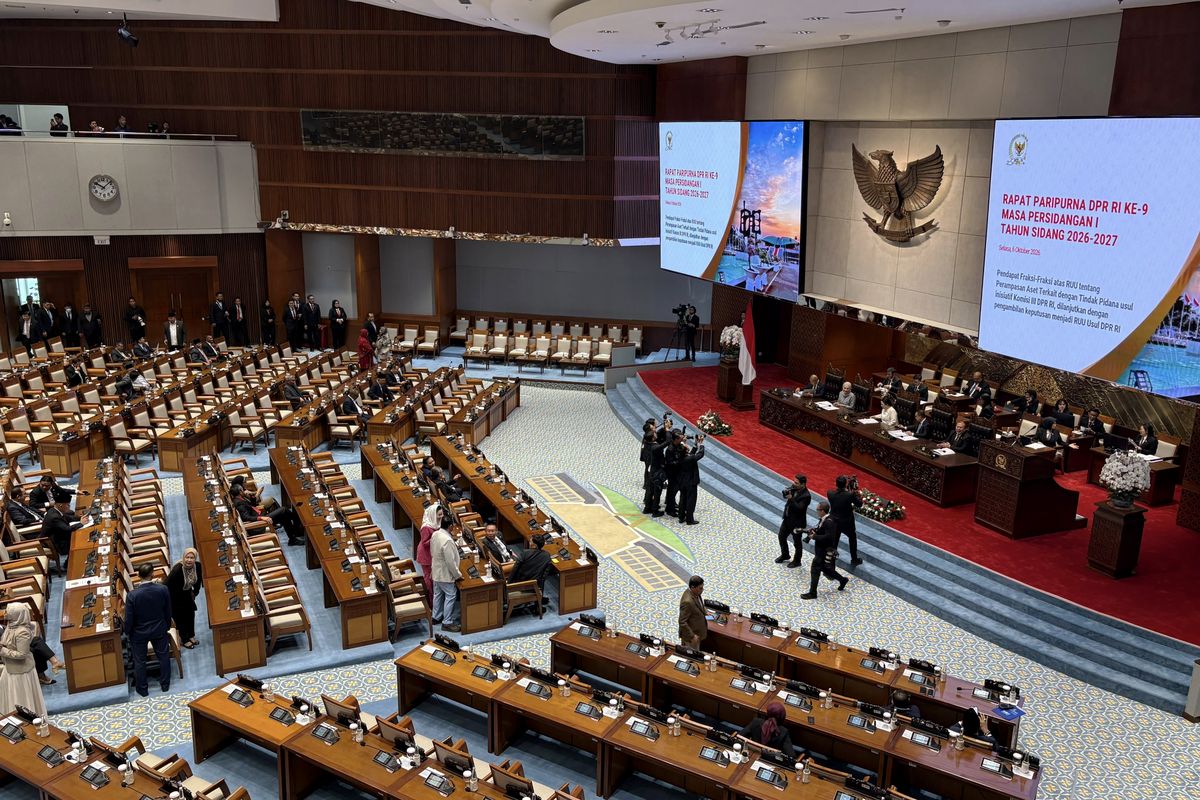
“Data security standards will be set by agencies in the field of cybersecurity and encryption, accompanied by cryptographic infrastructure, digital certificate management systems, security audits, and sovereignty audits, as well as incident reporting within a maximum of 24 hours,” Sturman noted.
He pointed out that the SDI law also recognizes two constitutional rights related to data.
The first is the public's right to obtain information, which must proceed in balance.
The second is the right to personal data protection.
“The SDI law is founded on these two constitutional rights, which must run in balance: the citizen's right to obtain information and the right to personal data protection,” he said.
Thus, the SDI law also introduces classifications of open, limited, and closed data.
Beyond governance management issues, the SDI law has a national resilience dimension.
According to Sturman, a nation's sovereignty today is also related to its ability to manage its data.
“Moreover, this draft law carries a national resilience dimension. A nation's sovereignty today is measured by its sovereignty over data,” Sturman stated.
He views that a country that does not recognize and manage its data will be more easily mapped by others.
“A nation that does not recognize its own data will be easily recognized, mapped, and even controlled by others,” Sturman added.
The SDI law also opens avenues for public involvement in the administration of One Data Indonesia.
Sturman mentioned that the public can provide input, report data misuse, engage in participatory oversight, and voluntarily contribute data.
“The public plays a role through providing input, reporting suspected data misuse, participatory oversight, and voluntary data contribution,” he said.
This provision ensures that the implementation of One Data Indonesia is not solely a government affair, but also opens space for community involvement.
Sturman added that the SDI law also outlines dispute resolution mechanisms prioritizing non-litigation methods or out-of-court settlements.
“This formulation affirms a clear division of roles to prevent overlaps and gaps in responsibilities,” Sturman concluded.
He explained that the mediation process is given a maximum of 14 working days, which can be extended for another 14 days.