

Rumors Emerge That Jeff Bezos Wants to Fund the Relocation of the Javan Rhino
-
News
-
10 minutes ago
This article was translated by AI. Read the original article on Kompas.com. See Original
JAKARTA, KOMPAS.com - The bars of a correctional facility are supposed to create a clear division between the lives of inmates and life outside prison walls.
However, recent findings suggest that this boundary can be crossed when money and personal connections determine the facilities available to inmates.
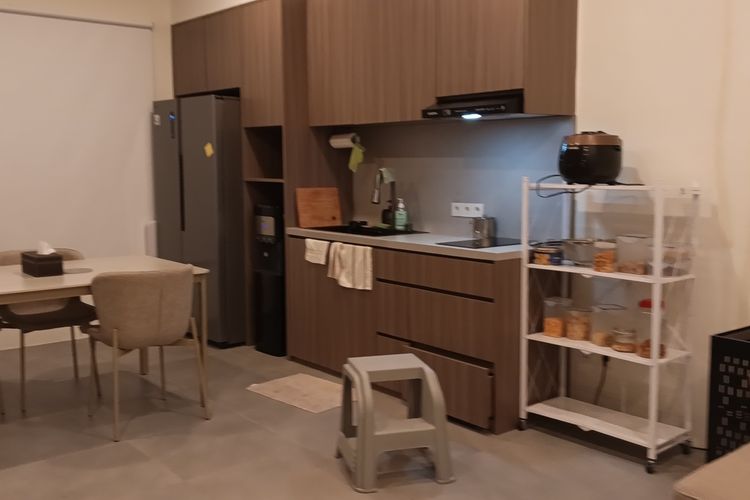
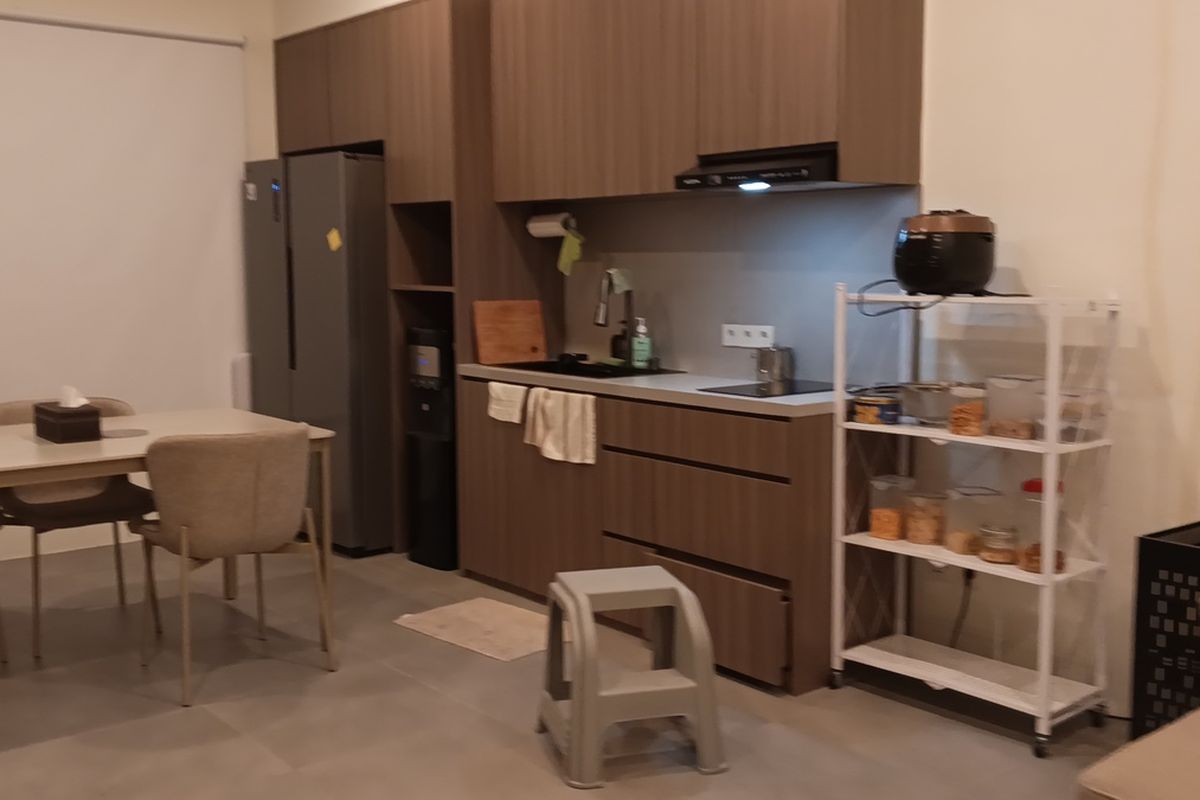
At the Class IIA Cibinong Correctional Facility in Bogor Regency, West Java, for instance, a complex known as "apartments" has been discovered to be inhabited by inmates.
Elsewhere, allegations of a drug party at the Class I Depok Detention Center have revealed a different issue lurking behind prison walls.
Rudi Setiawan, Inspector General of the Ministry of Immigration and Corrections (Imipas), disclosed that houses within the Cibinong Correctional Facility complex are indeed used by certain inmates.
According to Rudi, these buildings were initially said to be designated for family visits for inmates.
"These houses were intended to host family relations of inmates. This is particularly true for those convicted of corruption cases," Rudi stated during a press conference on Monday (5/10/2026).
Rudi then listed several inmates who have resided in those facilities.
Among them are Jimmy Masrin, convicted in a fictitious credit case involving the Indonesian Export Financing Agency (LPEI); Indra Kesuma alias Indra Kenz, convicted of a Ponzi scheme; and Heru Hidayat, convicted of corruption related to PT ASABRI.
"There are other names too, like (Ahmad) Albani and Hasan (Tjhie) who were found by Mrs. Ida. Ahmad and Hasan. Those are the names identified," Rudi explained.
Not only buildings and residential facilities, but other issues have also surfaced within the complex.
Rudi noted that the alcoholic beverages discovered by the Ombudsman during an inspection belonged to Jimmy Masrin.
"The items were not as claimed by the Section Head of Security, Adi Nugroho Nur Wichaksono, but rather belonged to the inmate residing in that house," he stated.
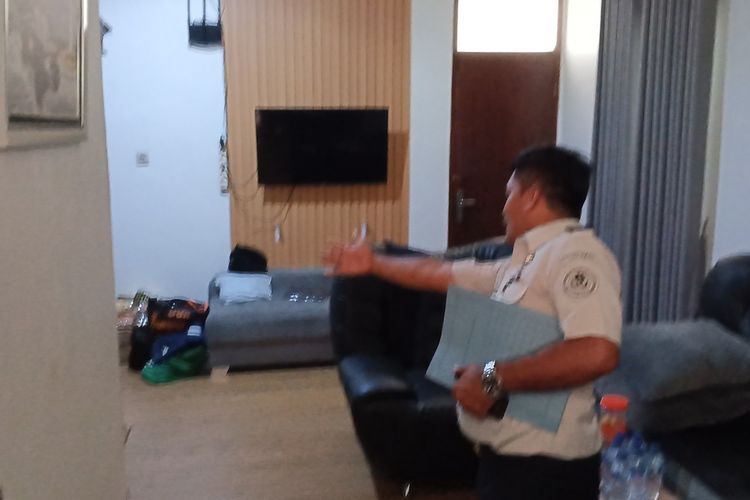 Condition of Class IIA Cibinong Correctional Facility in Bogor Regency, West Java, featuring several houses with apartment-like facilities. The review took place on Thursday (24/9/2026) morning to noon at the Class IIA Cibinong correctional complex, specifically in the area of houses previously highlighted by the Indonesian Ombudsman.
According to Rudi, all items found in that house were also Jimmy's possessions.
In fact, some luxury items were moved prior to an impromptu inspection conducted by Minister of Imipas Agus Andrianto.
"The items, including other luxury possessions, were provided by the inmate using and acquiring them. When the Minister arrived, those items were no longer there," Rudi shared.
Some items, he mentioned, were recovered, yet many were taken out of the prison complex.
"So on the night of the 23rd, those items were moved. Some we managed to recover, while others were already taken outside, and we found them in the former cow shed," Rudi said.
Criminal law expert Abdul Fickar Hadjar from Trisakti University believes the existence of special facilities for certain inmates indicates a fundamental issue within the correctional system.
He argues that such conditions even reverse the nurturing function of prisons.
"This is a reverse concept, where the correctional staff are actually being conditioned by inmates, making it so that wealthy inmates receive service and even have luxury homes built for their stay," Fickar told Kompas.com on Tuesday (6/10/2026).
He asserts that the situation is not merely a deviation but also a shift in the role of correctional officers.
"This clearly demonstrates not just a deviation but also a transformation of correctional staff roles into serving inmates, rather than fulfilling state duties," he remarked.
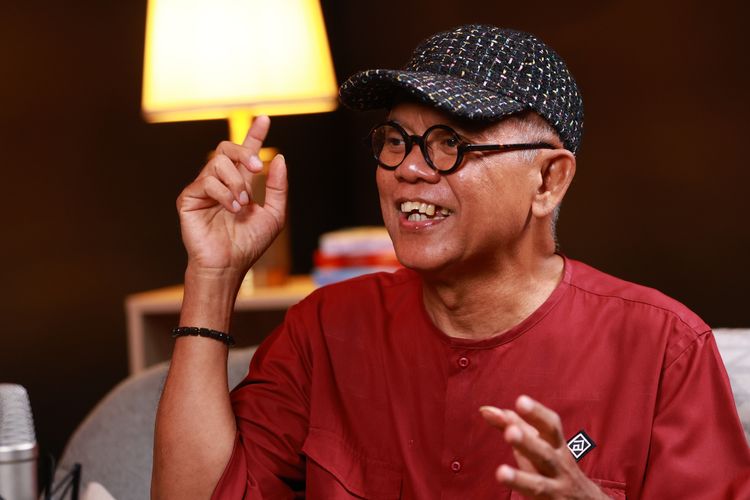 Criminal law expert Abdul Fickar Hadjar poses after being interviewed by Kompas.com at the Kompas Gramedia Building, Palmerah Selatan, Central Jakarta, on Friday (17/7/2026).
This issue becomes more pronounced when considering that correctional facilities and detention centers are still experiencing severe overcrowding.
Minister of Imipas Agus Andrianto stated that prisons and detention centers in Indonesia face an overcapacity of up to 85 percent.
According to data as of April 30, 2026, there are 271,602 inmates, comprising 215,044 convicts and 56,558 detainees.
"Currently, correctional facilities and detention centers are overcapacity by 85 percent, with a total inmate population of 271,602. Among them, 146,376 individuals, or 53 percent, are incarcerated for drug-related offenses. This is no longer just an overcapacity crisis," Agus said during a virtual correctional seminar on Wednesday (6/5/2026).
Fickar asserts that the phenomenon of overcrowded prisons combined with the existence of luxurious prisons creates discrimination against other inmates who lack financial means.
"Clearly, this is a discriminatory act against other prisoners, especially those without wealth," Fickar stated.
He noted that this issue becomes even more serious given that it occurs amid overcrowded conditions.
"Especially as the reality shows that amid this overcapacity, the prison staff are actually profiting for themselves," he added.
According to him, the issue of luxury facilities is not just about the presence of improper buildings within prison environments.
It also concerns the principle of equality in treatment of inmates.
Deputy Chairman of Commission III of the DPR Ahmad Sahroni emphasized that special facilities for inmates based on wealth or connections cannot be justified.
"There should be no special treatment in prisons for convicted individuals based on money or personal relationships. This clearly violates existing principles and regulations," Sahroni stated to Kompas.com on Tuesday.
Thus, Sahroni believes an audit of facilities and treatment of inmates is necessary.
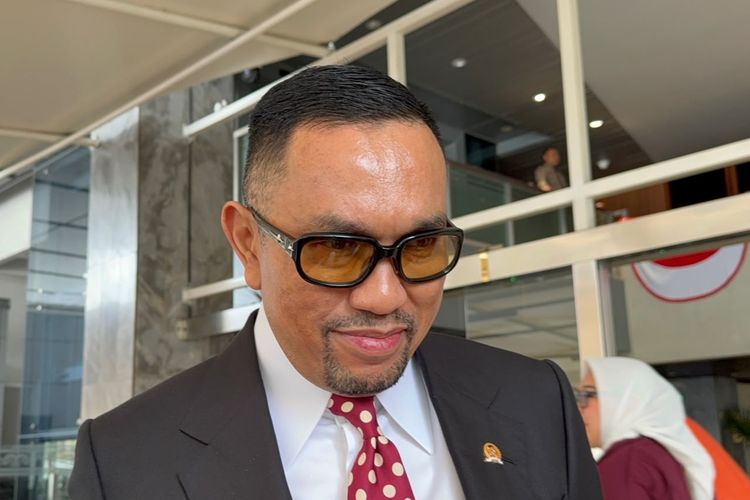 Deputy Chairman of Commission III of the DPR Ahmad Sahroni during an interview at the DPR Building, Senayan, Jakarta, on Tuesday (18/8/2026).
He insisted that the audit should not only be conducted at the Cibinong Correctional Facility.
"A comprehensive audit is crucial, not just in Cibinong but gradually across other correctional facilities," Sahroni said.
According to him, the purpose of the audit is not merely to identify errors of the staff.
"The goal is not just to find faults but to ensure that monitoring and correctional processes are functioning properly," he noted.
The next challenge is ensuring that facilities and treatment of inmates are not dictated by economic capability.
Sahroni argues that improvements must start with the integrity of the staff and the transparency of prison mechanisms.
"The most important thing is to strengthen the integrity of the staff and ensure all mechanisms run transparently," Sahroni emphasized.
He reminded that the primary goal of corrections is to rehabilitate inmates so they can reintegrate into society.
"We must prevent rehabilitation and correction processes, which should enhance inmates' capacity for improvement, from being disrupted by such practices," he warned.
Meanwhile, Fickar believes this issue needs to be addressed through an evaluation of the overall correctional system.
He argued that society should also have a role in monitoring the administration of corrections.
"What needs evaluation is the correctional system, which should provide access for society to oversee government efforts in rehabilitating individuals who have strayed into crime," Fickar concluded.


















