Prabowo Gathers Gerindra Cadres in Hambalang, Dasco and KDM Attend
-
News
-
1 hour ago
This article was translated by AI. Read the original article on Kompas.com. See Original

JAKARTA, KOMPAS.com - The Corruption Eradication Commission (KPK) has released the results of the Integrity Assessment Survey (SPI) for Education 2026, recording a score of 73.30, placing it in the adaptive category, an increase from the previous period.
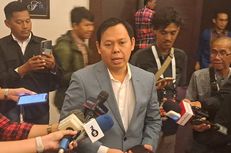
“Let's give an applause for the SPI score; it’s remarkable. We are grateful that the score is quite high,” said KPK Chairman Setyo Budiyanto during the launch of the 2026 Education Integrity Index at the Juang Building in Jakarta on Tuesday (6/10/2026).
The SPI Education score two years prior was recorded at 68.5, indicating a vulnerable corruption level.
Although the SPI Education score has improved since 2024, Setyo noted that several regions still fall into the corrective category, highlighting the need for improvements.
“I hope all parties are not averse when certain regions are deemed lacking. It’s an opportunity for us to improve,” he stated.
The 2026 SPI revealed that 8 percent of educators reported that School Operational Assistance (BOS) funds were not used as intended.
“From the governance dimension, there are still reports that BOS fund utilization does not align with its objectives. This was reported by 8 percent of our respondents,” said Acting Deputy for Education and Community Participation at KPK, Dian Novianthi, during the SPI Education 2026 launch.
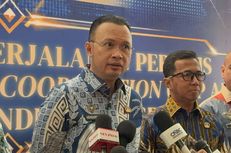
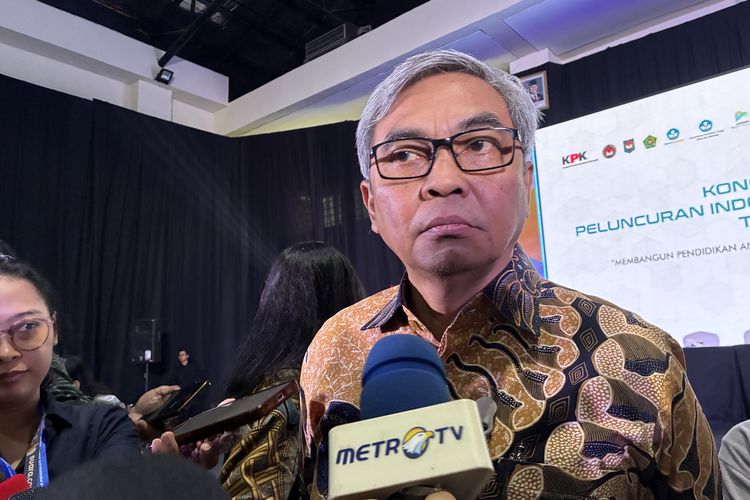 KPK Chairman Setyo Budiyanto at the Juang Building in Jakarta, Tuesday (6/10/2026).
Among this 8 percent, 16 percent experienced extortion, deductions, or levies; 40 percent reported nepotism; 45 percent noted cost inflations for other fund utilizations; and 41 percent reported other issues.
Additionally, KPK found that 91 percent of practices involved using proxies to complete students' final assignments or theses at universities.
Meanwhile, 43 percent of respondents stated that proxy practices for theses are still occurring at universities.
“There are still findings related to students paying others to complete their final assignments or theses, akin to hiring a proxy. This was reported by 43 percent of respondents and occurred in 91 percent of the surveyed educational units,” she explained.
Moreover, the SPI Education 2026 uncovered other integrity issues in higher education.
Among these, 50 percent of respondents reported ongoing cheating practices during exams at 94 percent of surveyed higher education institutions.
Additionally, KPK found that 31 percent of teachers arrived late for classes without clear reasons.
“This was noted in 31 percent of primary and secondary education and 53 percent in higher education,” she added.
In closing, KPK Chairman Setyo Budiyanto emphasized that corruption prevention must begin in the classroom to avoid future corrupt practices.
He also mentioned that KPK understands the government is focusing on infrastructure development, but the character development of the younger generation should also be prioritized.
“If we accomplish this, hopefully, it will strengthen our culture and preserve it for future generations,” he stated.
The 2026 SPI Education involved 42,810 educational units as respondents, consisting of 41,720 primary and secondary schools and 1,090 higher education institutions.
For primary education, the survey involved students from grades 4 and 5 who are deemed capable of reading and comprehending the questions.
Then, for junior high and equivalent, it included grades 7 and 8, while for high school, grades 10 and 11, and university students from semester 3 to 8. Parents were also involved, especially for primary and secondary levels.
Furthermore, educators from selected educational institutions were surveyed, alongside school principals and university leaders.
Data collection methods utilized three approaches: first, online submissions through a questionnaire link sent via WhatsApp blast and email blast.
Second, CAWI (Computer Assisted Web Interviewing) for respondents who have limitations such as lacking mobile devices, data privacy concerns, or are in boarding schools.
Third, CAPI (Computer Assisted Personal Interviewing) for self-administered data collection through applications facilitated by survey teams directly in the field for respondents with limited internet access.