

Prabowo Gathers Gerindra Cadres in Hambalang, Dasco and KDM Attend
-
News
-
2 hours ago
This article was translated by AI. Read the original article on Kompas.com. See Original
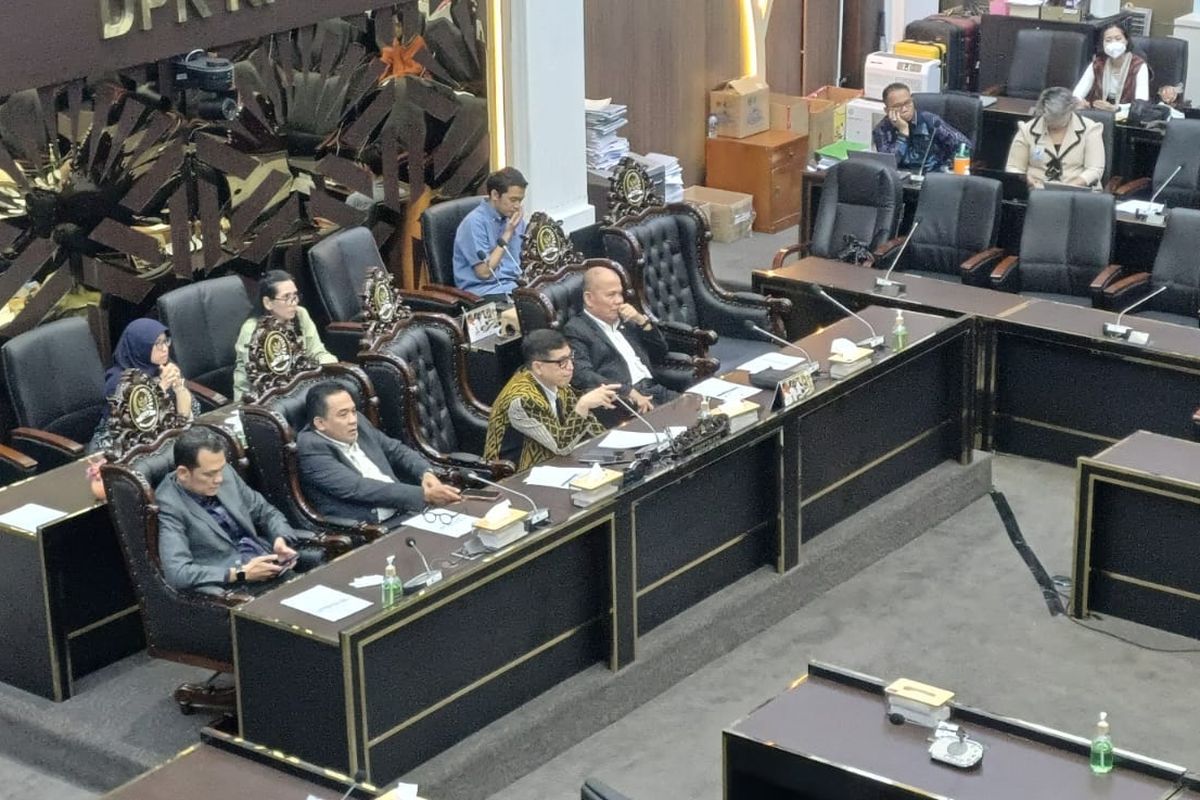
JAKARTA, KOMPAS.com - The Indonesian House of Representatives (DPR RI) and the government have agreed to begin discussions on the Revision of the Copyright Law (RUU) after the legislature's recess in November 2026.
The discussions are targeted to be completed by December 17, 2026.
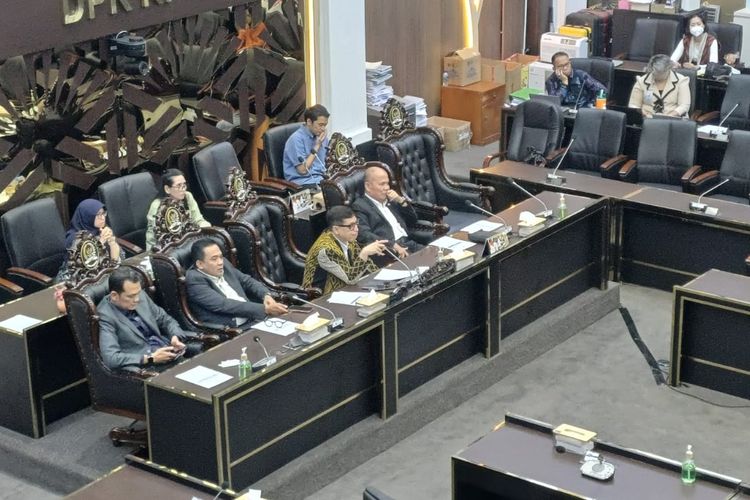
This agreement was reached during a working meeting of the House Legislative Body (Baleg) with the government at the Parliament Complex in Jakarta on Tuesday (6/10/2026).
"What is written here is still tentative and can be moved or adjusted, but fundamentally, the completion is no later than December 17, 2026," said Chairperson of Baleg DPR RI, Bob Hasan.
"Yes, Chair," replied Deputy Minister of Law Edward Omar Sharif Hiariej.
Initially, Bob sought approval from the meeting to start discussions on the Copyright Law on October 7, 2026.
However, Edward stated that the government could not begin discussions on that date.
"We apologize, leadership as the leading sector is at the Ministry of Law. From October 7 to 10, we have a WIPO (World Intellectual Property Organization) conference in Bali, hosting representatives from 50 countries, so the director general managing this matter will be in charge in Bali," Edward explained.
Bob then confirmed that discussions would only commence after the DPR's recess.
"After the recess, yes," replied Edward.
It is worth noting that the DPR members will enter recess from October 10 to November 10, 2026.
During the meeting, the government conveyed the President's views on the Copyright Bill, which are outlined in 1,117 Problem Inventory Lists (DIM).
Of these, 558 DIM are permanent, 91 DIM are changed or substantive, 143 DIM are proposed for deletion, 181 DIM are new substances, and 144 DIM are editorial.
"Regarding the content of this Copyright Bill, in principle, the government welcomes it and is willing to engage in a more in-depth and comprehensive discussion with the DPR RI according to the procedures for discussing Draft Laws as regulated in legislation," Edward stated.
Edward noted that the update of the Copyright Law is necessary because the regulations have been in place for over a decade.
Therefore, it needs to be adjusted to developments in law, technology, and societal needs.
"This renewal aims to build a fair and competitive copyright ecosystem, providing legal certainty and positioning intellectual property as one of the pillars of national advancement," Edward added.
Meanwhile, the Chairman of the Copyright Bill working committee at Baleg DPR RI, Martin Manurung, mentioned that the bill aims to strengthen protection for creators, copyright holders, and related rights owners, including journalistic works.
"Broadly speaking, this Copyright Bill aims to: A, align regulations with the era of digitalization and technological transformation. B, provide more optimal protection for creators, copyright holders, and related rights owners including in journalistic works," Martin articulated.
The bill will also regulate the obligations and responsibilities of digital platforms in preventing copyright violations, protecting traditional cultural expressions, and creations based on artificial intelligence (AI).
Other materials include economic rights, broadcasting institutions and media companies, fair use, duration of copyright and related rights, licensing, royalties, Collective Management Organizations (LMK), disputes and law enforcement, as well as criminal provisions.
Edward mentioned that the government proposes adjustments to the LMK and National Collective Management Committee (KMKN) institutions, including updates to royalty management systems.
"First, the institutional arrangements for the Collective Management Organization (LMK) and the National Collective Management Committee (KMKN), including updates to copyright royalty management systems, will be applied to creations in music and other fields," Edward explained.
The government also proposed regulating an endowment fund for royalties to strengthen governance and sustainability in royalty management.
Furthermore, discussions are expected to cover the legal status of works produced with the assistance or entirely by artificial intelligence (AI) systems.
The government is also encouraging the strengthening of media companies' involvement and the protection of journalistic works in copyright issues.
"We aim to strengthen media companies' involvement and the protection of journalistic works as part of the adjustments needed with the evolving press industry and digital ecosystem," Edward emphasized.