

National Police Chief Feels Betrayed by Listyo Sigit and Associates for Intercepting Prabowo
-
News
-
3 minutes ago
This article was translated by AI. Read the original article on Kompas.com. See Original
PEKALONGAN, KOMPAS.com – On the slopes of the Lumping Hills in Mendolo Village, Lebakbarang District, Pekalongan Regency, Central Java, tourism offers more than just scenic views. The Mendolo Young Farmers Association (Paguyuban Petani Muda, PPM) invites visitors to explore deeper.
Visitors can trek the forest, observe endemic Javanese birds and primates, stay in local homes, and sample foods grown in the village.
Within the forest, there is no set schedule for when a bird or primate will appear.
They might show up when one’s eyes are relaxed, or they might not appear at all, even after standing for a long time waiting amidst the still moist trees.
PPM Mendolo member Iman Sofiana explained that this uncertainty is part of the experience.
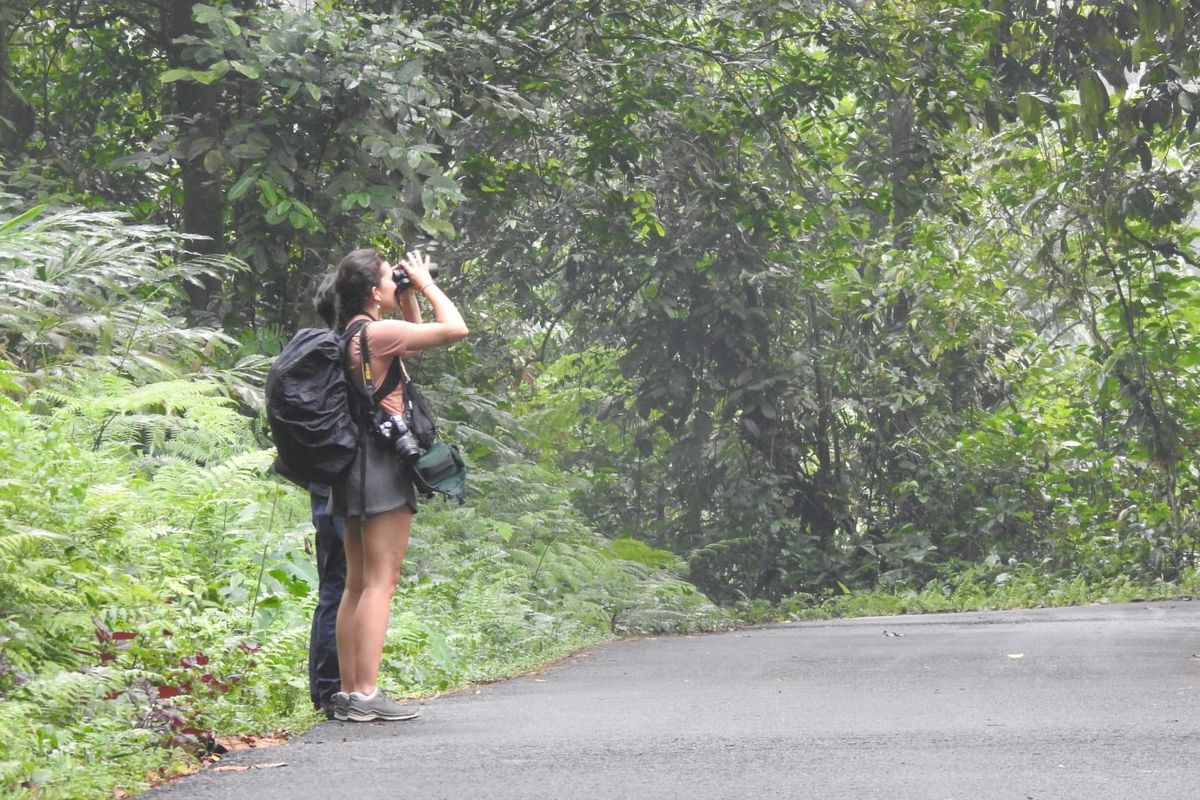
He shared a photo of himself accompanying a tourist from Switzerland standing among trees, eyes fixed on the canopy, binoculars in hand serving as an extension of his sight.
The forest serves both as a workspace and a classroom for anyone who comes. It is here that Iman and friends from PPM Mendolo develop specialized ecotourism.
This is tourism that does not promise entertainment through crowds, but rather encounters with wild life that cannot be forced.
“Touring here isn’t just about the beauty of lush forest leaves; we offer value — local knowledge that has developed here. It’s the result of our care for nature, wildlife, and local food,” said Iman when met by Kompas.com at his home on Friday (18/9/2026).
Visitors are not simply shown the forest from the roadside; they are invited to enter, follow paths, and search for the hidden sounds and movements among the foliage.
Wildlife photography and birdwatching serve as entry points, but Mendolo’s forest holds many more stories.
According to Iman, five primate species that enrich Java’s forests have been confirmed to inhabit the area: the Javan slow loris (Kukang Jawa), Javan gibbon (Owa Jawa), lutung, long-tailed macaque (Monyet ekor panjang), and rekrekan.
They are more than just names for a tourism brochure. For Mendolo’s community, the presence of these animals signals that the forest remains a sufficient home for wildlife.
The tourism here does not involve bringing in animals or turning the forest into a stage show. Instead, visitors must adapt to the forest.
If visitors want to see primates, their guides prepare the routes. If they want to observe birds, the species they want to spot are discussed in advance.
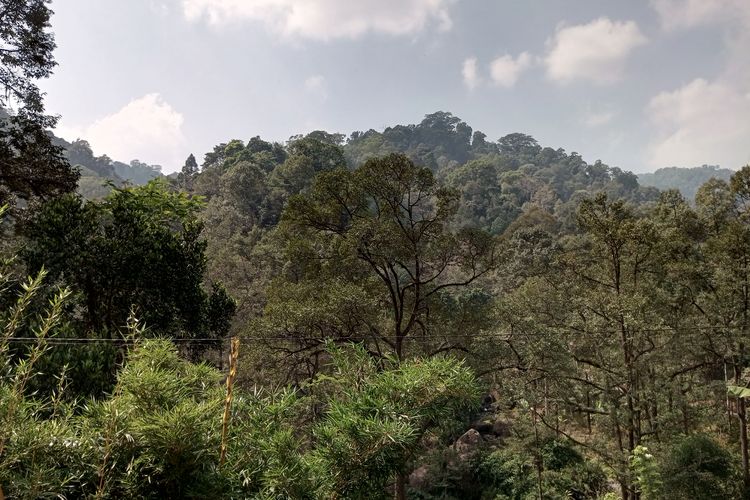 FOREST CONSERVATION: The forest area of Mendolo Village, Lebakbarang District, Pekalongan Regency, Central Java, remains lush and dense, Wednesday (2/9/2026). This forest is home to various wild animals protected by village rules against hunting. Residents believe that tigers and other wildlife play a crucial role in maintaining ecological balance, including helping farmers control wild boar populations.
“If they specify birds, we prepare this, this, and that,” Iman said.
There are choices for which species to search for, as well as specific trails and locations prepared. Once arrangements are made, visitors arrive.
Guides accompany them. The forest is explored slowly. When visitors are satisfied observing one species, the journey moves on to the next location.
The challenge, he said, is that the primates or birds being observed don’t adhere to a “visiting schedule.”
“If the birds don’t come, they just won’t be seen,” Iman said with a laugh, describing one of the biggest challenges in wildlife observation tourism.
It’s that simple — and that is precisely where nature reveals itself, not always complying with human expectations.
“That is the concept of ecotourism,” he said proudly.
Guides don’t just point out wildlife locations; they provide knowledge to accompany the visitors.
When encountering primates, visitors receive explanations about the animals’ behaviors, diets, and the trees important to their lives. The same applies to birds.
Guides must keenly direct the tourists’ attention. Among the nearly uniform green foliage, a bird can hide just a few meters from human eyes.
Binoculars are used to help point out birds to the visitors. In Mendolo, the favorite bird is the common kingfisher (cekakak batu).
There is also the blue-banded kingfisher, which requires a river journey and is still being developed as a trip. Meanwhile, the red-backed shrike (raja-udang punggung merah) is already featured in observation packages.
“The knowledge about the forest isn’t just in the guide’s head—it also clearly impresses itself on tourists’ memories,” Iman explained.