

Said Didu: Golkar's Legal Notice is Misdirected and Lacks Substance
-
News
-
15 minutes ago
This article was translated by AI. Read the original article on Kompas.com. See Original
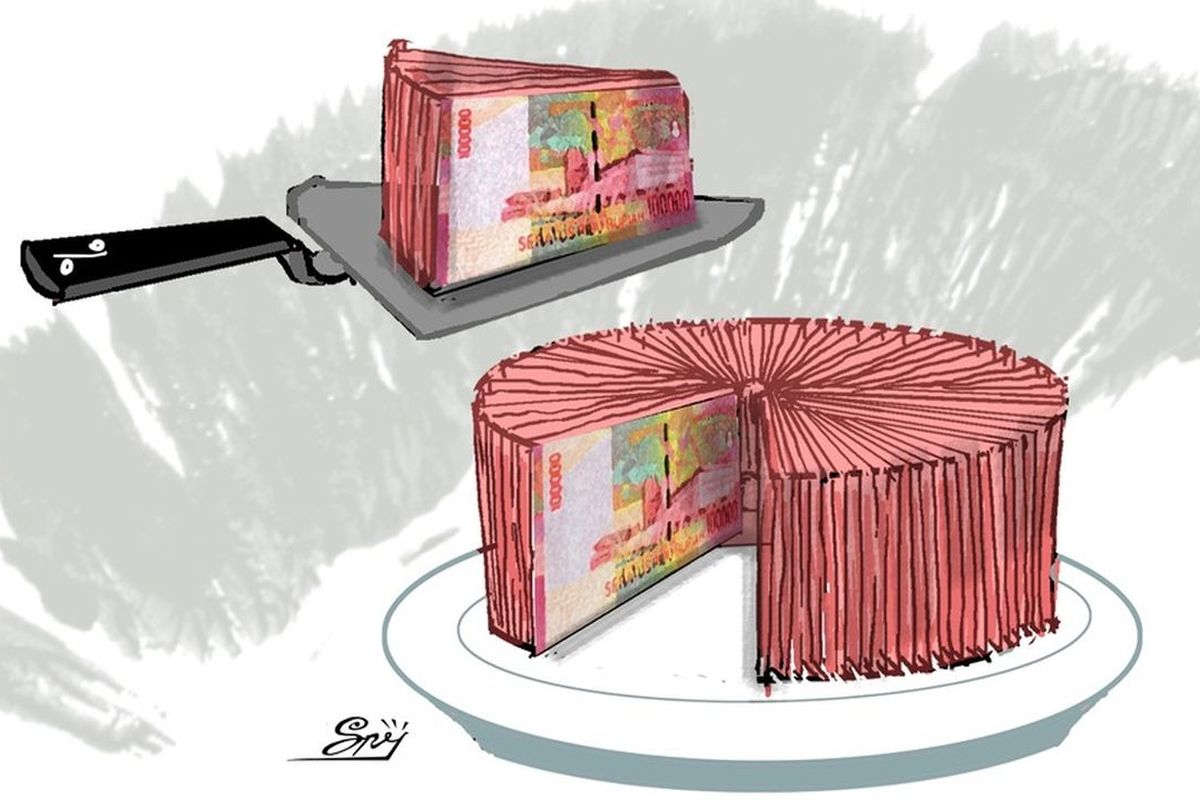
DEFICIT Regional Revenue and Expenditure Budgets (APBD) have become a recurring issue across various regions. The scale varies, and the causes are not uniform.
However, one common thread worth noting is that local governments’ fiscal space is under significant pressure while public service delivery and development responsibilities must continue.
West Nusa Tenggara, for example, recorded approximately Rp 5.68 trillion in revenue and Rp 6.05 trillion in expenditure in its 2026 Revised APBD.
This resulted in a deficit of about Rp 369.6 billion, covered through financing, including the use of budget surplus from previous years (SiLPA) of roughly Rp 431 billion.
Local authorities stress that such fiscal pressure must be met with controlled spending and realistic revenue management.
In West Java, the scale is much larger. Initial deficit projections of around Rp 5.7 trillion were adjusted after reconciliation to approximately Rp 3.4 trillion.
The provincial government cited several factors including delayed revenue-sharing funds, excise revenue falling below targets, and changes in the revenue base from electric vehicles.
Jakarta faces a different set of challenges. As a region with a far stronger Own-Source Revenue (PAD) capacity, the 2026 Jakarta APBD notes revenues of about Rp 71.45 trillion, with PAD contributing Rp 57.67 trillion and central government transfers Rp 11.16 trillion.
Expenditures reached roughly Rp 74.29 trillion. This means even regions with relatively high fiscal independence are experiencing squeezed fiscal space.
These three examples are important precisely because, while not identical cases, they share a similar tone.
West Nusa Tenggara’s revenue structure differs noticeably from West Java’s. West Java, in turn, differs from Jakarta.
If regions with vastly different fiscal characteristics all face budget pressures, the issue cannot be simplified by just blaming local governments for overspending or excessive dependence on the central government.
There are more structural problems in the fiscal relationship between central and local governments.
This is where the agenda for efficiency in the State Budget (APBN) needs to be viewed more broadly.
Efficiency, of course, is necessary. The state cannot allow public spending to grow unchecked without regard for productivity and the ability to finance it.
Local governments must not use reductions in transfers as a permanent excuse to maintain unproductive spending.
However, fiscal efficiency should not stop at the question of how many rupiahs the central government can save. Equally important is how much of the cost is shifted onto local governments after those savings are made.
Data on Transfers to Regions (TKD) illustrates why this question matters. In 2026, the national TKD ceiling was approximately Rp 661.67 trillion, with actual disbursements amounting to Rp 492.87 trillion as of September 18.
Meanwhile, national APBD data reported by the Regional Financial Information System shows total local revenues of about Rp 1,192.81 trillion, with central government transfers constituting Rp 703.08 trillion.