
Cak Imin Encourages Pesantren-Based Vocational Schools to Elevate Standards to International Levels
-
News
-
2 hours ago
This article was translated by AI. Read the original article on Kompas.com. See Original
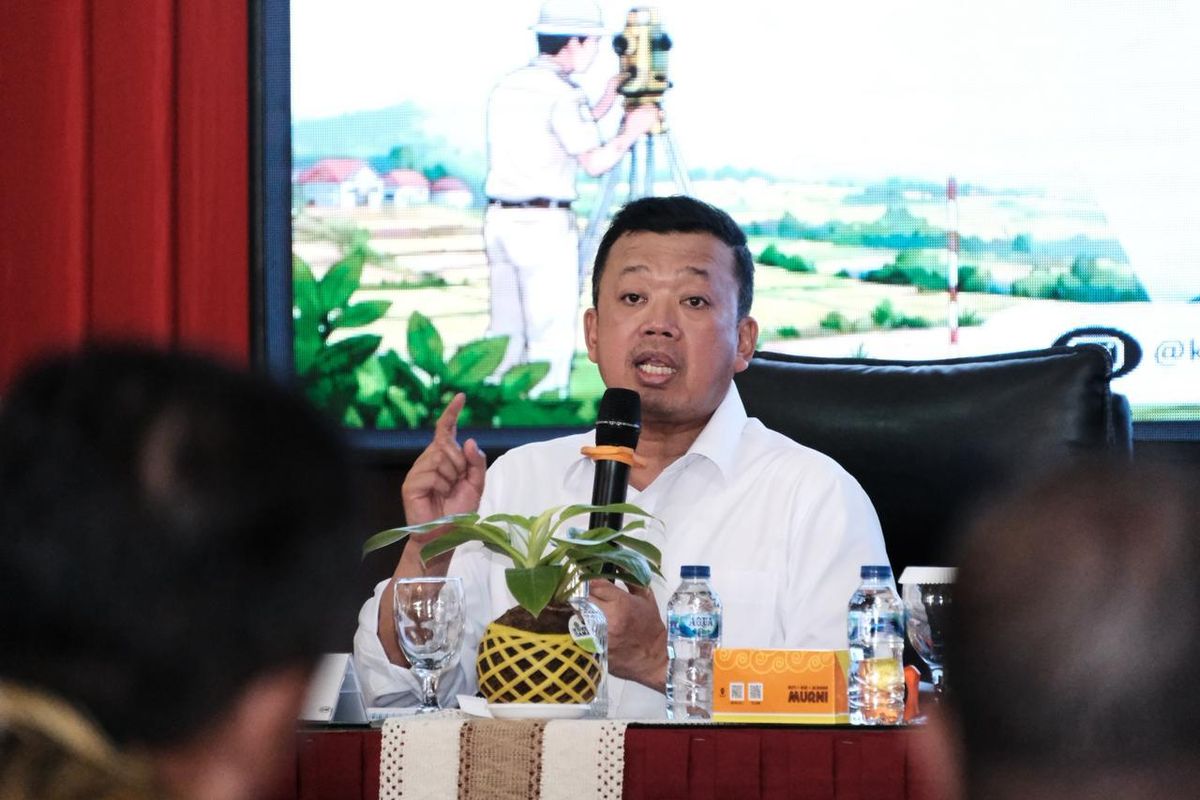
Corrupt criminal acts within the Ministry of Agrarian Affairs and Spatial Planning/National Land Agency (ATR/BPN) have once again shaken public trust.
The Corruption Eradication Commission (KPK) conducted a sting operation on September 14, 2026, subsequently naming eight individuals as suspects in a case involving alleged bribery and gratuities related to processing Building Use Rights (HGB).
Among them are officials from ATR/BPN and several private parties.
What gives this case a more serious dimension is the KPK’s statement that four of the eight suspects are reportedly trusted aides of ATR/BPN Minister Nusron Wahid.
They are Arif Sugiyanto, Fahd El Fouz alias Fahd Arafiq, Erwin, and Muhammad Fakhry.
However, it must be emphasized from the outset that Nusron Wahid has not been named a suspect. The KPK has said that summoning Nusron depends on the needs of the investigation.
Therefore, the issue this article wishes to discuss is not whether Nusron Wahid is involved in a criminal offense. That falls within the investigative domain of the KPK and should be respected as a legal process, including the presumption of innocence.
The question then is: must a minister wait until proven criminally involved before being held ethically and administratively accountable for what happens under their ministry? This is where the issue becomes interesting.
In law, we know the principle of individual criminal responsibility. A person cannot be declared guilty simply because they hold a position when a subordinate commits a crime.
However, government accountability is not limited to criminal responsibility. There is also administrative, ethical, political, and institutional accountability.
A minister is the political responsible official for the ministry they lead. Therefore, the standard of accountability is not merely: did they receive money?
A broader question is: how does the oversight system within the ministry function? How are those around the minister allowed to operate?
Why can alleged corrupt practices grow within institutions under their control? Are internal oversight mechanisms working?
Equally important is whether the leader is willing to take responsibility when their institution faces serious problems.
These questions should not be confused with accusing a minister of criminal misconduct. This is precisely where the difference between liability and responsibility must be understood.
Liability relates to legal accountability for an act. Responsibility encompasses a broader dimension: the moral, administrative, and leadership obligation to account for the state of the institution under one’s authority.
In this area, we can learn from Japan.
In modern governance practices, an official’s integrity is not measured solely by one question: did they commit corruption? A wider measure is whether they managed to create an integrity system within the organization they lead.
A leader cannot possibly know all actions of their subordinates. That is true. But precisely because of this, oversight systems, transparency, conflict-of-interest restrictions, reporting mechanisms, and internal control are needed.
If all of those fail, at least we must question the quality of leadership and governance.
In this context, public office differs from ordinary jobs. A minister does not only carry a personal name. They carry the name of the ministry, the government, and the state.
Moreover, ATR/BPN is no ordinary ministry. Land affairs directly touch on public economic interests, investment, agrarian conflicts, legal certainty, land rights, and even an individual’s future livelihood.