

The National Education System Bill to Regulate Teachers' Salaries, Proposed to Be at Least Equivalent to UMP
-
News
-
6 minutes ago
This article was translated by AI. Read the original article on Kompas.com. See Original
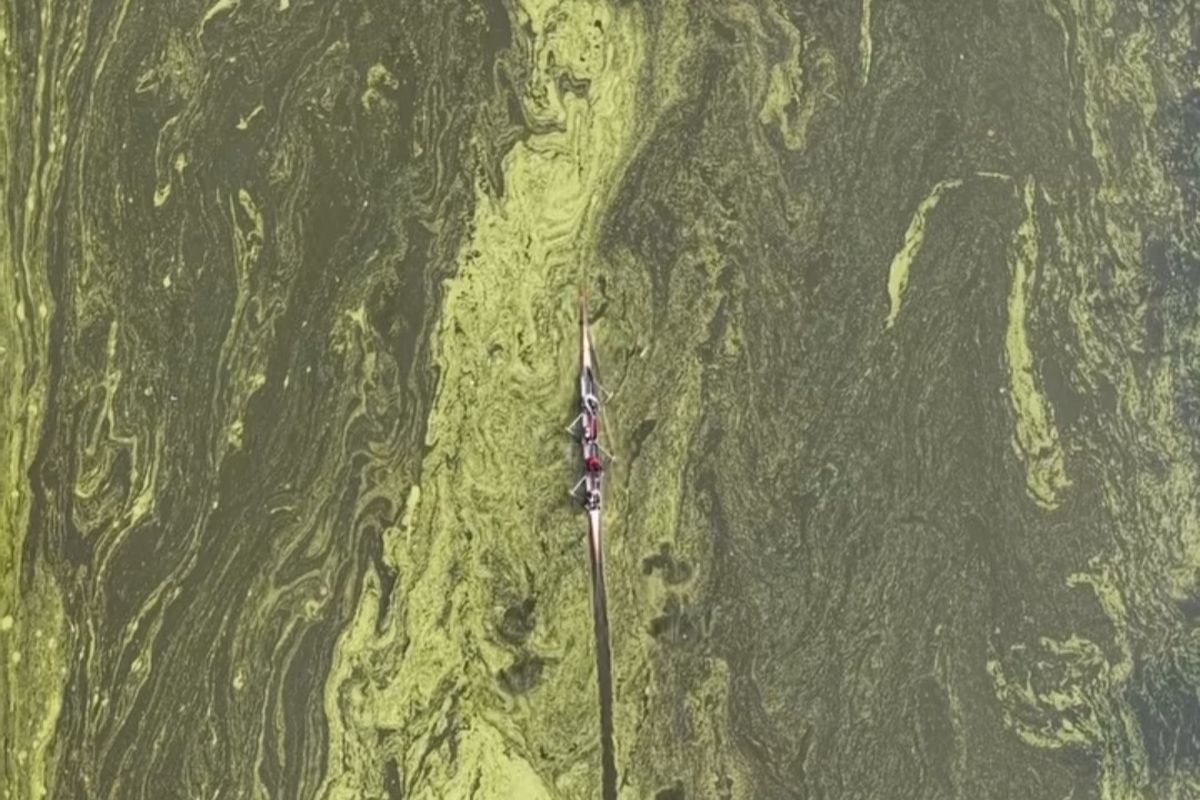
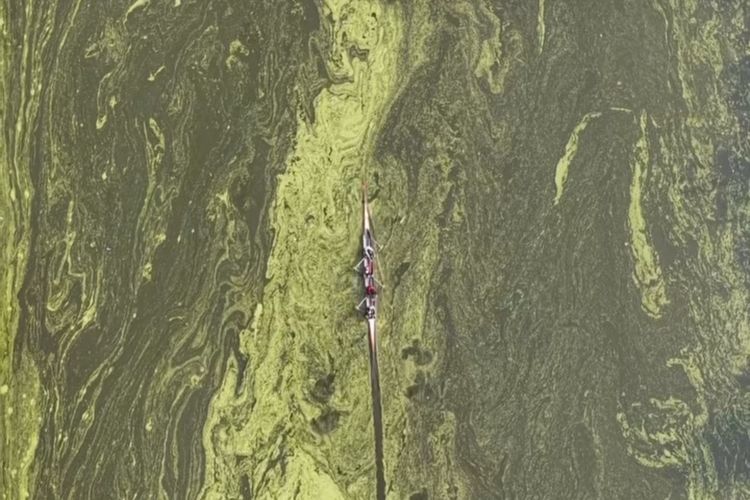
JAKARTA, KOMPAS.com - A bright light green color has covered part of the surface of the East Flood Canal (BKT) river in Cilincing, North Jakarta.
This color is dominant on both the left and right sides of the flow, stretching from Weir 3 Gate to the bridge on Sekda Saefullah Street, Friday (9/18/2026).
Along the river, several officers from the Cilincing Subdistrict Water Body Waste Management Unit (UPS) were seen dredging the plants covering the water surface.
The plants turning the BKT surface green are locally known as "mata lele" (catfish eyes).
"I saw in the Instagram comments, 'If it were fully covered, the color would look nice like matcha,'" said Syarif Hidayatullah, Commander of the UPS Water Body Team in Cilincing Subdistrict, to Kompas.com on Friday (9/18/2026).
Syarif explained that the appearance of mata lele in BKT this time is related to the extended dry season.
The water flow in BKT that usually runs swiftly slows down during the dry season. Water from several connecting channels (PHB) then enters the BKT flow and causes mata lele to appear.
"So what suddenly appeared in BKT is, as locals say, mata lele. Generally, its emergence is caused by the prolonged dry season," he said.
The slowed water flow creates calmer conditions, allowing mata lele to grow faster, especially when the water surface is exposed to sunlight.
Syarif noted that under normal conditions, BKT is usually clean and free of mata lele.
He added that a similar phenomenon occurred in 2021 and 2022, while from 2023 to 2025, BKT conditions returned to normal.
"Previously, it happened in 2021 and 2022. But in 2023 through 2025, it was normal," Syarif said.
The green cover on BKT's surface has gradually diminished. The UPS Water Body officers have been handling the mata lele for approximately four days since Tuesday (9/15/2026).
"As for the response, we keep dredging and removing it and then block it off to prevent further spread," he explained.
Over the four days of treatment, it is estimated that about 4 cubic meters of mata lele have been removed.